
What Industrial Inkjet Can Learn from Arnold Schwarzenegger
Industrial inkjet, the business of building equipment to apply inkjet technology to industrial production, has never suffered from a lack of ambition. What it has often lacked is restraint. Arnold Schwarzenegger’s career and scribblings offer an unexpectedly useful parallel. His maxim, “If you’re going to do it, do it properly”, was never about perfection for its own sake. It was about commitment, clarity of purpose and execution. In industrial inkjet, those same principles apply, but they are often misunderstood or disregarded.

Arnold Schwarzenegger, Be Useful: Seven Tools for Life
“If you’re going to do it, do it properly”
From its earliest days, the technology has attracted big technical ideas. Often the technical vision is paramount and pursued fully with a minor nod to business indicators as a means to feeding the technical beast. Bold engineering and a tendency to chase technical perfection for unrealistic performance goals dominate, long after usefulness would have done the job. In today’s market, that instinct is becoming harder to justify.
The origins of industrial inkjet offer a useful reminder. Much of the modern inkjet industry rests on foundations laid by Steve Temple and the team at Xaar. Higher nozzle densities, fluid recirculation and robust industrial printheads did not just improve performance, they made entire markets possible. Those technologies were not developed to be flawless. They were developed to work, reliably, at scale, in real industrial environments. Many of today’s leading OEMs and their offerings still depend on that pragmatism, whether directly or indirectly.
That distinction matters because industrial inkjet integration is not, or should not be, a theoretical, academic exercise, the pursuit of scientific superiority. It succeeds only when the technology is genuinely useful. Vision matters, but vision without discipline tends to drift into wasteful, over-engineering. In practice, 80 percent of the benefit can often be delivered with a fraction of the cost, time and risk.
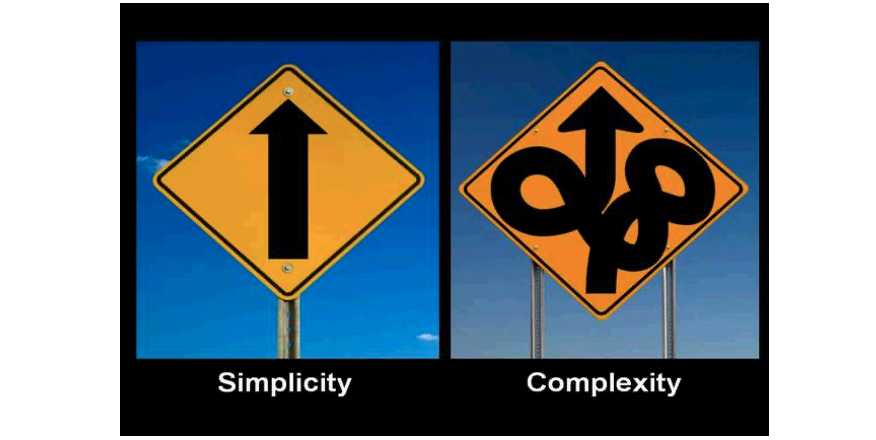
“Good enough” is not a compromise. It is frequently, if not always, the optimal solution.
This is where regional approaches to inkjet integration diverge.
In much of Asia, particularly but not exclusively, China, development tends to proceed in small, fast steps. Equipment is brought to market quickly, refined in use, and sold aggressively. Target cost matters. Time matters even more. Missing a window by six months can be fatal when price points are falling and competitors are moving fast. This approach means working your ass off, and still carries risks. Corners are sometimes cut. Software, HMIs and version control are not always given the attention they deserve. But speed to market, volume installation ambitions and market awareness are taken very seriously.
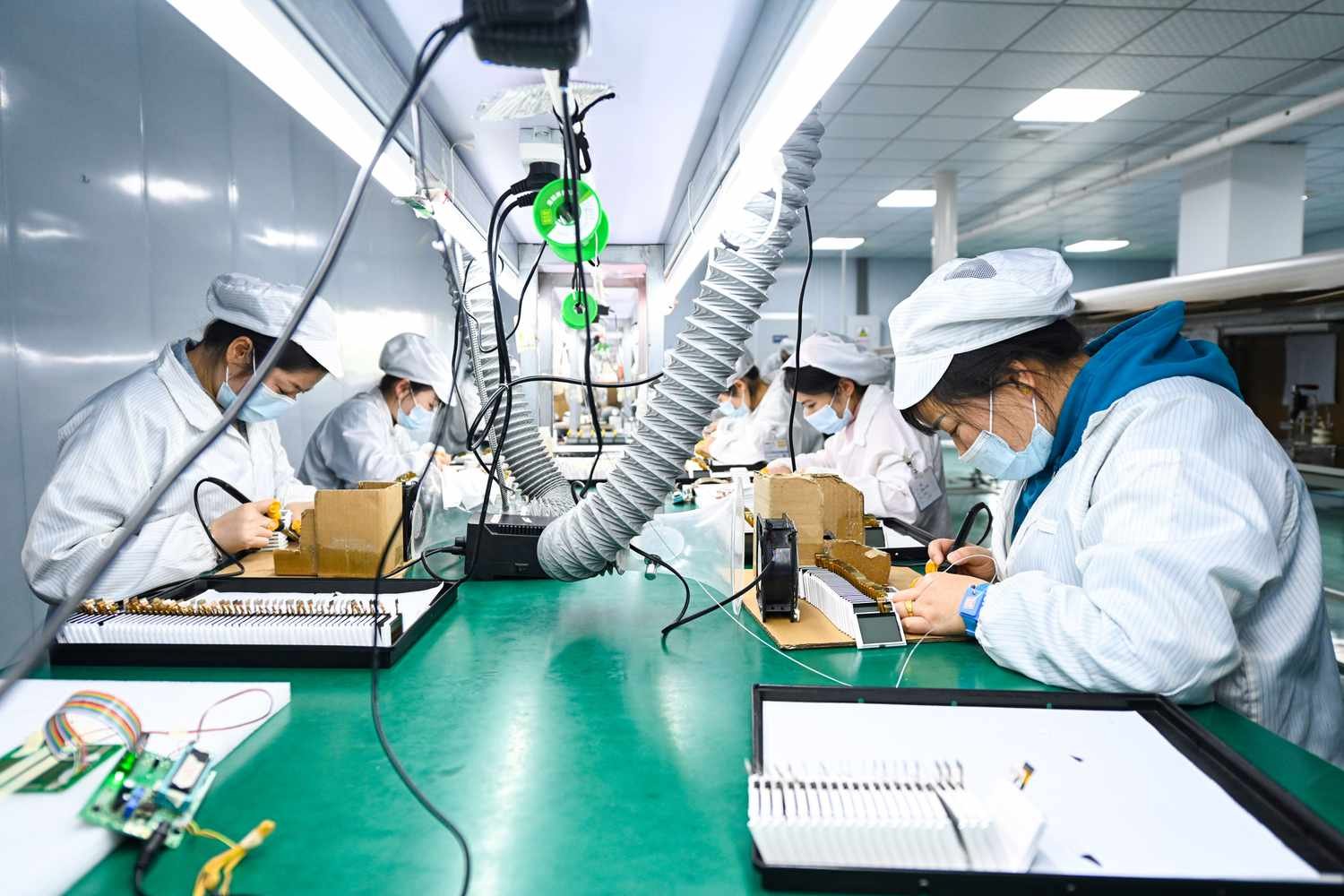
“In much of Asia, particularly but not exclusively, China, development tends to proceed in small, fast steps. Equipment is brought to market quickly, refined in use, and sold aggressively.”
Western approaches have often leaned in the opposite direction. Projects aim high technically, aiming to rival or challenge offset quality or analogue print speed (without the need), to chase peak performance before establishing clear market usefulness. Development cycles stretch. R&D costs rise. Market opportunities can so easily be missed while teams pursue an ideal state for which customers did not ask nor will they pay. Attention to detail is admirable and the strength of long-term customer relationships for some of the perennial Western OEMs is so clear. But the commercial reality is often underestimated.
Neither approach is inherently right or wrong. Each has strengths and weaknesses. The problem arises when perfection, rather than usefulness, becomes the objective; if the big vision is overly biased towards unrealistic technical dreams and insufficiently conscious of big business aims. Achieving big business is a sign of wide applicability, of usefulness.
Markets do not reward effort. They reward relevance.
Perfectionism is often mistaken for high standards. It is absolutely not the same thing. High standards focus on outcomes that matter and address needs. Perfectionism focuses on eliminating flaws, even when doing so adds cost, delay and risk without delivering proportional benefit. In industrial inkjet, this can mean complex architectures, excessive in-house development, and long beta phases that quietly erode momentum, confidence and stifle investment willingness.
This is where many OEMs now find themselves under pressure. Carrying large R&D expense for extended periods, development costs are rising. All of this opens the gap between necessary equipment cost/price and user affordability. Customers are cautious. The macro environment is unstable. De-globalisation, localisation and tariffs are reshaping supply chains on so many levels. Meanwhile, OEM competitors are getting faster, more nimble and more agile. In this context, getting something useful, finished and delivered, often beats waiting for “castles in the sky” or something flawless from the trusty market-leading OEM.
Component suppliers have not always helped. In the early days, when industrial inkjet volumes were low, componentry was limited, performance was prices were high and information was poor. OEMs were pushed towards DIY strategies, reinventing systems for themselves that already existed, repeating tests whose outcomes were well understood, and carrying unnecessary development risk. That carried on for too long. Vertical integration for an OEM can be powerful, but only when it’s pragmatic and does give a competitive advantage. Dogma is risky. The Tier 1 inkjet component scene has changed.
What matters is knowing which cards you’re holding, not keeping them close to your chest, what’s really core to competitive advantage.
Specialist partners can shorten development cycles, reduce risk, broaden perspective and choice of printhead technologies, existing and to come, provided they’re willing to look beyond their own products. Printheads, fluids, system configuration, software and quality control all interact. Treating them in isolation is a reliable way to create complexity devoid of usefulness.
The lessons from Schwarzenegger, the successful Hollywood actor, the Governor of California, the philanthropist, holds because it is so well grounded in reality. Commit fully. Think big. Work relentlessly. But also know what you are trying to achieve and why. In industrial inkjet, doing it properly does not mean doing everything. It means doing the right things, to the right extent, in the right order, for a real market.
In most cases, pragmatism and usefulness beat unrealistic perfection. Probably not in most cases, probably every time.
This article is based on a presentation by Richard Darling, Global Inkjet Systems (GIS)