
Marcus Timson: A reflection on the TCM Decorative Surfaces Conference
I recently attended the TCM Decorative Surfaces Conference and thoroughly enjoyed the experience of being a delegate rather than an organiser. As the title suggests, the event focuses on decorative surfaces - a field that intersects closely with digital printing technologies, but perhaps even more interestingly, with the environments we inhabit as human beings.
The conference offered a fascinating window into a sector that is yet to fully exploit the full potential digital printing. This came through in the market analysis and general conversations I had, added to my own viewpoint. Regardless of this, what struck me was how strongly attached the industry is to interior design and the emotional impact of human spaces. The programme reflected this well, blending technology discussions with perspectives from design, materials, and colour specialists.
While the technology sessions were insightful with some great talks by Marc Graindourze (Agfa), Robert Bierfreund (MetiQon), Oliver Luedtke (Colorgate), Nino Speranza (Interprint) and a very inspiring talk by Ben Hartkopp (Quantica), but two presentations in particular stood out for me because they offered a different kind of perspective for me.
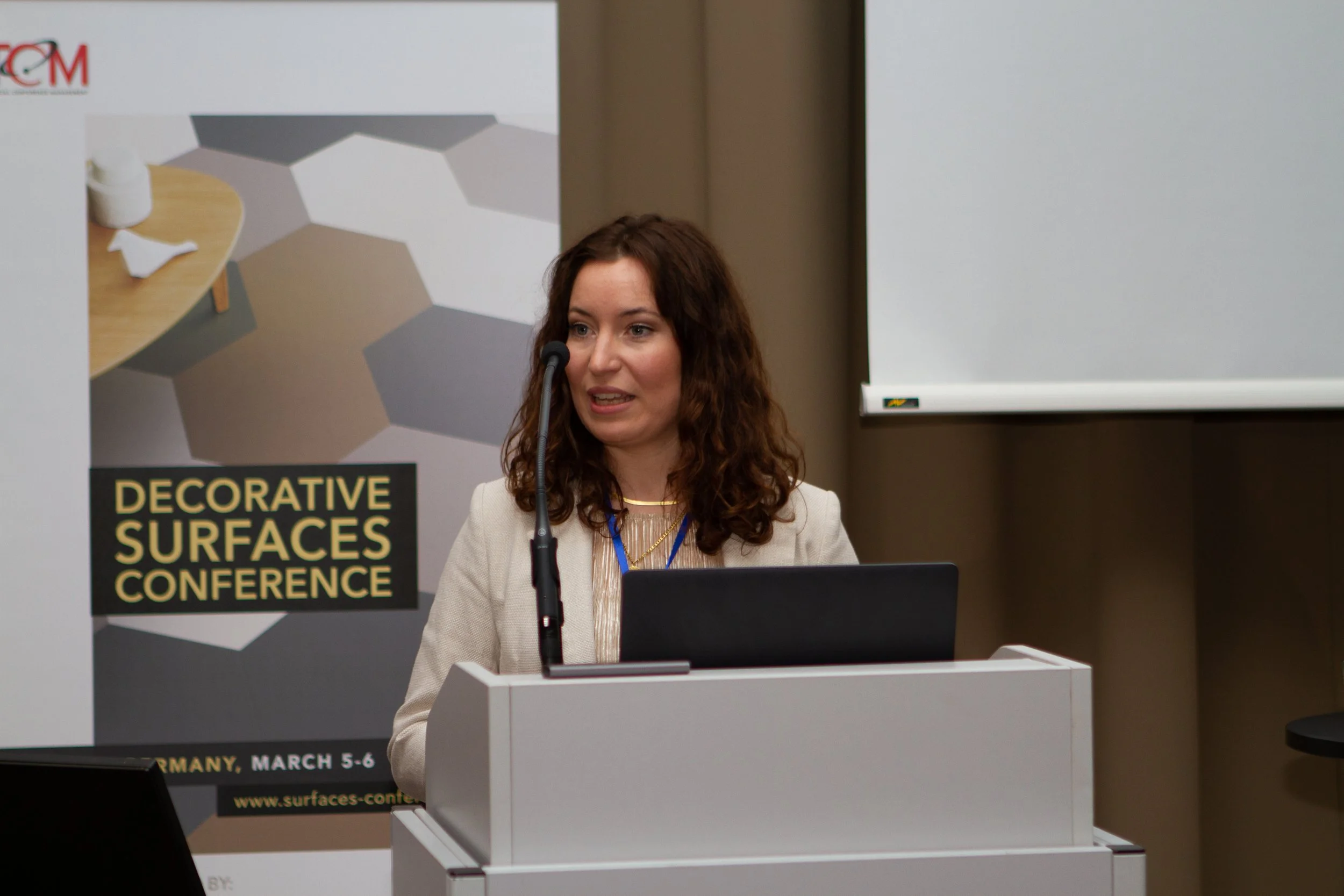
Clarissa Bluem’s talk explored how colour trends are not arbitrary. They are carefully researched responses to social moods, cultural shifts and psychological needs. In a world that often feels increasingly volatile and uncertain, colour palettes are evolving to reflect and respond to this reality.
The first was delivered by Clarissa Blueme. Clarissa represents the Trend service Colour Road at Renolit. It may seem an obvious thing to point out but colour trends quietly shape the visual identity of our homes, offices, hotels, restaurants, schools and many other spaces. What fascinated me most was the depth of thinking behind the colours and surfaces we encounter in everyday environments.
Her presentation explored how colour trends are not arbitrary. They are carefully researched responses to social moods, cultural shifts and psychological needs. In a world that often feels increasingly volatile and uncertain, colour palettes are evolving to reflect and respond to this reality.
Rather than stark or overly bold aesthetics, there is a clear movement toward warmer tones - colours inspired by autumn landscapes, sunsets and sunrises. These hues create spaces that evoke reassurance, connection and calm. They support environments that encourage collaboration, belonging, comfort and creativity.
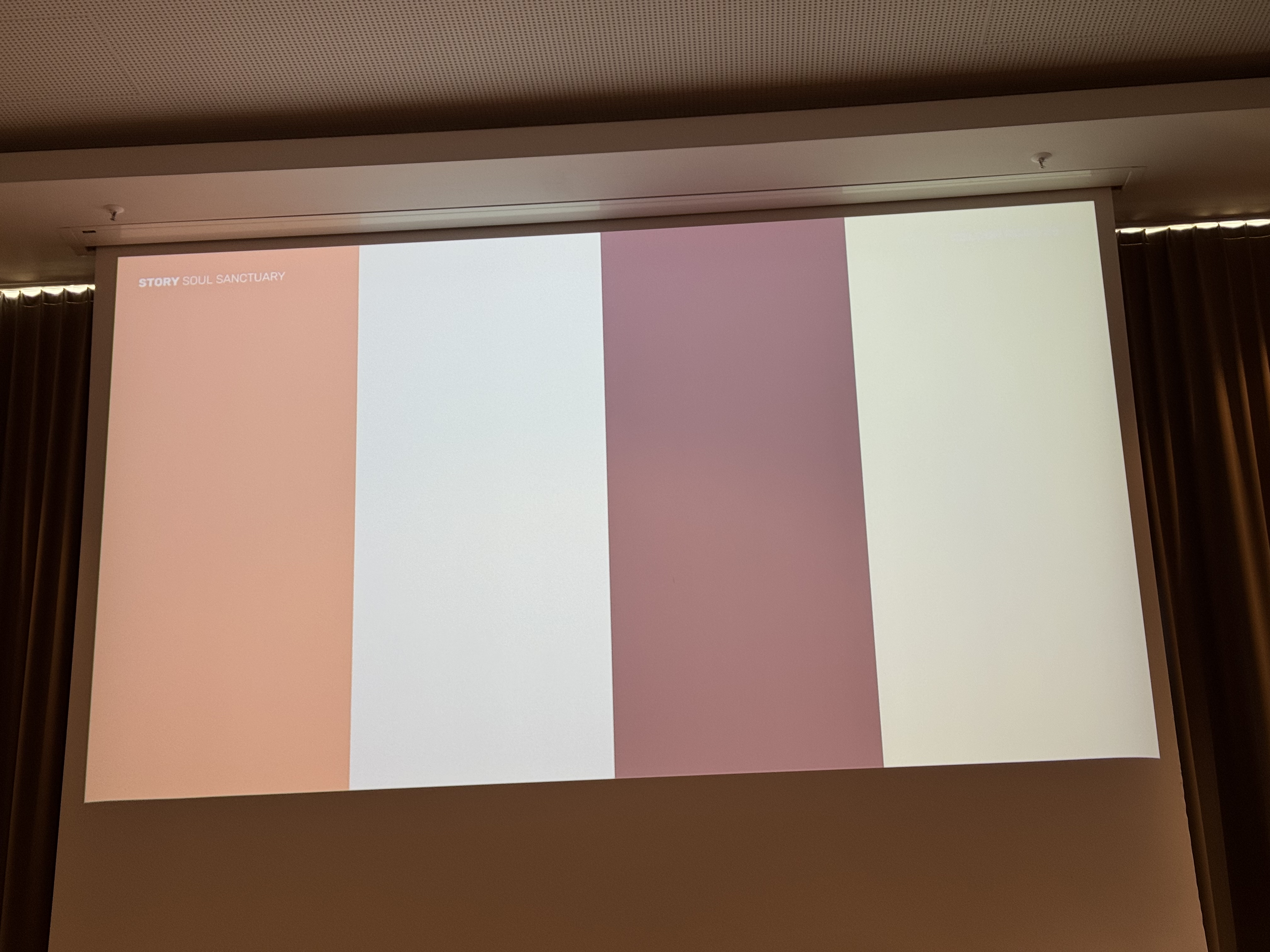
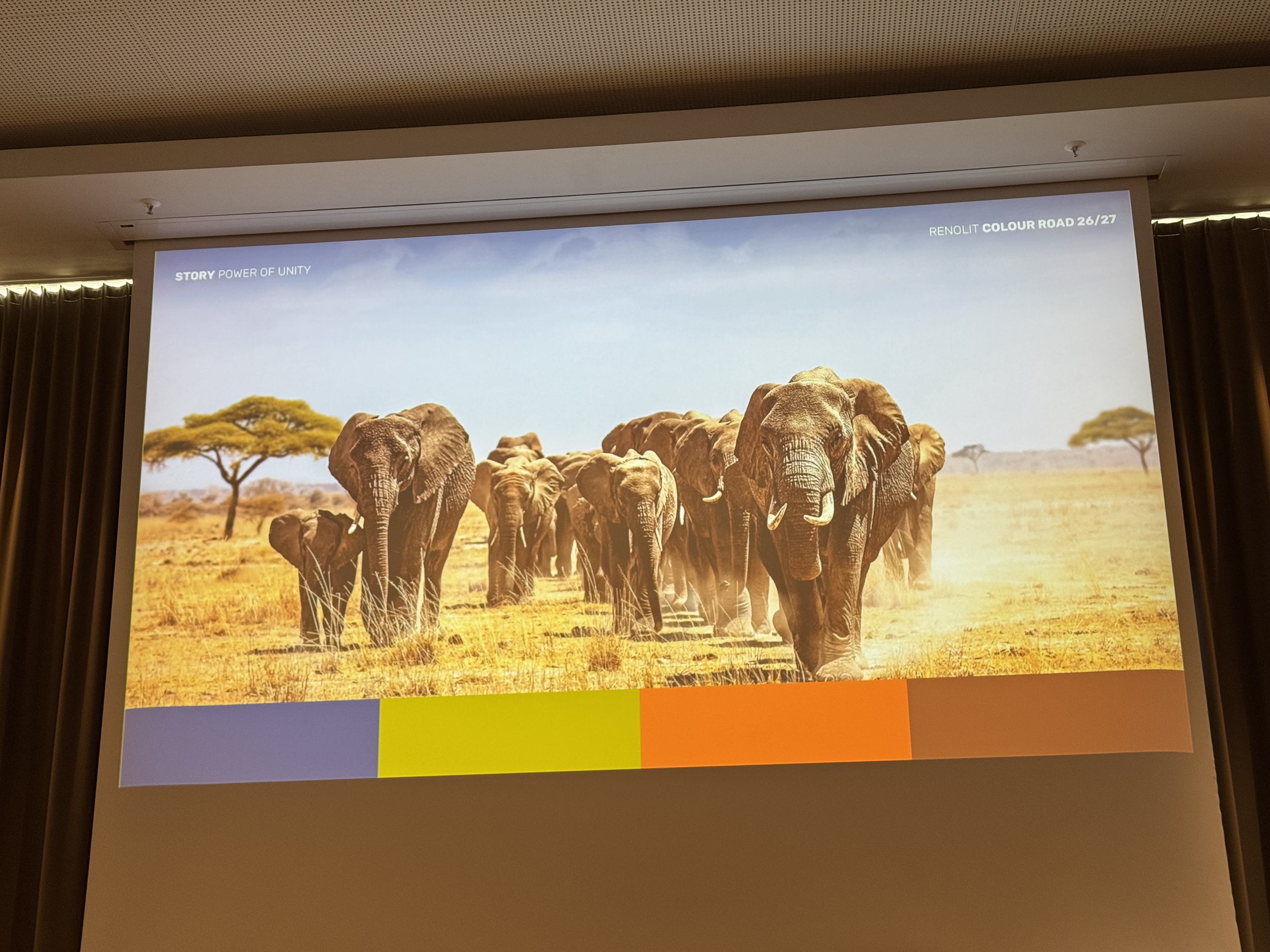
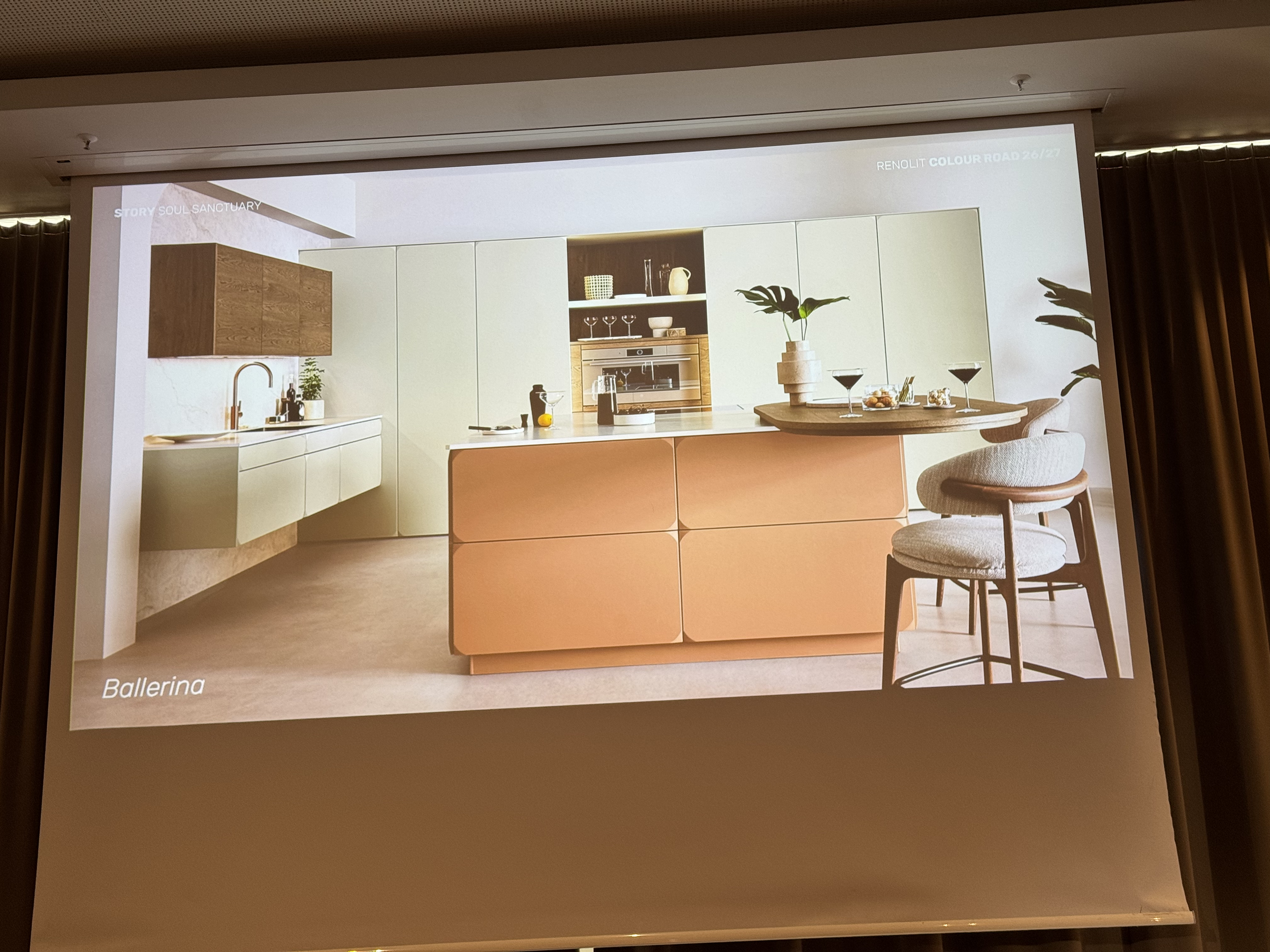
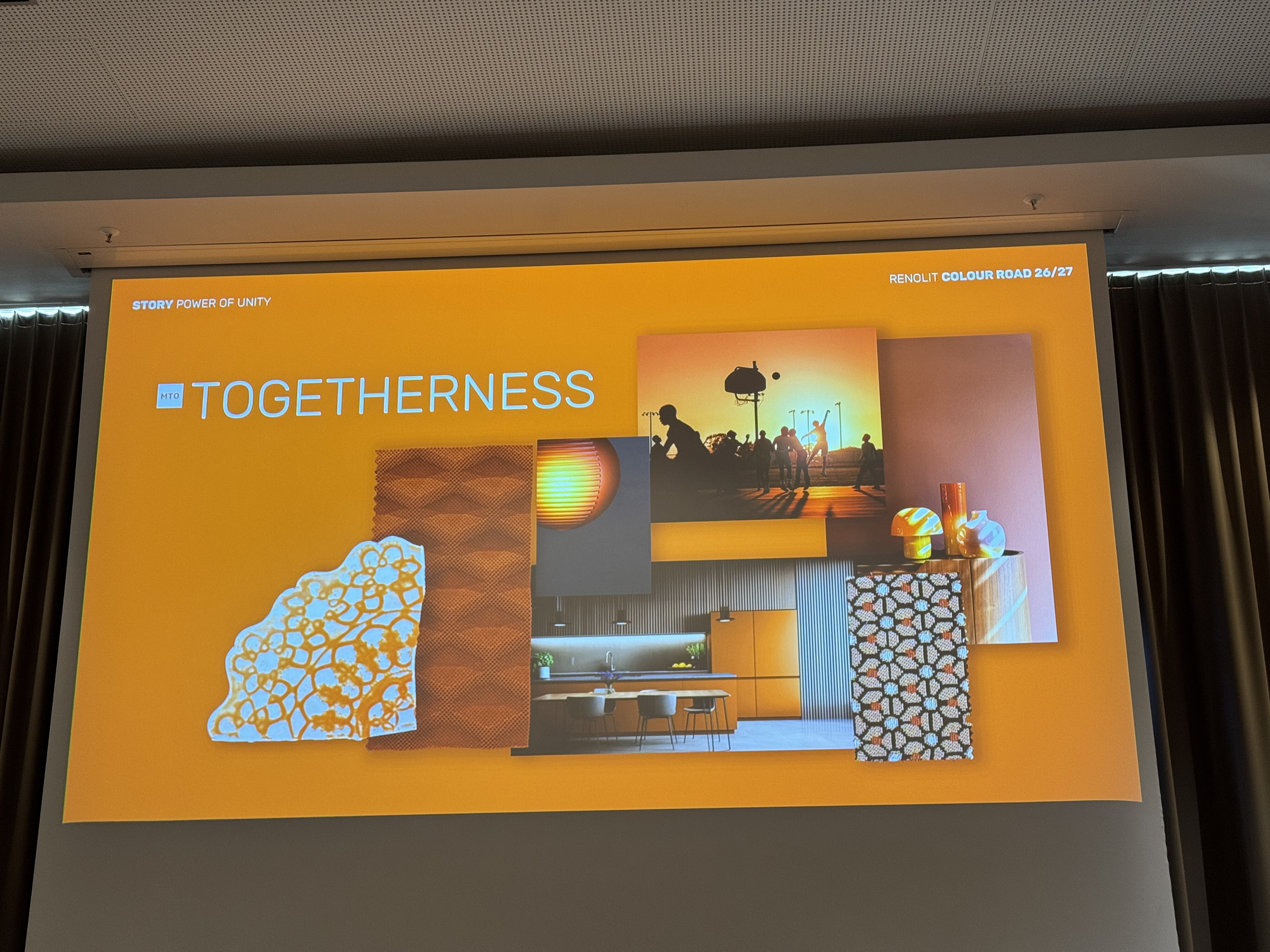
The images above from her presentation in this article likely cannot fully capture the atmosphere they conveyed in the room, but the emotional resonance was immediate. The palette choices instinctively communicated warmth and humanity.
It was a reminder that while many aspects of the world around us may feel beyond our control, the environments we design and inhabit are not. The colours and materials we choose can influence mood, productivity and wellbeing in subtle but meaningful ways. Designing spaces that enhance our sense of purpose and creativity is far from trivial.
So my thanks to Clarissa for an inspiring and thoughtful presentation.

Anastasia Folak introduced Saueressig’s MIMIC technology - an intelligent AI-powered design platform that enables the photorealistic digital reproduction and creation of natural surfaces such as wood, stone, and textiles. Rather than relying on traditional methods that require physical samples and time-consuming scanning or reproduction processes, MIMIC uses artificial intelligence to learn the visual “DNA” of natural materials - elements such as grain structure, contrast, rhythm and pattern.
The second talk that particularly resonated with me came from Anastasia Folak of Saueressig’s MIMIC. While very different in focus from the earlier discussion on colour trends, it was equally inspiring because it demonstrated how technology is beginning to unlock entirely new creative possibilities for designers.
MIMIC is an intelligent AI-powered design platform that enables the photorealistic digital reproduction and creation of natural surfaces such as wood, stone, and textiles. Rather than relying on traditional methods that require physical samples and time-consuming scanning or reproduction processes, MIMIC uses artificial intelligence to learn the visual “DNA” of natural materials - elements such as grain structure, contrast, rhythm and pattern.
From that foundation, designers can generate entirely new surface variations digitally, combining characteristics from different reference materials or adjusting colour, texture and structure in real time. The result is a system that allows designers to create highly authentic decorative surfaces that remain visually consistent with the original material while enabling almost limitless variation.
What makes this particularly powerful is not simply the creative freedom it provides, but the shift it represents in the design workflow. Traditionally, developing decorative surfaces has been a slow and resource-intensive process involving multiple physical samples and lengthy prototyping cycles. MIMIC moves much of this work into a fully digital environment, enabling designers to experiment, visualise and refine ideas instantly.
Importantly, this is not about replacing the role of the designer. Quite the opposite. Technologies like MIMIC amplify human creativity by removing many of the technical constraints that historically limited design exploration. Designers can iterate faster, build entire collections of surface variations from a single material reference, and develop concepts that would have previously been impractical or impossible to produce.
There is also a sustainability dimension to this shift. By reducing the reliance on physical samples and rare natural materials, digital design workflows can significantly reduce material consumption and waste during the development phase.
For me, MIMIC represents an important example of how AI can be applied constructively in creative industries. It is not about automation replacing imagination. Instead, it is about providing designers with a powerful new toolset that allows them to translate ideas into production-ready decorative surfaces with unprecedented speed and flexibility.
It is an elegant combination of creativity, technology and manufacturing potential, and I will be watching with interest as MIMIC develops further and begins to shape the future of decorative surface design. Great talk Anastasia :)
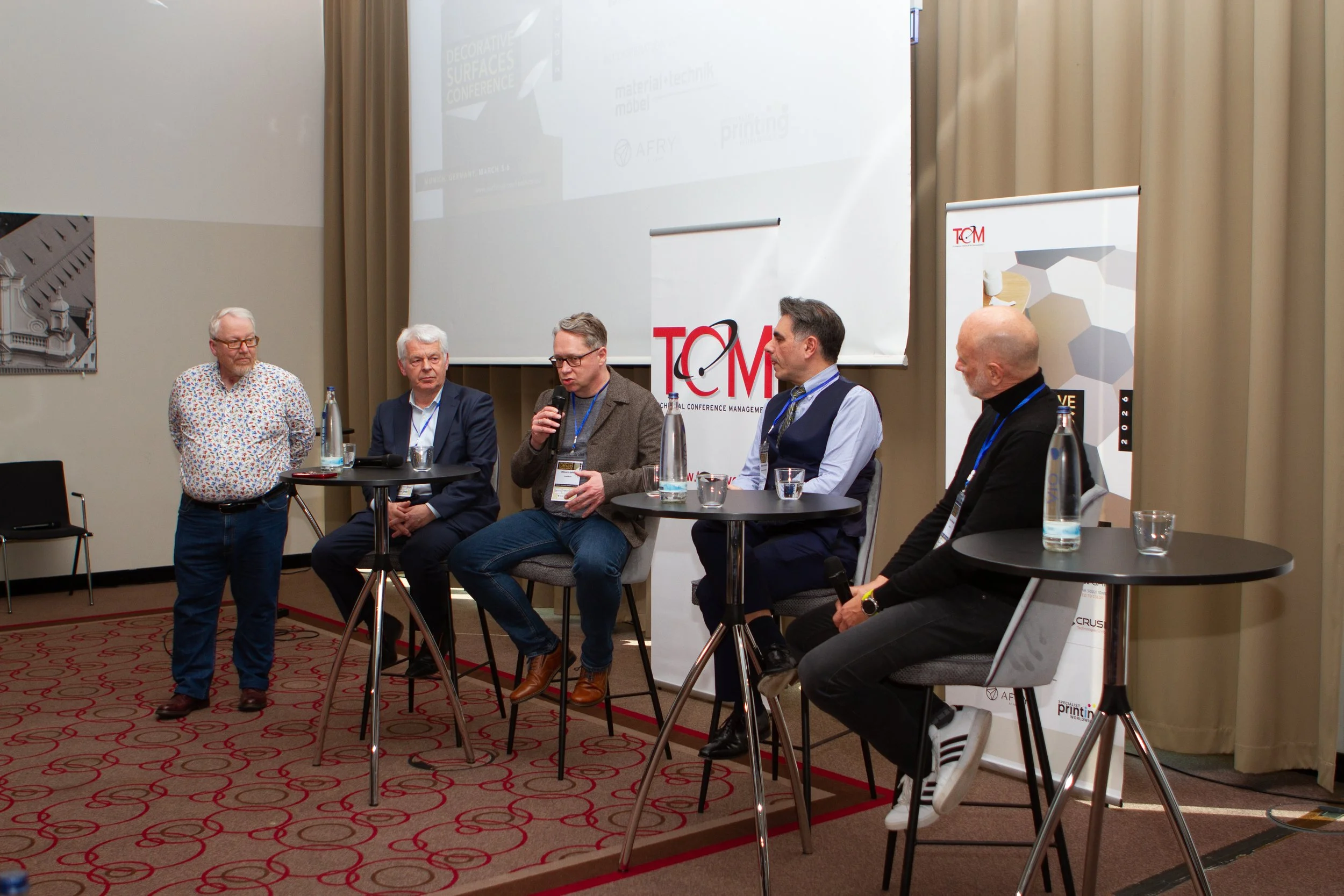
Beyond the presentations, the panel discussion also proved memorable - partly because I unexpectedly found myself participating in it.
Superbly moderated by Royce Dodds from Cruse, he asked me a question that many event organisers are currently grappling with: why is it increasingly difficult to attract the same levels of attention and attendance to industry events in 2026 compared with previous years?
It is a fair and on the surface (no pun intended) simple question, but one without a simple answer.
COVID drew a clear line in the sand for the events industry. During that period we learned how effectively platforms like Zoom and Teams could sustain communication and collaboration. The result is that attendance at many trade shows today remains below pre-pandemic levels.
But the deeper reason lies in the way B2B buying behaviour has changed.*.
Today, buyers can accomplish a remarkable amount of research online before ever attending an event. They are no longer limited to gathering information directly from sales representatives. Instead they have access to a vast ecosystem of digital content - websites, thought leadership platforms, podcasts, films, articles and expert commentary.
Platforms such as FuturePrint are part of this evolving landscape. They provide access to insights, conversations and analysis that help buyers understand technologies and trends long before a purchasing decision is made.
Events still matter. They remain powerful spaces for relationship building, networking and final decision-making. But they are no longer the starting point of the buyer journey. Instead, they form one important part of a much broader, interconnected information ecosystem.
Many of the delegates at conferences like this one belong to the same demographic as myself - in my case, a middle-aged (and increasingly bald) participant who grew up in a time when the sales representative was the primary source of knowledge. Buyers would first connect with a salesperson because that was where the information resided.
Today, the dynamic is different.
Sales teams remain critical, but they now operate within a world where buyers arrive already informed. Visibility within trusted digital platforms has become essential. Without that visibility, a company risks being absent from the early stages of the buyer’s research process - and being absent from the research phase often means being absent from the final shortlist.
Before this reflection turns too much into a personal rant, I should conclude by thanking the organisers.
My thanks go to Kurt Fischer for hosting an excellent conference and for the warm hospitality shown throughout the event. And to Royce Dodds for drawing me into the panel discussion and prompting a conversation that clearly resonated with many in the room.
The TCM Decorative Surfaces Conference was a reminder that innovation rarely exists in isolation. It emerges from collaboration between technology, design and human insight - and when those elements come together, the results can be genuinely inspiring.
*For a more indepth analysis on B2B Buying Behaviour, please check out a previous article here