
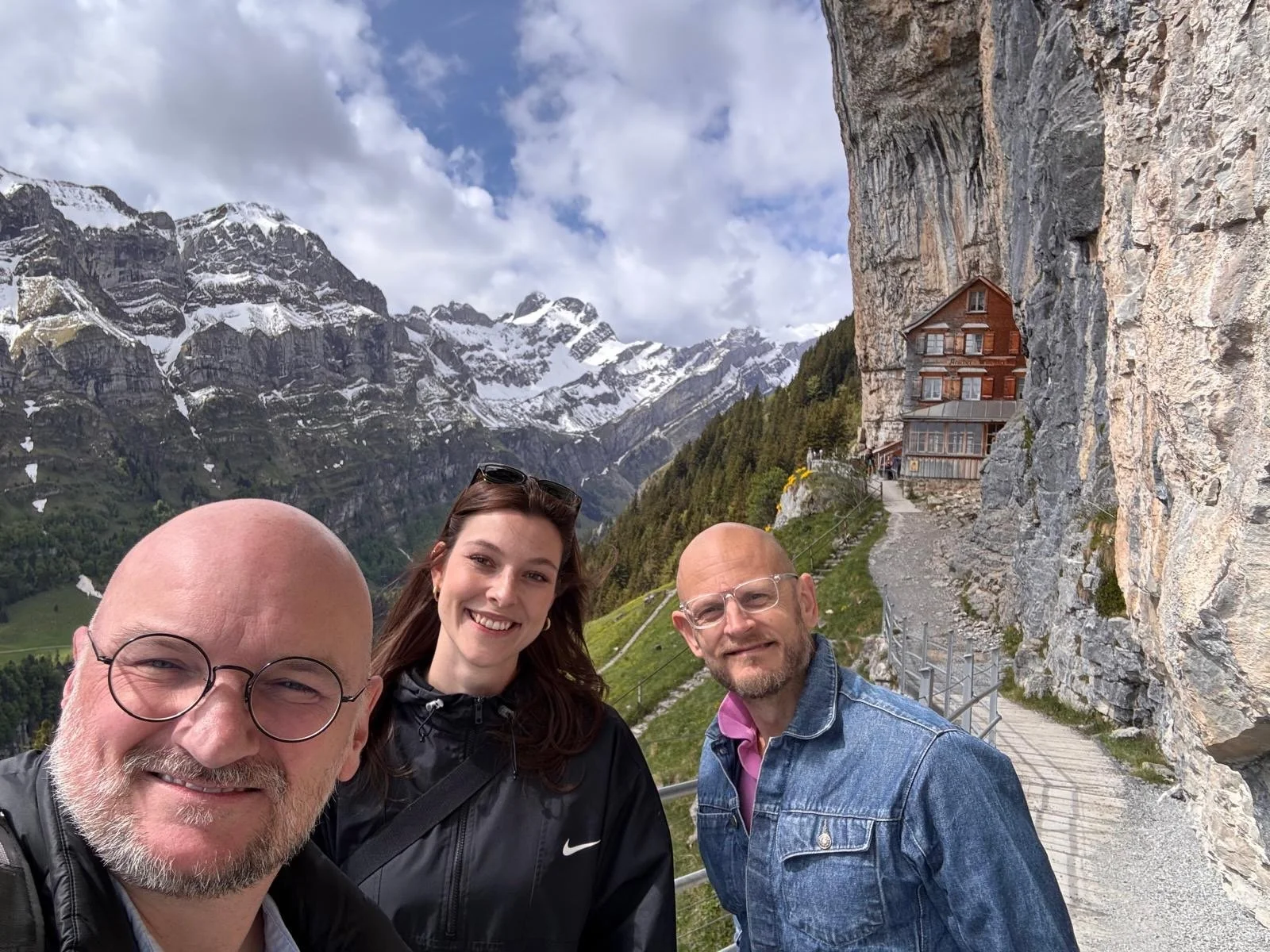
I recently visited the Gallus Experience Center and spent time with key Gallus people and technology. This article is an impression of my time there and the inspiring Gallus story.
St Gallen feels like the sort of place where precision and reflection coexist naturally. Nestled in eastern Switzerland, framed by mountains, lakes and rivers, the city carries centuries of intellectual, religious and commercial history. The abbey founded on the site of Irish missionary Gallus’ hermitage in AD 612 helped establish St Gallen as a centre of pilgrimage and learning, and over time the settlement evolved into one of Europe’s trading and academic centres. Today, its old town remains postcard-perfect - elegant, ordered and quietly confident.
It is also an entirely fitting home for Gallus Group.
Founded in 1923, Gallus built its reputation over more than a century as one of the printing industry’s most respected narrow-web press manufacturers. Today, the company remains a global leader in label printing technology. Yet what is perhaps most striking about modern Gallus is not its legacy, but its willingness to rethink itself.
Under CEO Dario Urbinati and a younger, highly energised leadership team, Gallus has undergone a notable transformation. The company has evolved from a traditional analogue OEM into something far more contemporary: part engineering business, part innovation hub, part collaborative ecosystem. Its reinvention feels deliberate rather than cosmetic. And while digital printing technology is crucial to its future strategy, I was more taken with the obvious shift upon arriving at its headquarters.
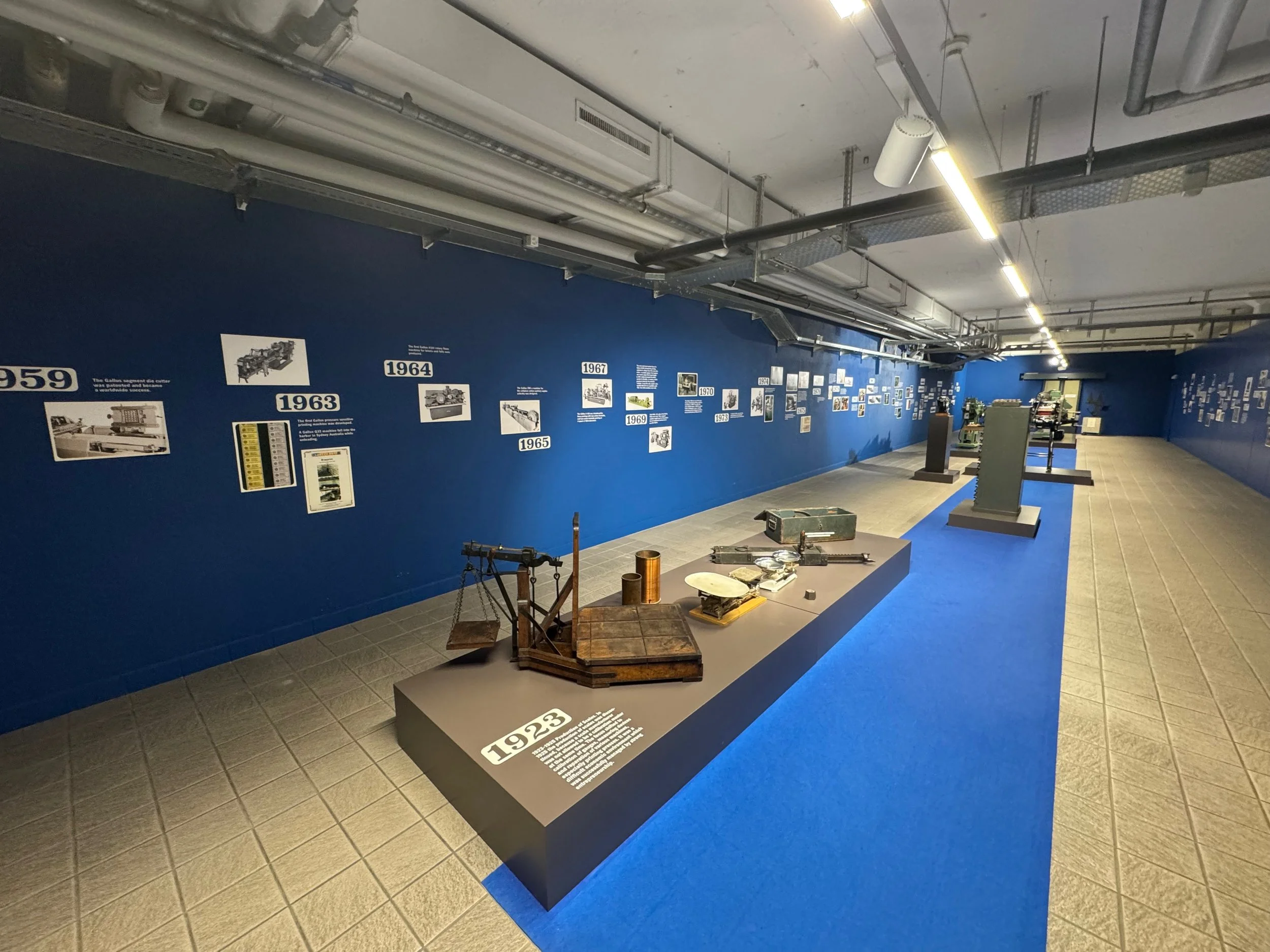
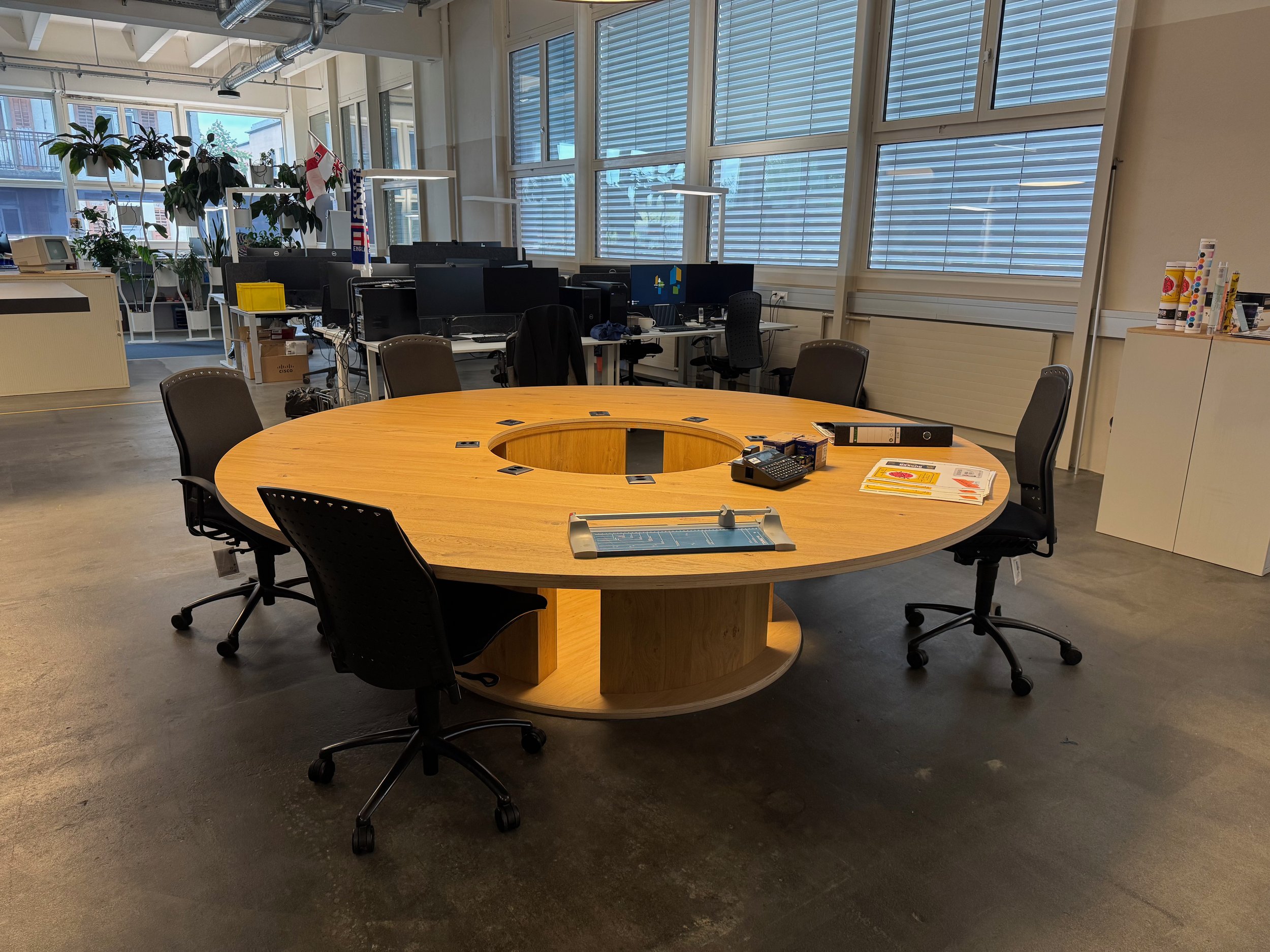
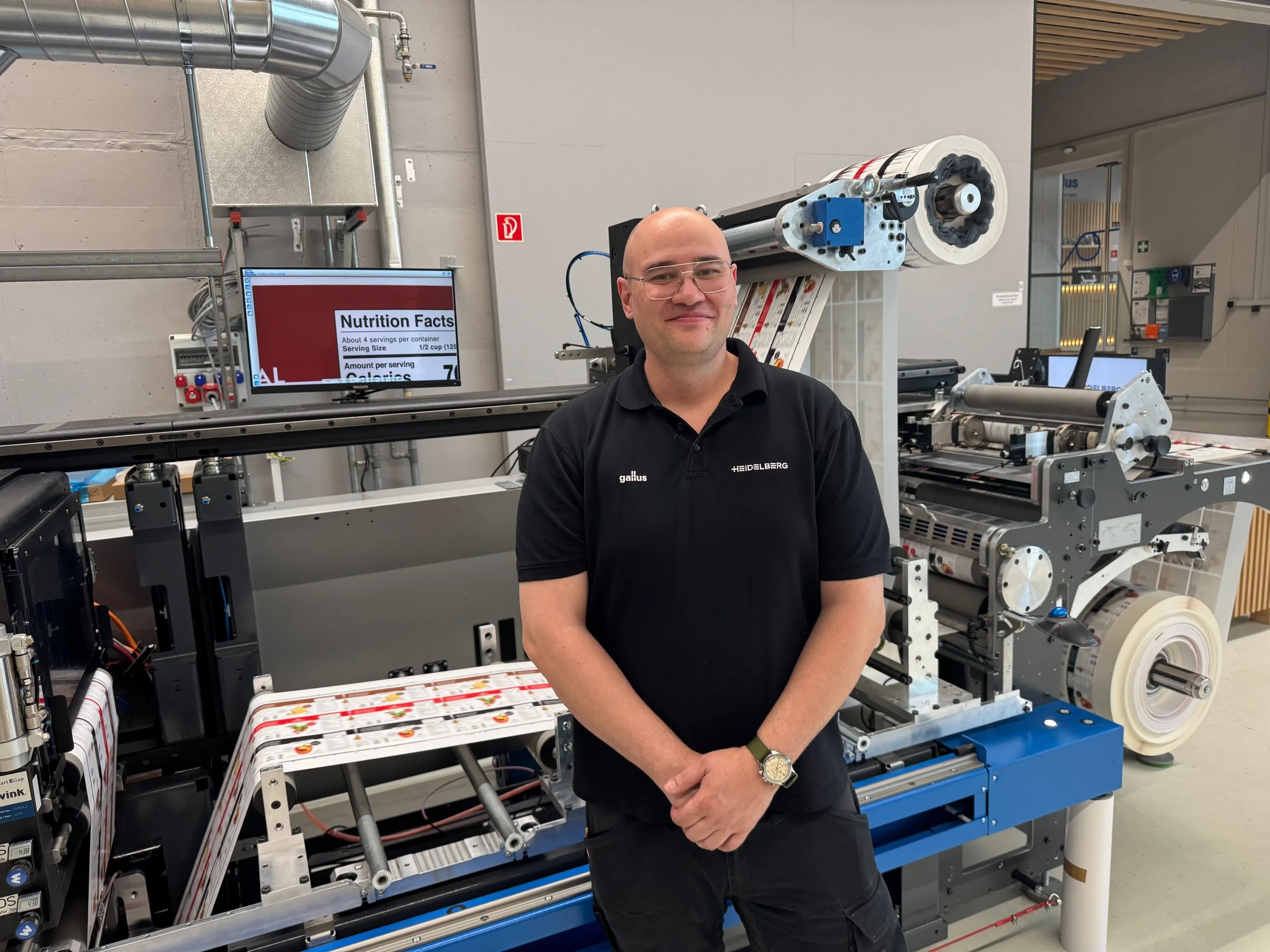
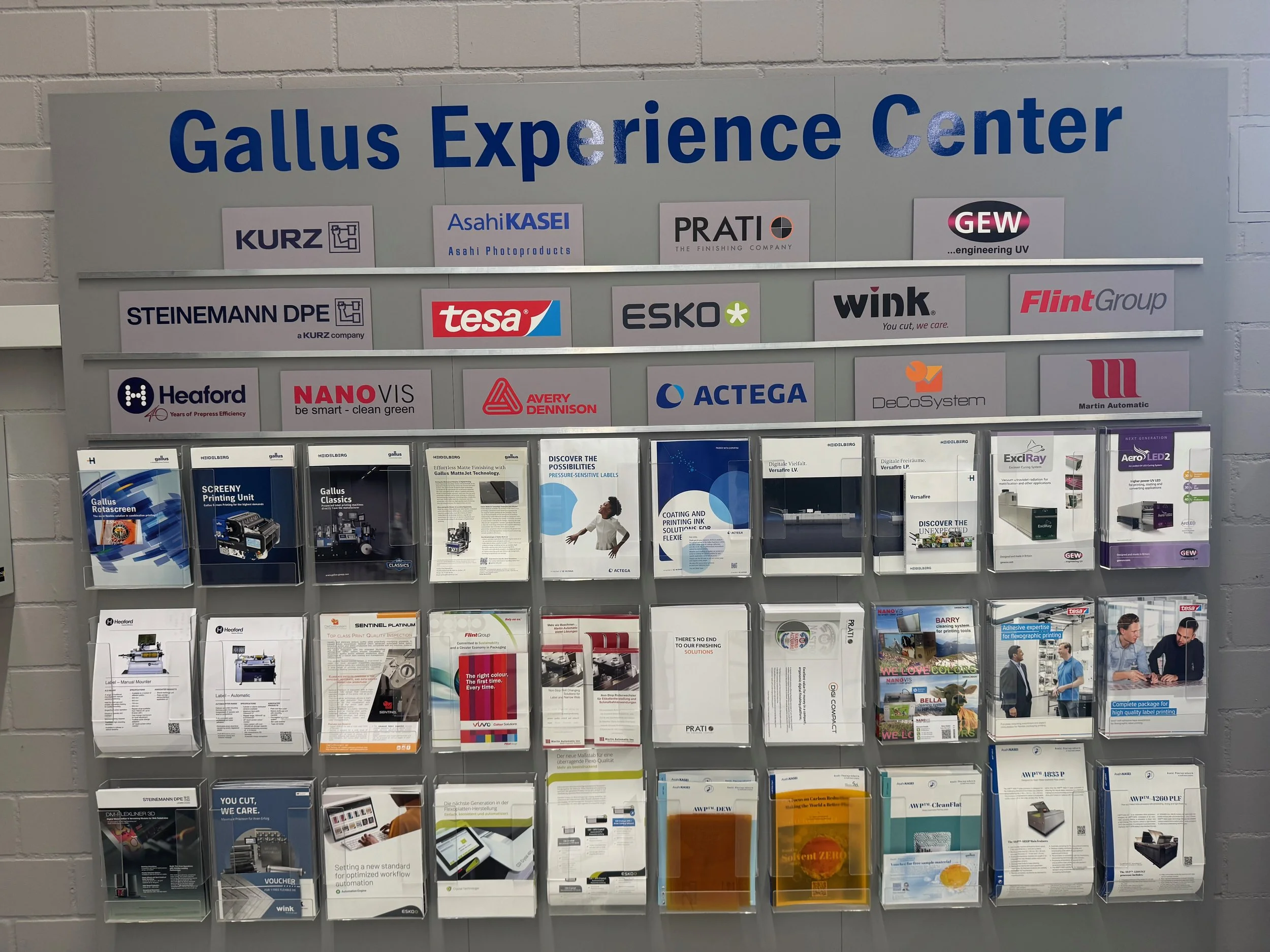
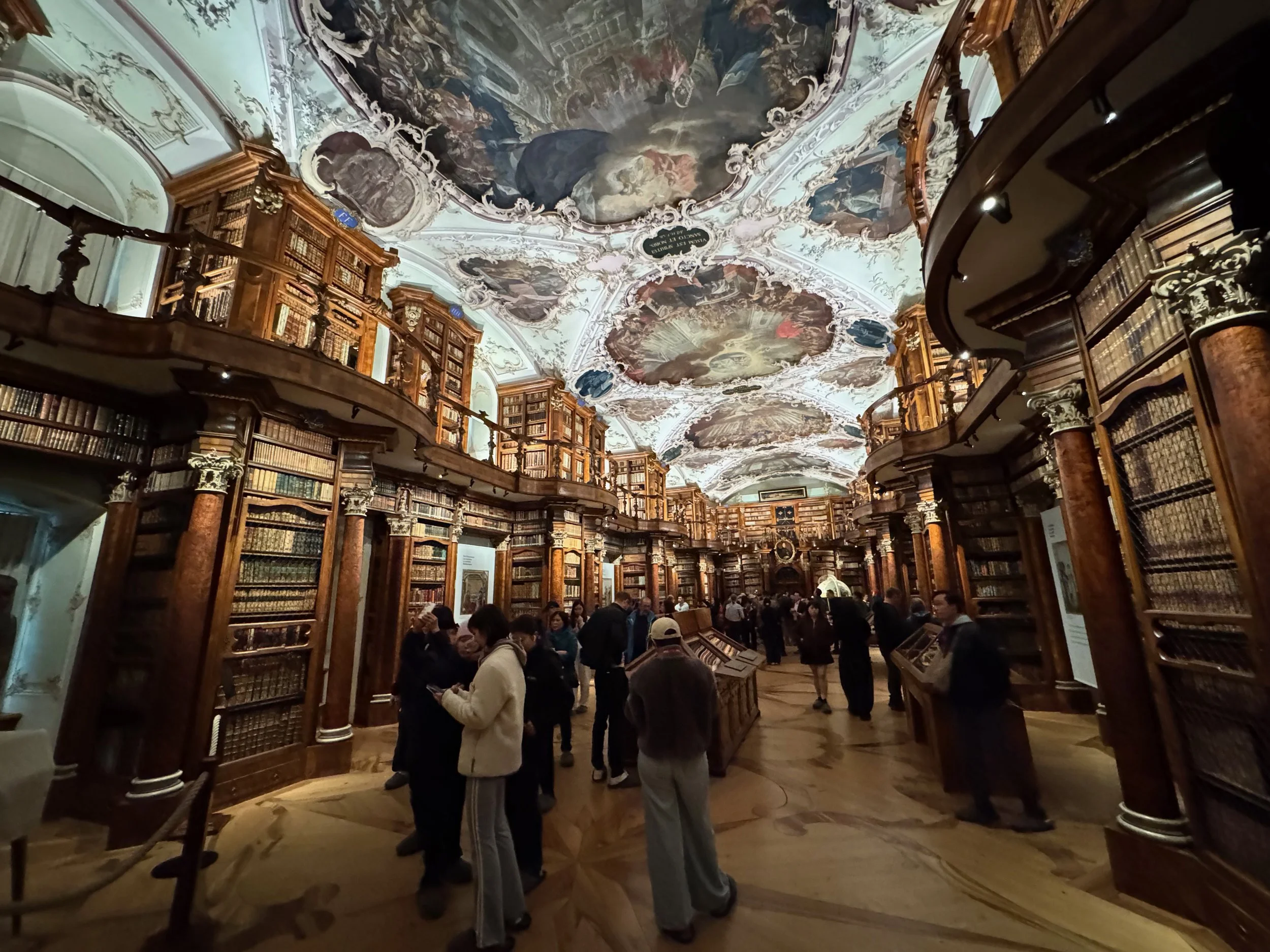
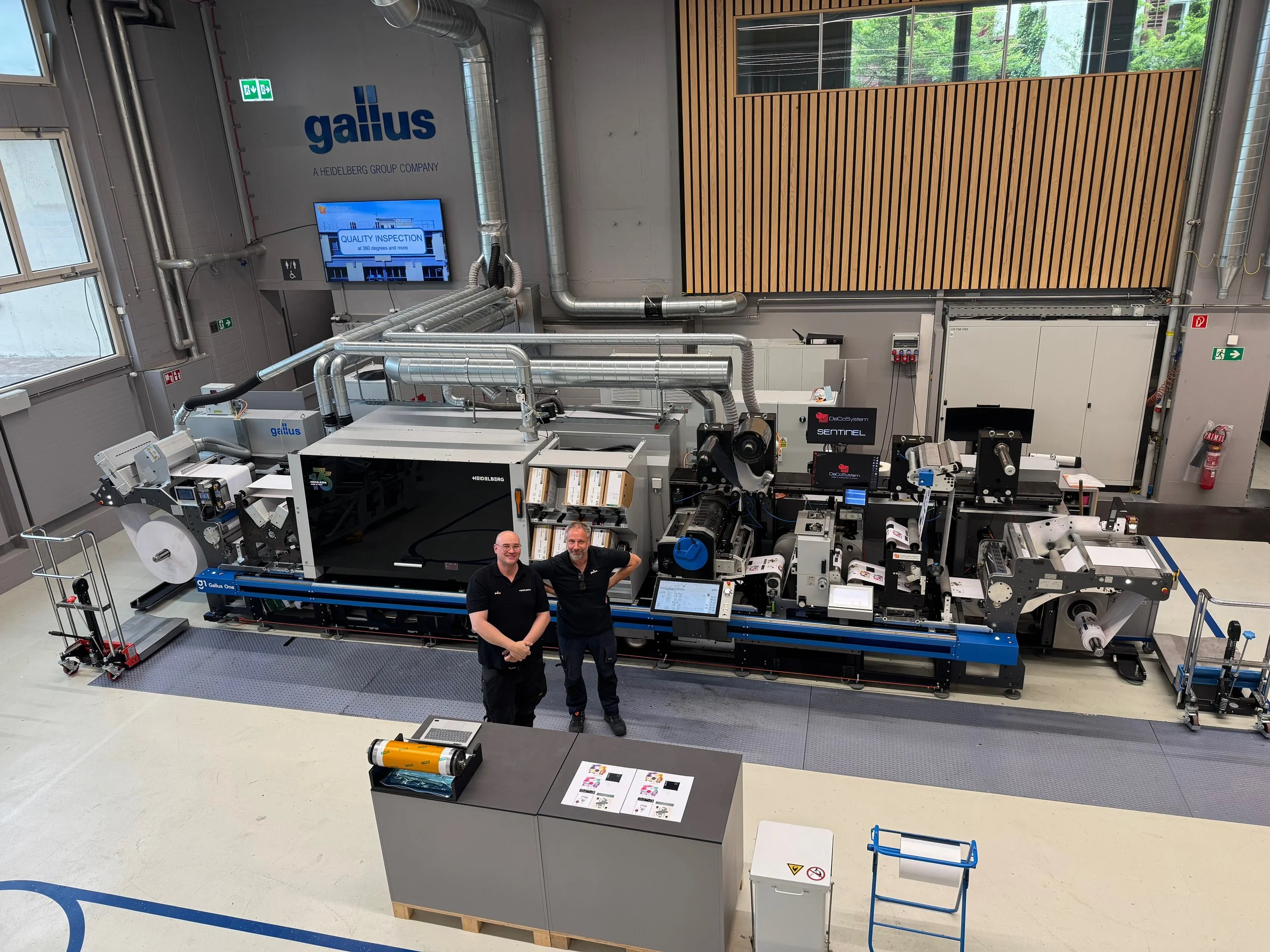
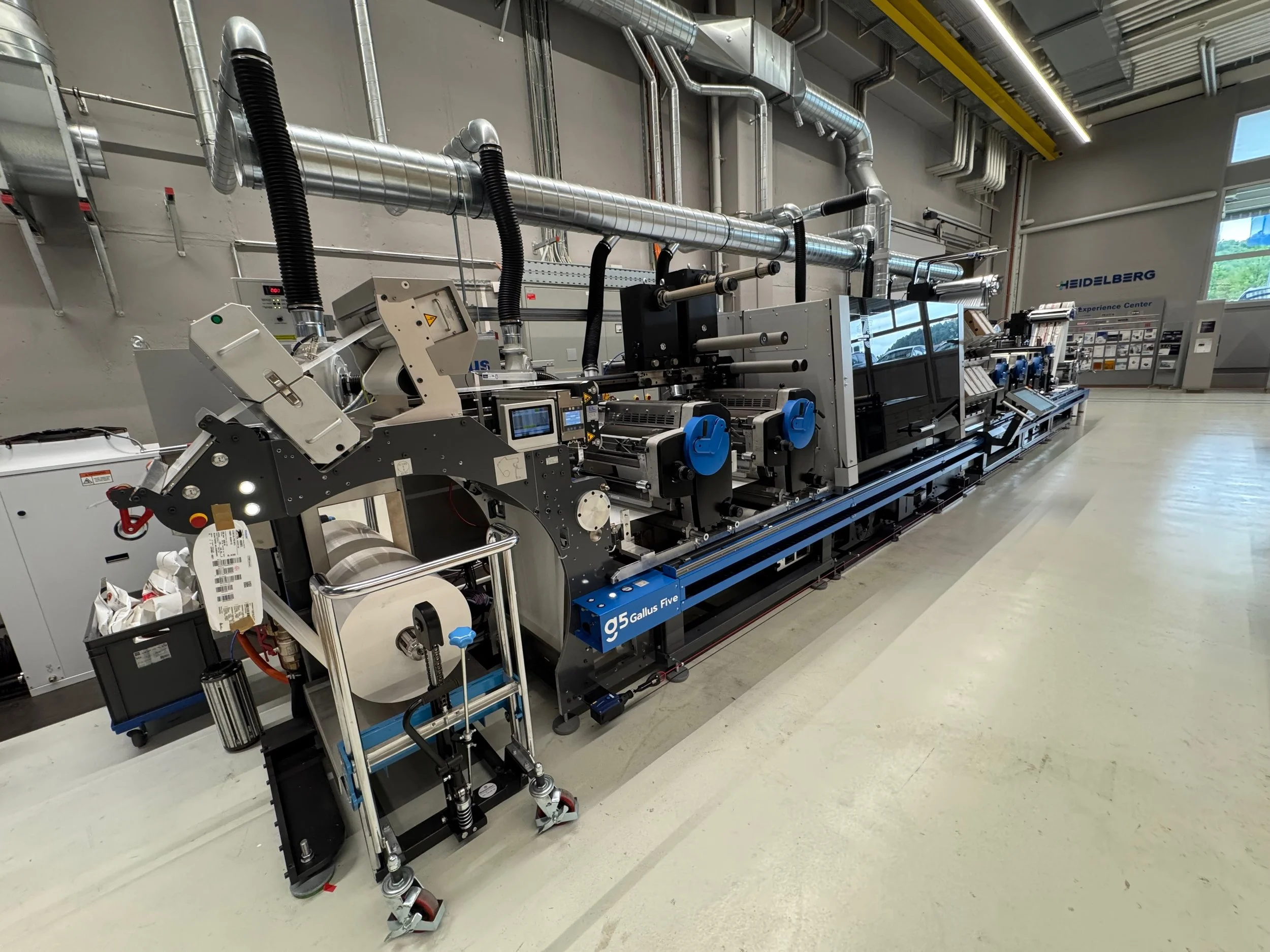
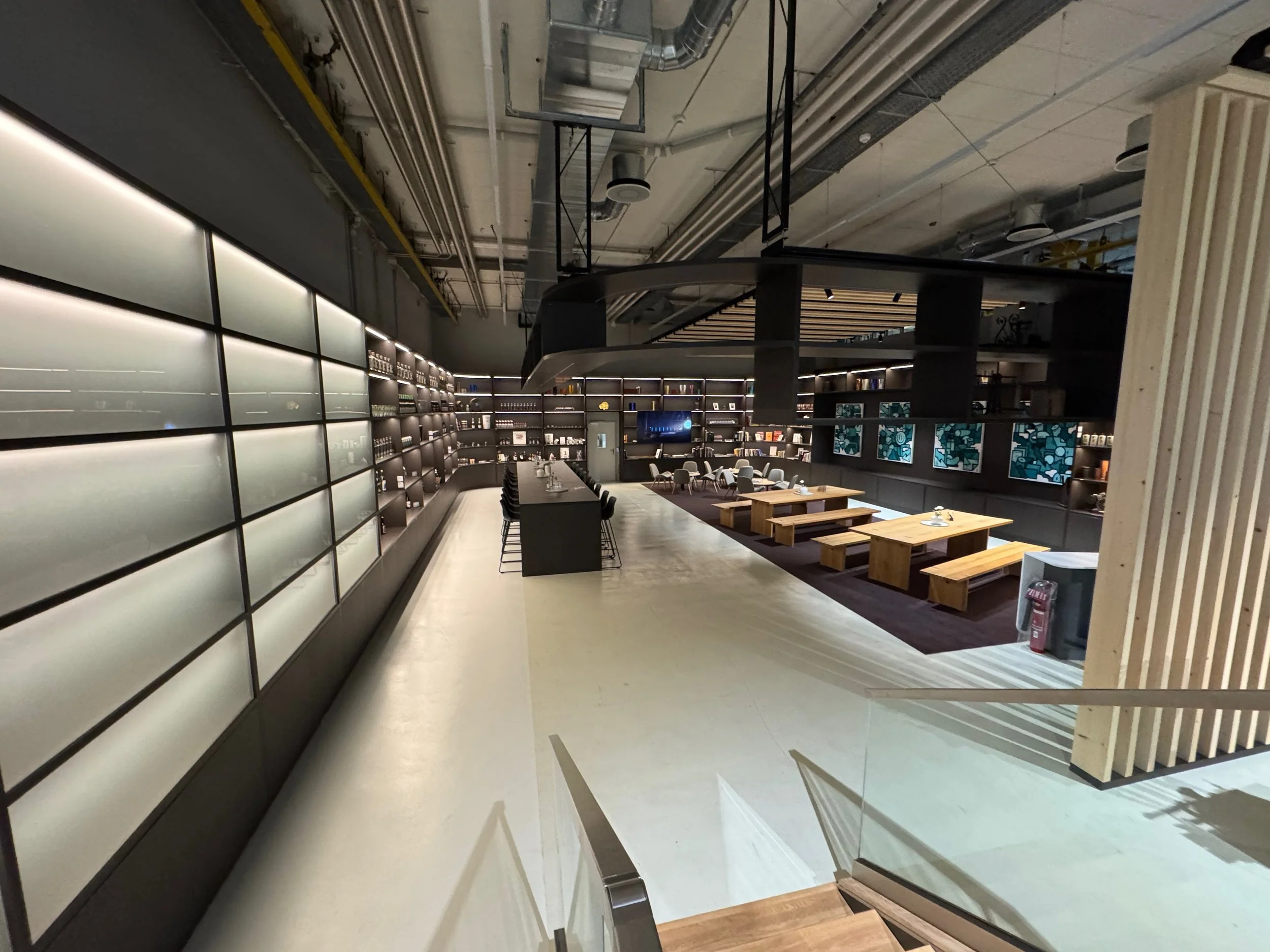
Rather than a conventional corporate facility, the Gallus Experience Center has the atmosphere of an intentionally designed community work space. With the feel of an event venue, the main hall spans 2,500 square metres, flooded with natural light and configured to encourage openness, interaction and experimentation. Machinery sits alongside hospitality areas, presentation spaces and social environments. There is even a library - a subtle nod to the famed St Gallen Abbey Library and the city’s long association with learning.
Every aspect of the space appears designed around collaboration. One particularly symbolic feature is a large circular table created specifically for problem-solving discussions. The message is clear: no issue leaves unresolved. Whether literal or philosophical, it neatly encapsulates the Gallus mindset.
This matters because Gallus is no longer simply selling presses. It is selling adaptability.
At the centre of its strategy is “System to Compose”, a modular philosophy that reflects the realities of modern manufacturing far better than the traditional model of large, fixed-capability investments. Instead of forcing converters into rigid technology pathways, Gallus allows customers to build and evolve production environments according to changing market needs.
The timing is astute. Label converters increasingly operate in a market defined by fragmentation, shorter runs, premiumisation, labour shortages, sustainability pressures and accelerating product turnover. Investment decisions have become harder to justify when customer demand can shift so quickly. Gallus’ modular approach acknowledges this uncertainty directly.
Converters no longer want fixed technology pathways in an increasingly unpredictable market. They want optionality.
Customers can invest incrementally, adding capability as required rather than overcommitting capital upfront. Perhaps most importantly, Gallus allows existing customers to evolve rather than replace infrastructure entirely, enabling converters to retrofit digital capability into established production environments. The strategy lowers investment friction while preserving flexibility - an increasingly attractive proposition in a market under constant pressure to adapt.
The commercial logic extends beyond machinery alone. Gallus repeatedly emphasises reducing total cost of ownership through automation, workflow integration and connected production environments. In many ways, “System to Compose” feels less like a product architecture and more like an operational philosophy designed around long-term resilience.
Importantly, the concept also moves beyond simplistic narratives around digitalisation. The industry has spent years discussing digital transformation, but many production environments remain constrained by isolated workflows and disconnected technologies. Gallus appears to recognise that true flexibility depends not merely on adding digital print capability, but on creating integrated systems without bottlenecks.
This is where the wider ecosystem becomes important.
Since entering a strategic partnership with Heidelberger Druckmaschinen AG in 1999, Gallus has increasingly benefited from access to broader workflow, automation and systems integration expertise. That wider connectivity is becoming more valuable as converters seek smarter, more unified production environments rather than purely standalone pieces of equipment.
Partnerships play a critical role within that philosophy. During my visit, I met with representatives from Steinemann, one of Gallus’ key technology partners. Also based in St Gallen, Steinemann exemplifies the highly collaborative culture Gallus is cultivating around its platform.
The relationship reflects a broader truth increasingly evident across industrial print: competitive advantage no longer resides solely in standalone machines. It emerges from ecosystems of trusted partners delivering integrated solutions. In labels particularly, converting and finishing are now as commercially significant as the printing process itself.
This becomes especially clear when technologies from partners such as LEONHARD KURZ are integrated into the Gallus environment. The combination expands the creative and commercial possibilities available to converters, particularly within premium sectors such as wine, spirits and luxury FMCG label printing, where embellishment, differentiation and limited editions continue to gain importance.
The Gallus technology portfolio itself reinforces this broader strategic direction. Live demonstrations of the Gallus One, Gallus Labelmaster and Gallus Five highlighted not only productivity gains, but also the degree of flexibility now embedded within the platform.
One particularly interesting innovation on the Gallus One involves the addition of the Gallus MatteJet, a breakthrough in-line matte finish technology developed for digital inkjet label printing. The system allows converters to apply a premium matte finish directly during the digital printing process, significantly reducing costs while eliminating the need for separate offset finishing machines. Particularly suited to wine and premium beverage applications, the capability provides converters with enhanced control over high-end finishes while removing some of the limitations traditionally associated with matte label production. It is precisely the kind of application-focused innovation that resonates in today’s increasingly brand-driven label printing market.
Yet perhaps the most revealing aspect of the visit was cultural rather than technological. Despite its engineering pedigree, Gallus increasingly feels like a people business first. Employees appear deeply engaged in the company’s direction, while the Gallus Experience Center itself functions less as a showroom and more as a collaborative community hub. Customers, partners and staff are encouraged to interact, learn and solve problems together.
That culture appears to be translating into real business momentum. At Labelexpo last September, Gallus achieved record-breaking levels of customer engagement and commercial traction that significantly outpaced broader market conditions. The achievement is unlikely to be accidental.
The printing industry often speaks about transformation, but genuine reinvention is comparatively rare. What Gallus demonstrates is that strategic change works best when multiple elements align simultaneously: technology, workspace, culture, partnerships and business model. Driven by a unity of purpose among its people.
The company’s recent success feels rooted in careful observation of structural market shifts rather than short-term opportunism. Gallus recognised that converters increasingly value agility over rigidity, ecosystems over isolation, and scalable investment over fixed infrastructure. It then built a strategy around those realities.
In many ways, the transformation mirrors the wider evolution taking place across manufacturing itself. The future is not necessarily about bigger systems. It is about smarter, more adaptable ones.
Gallus appears to understand that well.