
For many companies in the print and industrial coating sectors, the ongoing EU review of the RoHS exemptions covering mercury-containing UV lamps may seem like another regulatory exercise. In reality, it has the potential to influence the future of UV curing technology across Europe.
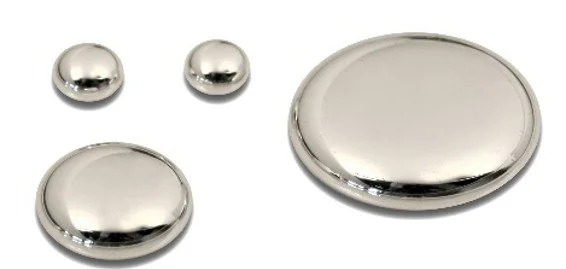
The current review focuses on RoHS exemptions 4(a)-I and 4(f)-IV, which allow the continued use of mercury-containing UV lamps in applications where suitable alternatives are not yet technically or economically viable. These exemptions underpin a significant proportion of UV curing systems used throughout the printing, coating and converting industries.
The consultation process, managed by the Oeko-Institut on behalf of the European Commission, closes on 1 August 2026. After this, a recommendation will be made to the Commission, with a final decision expected in late 2026 or early 2027.
Importantly, this is not simply a decision about whether mercury lamps remain or disappear overnight.
Thanks to Article 5(5) of the RoHS Directive, renewal applications submitted before the exemption expiry date mean the current exemptions remain valid until the European Commission reaches a final decision. This means there is no immediate regulatory cliff edge for the industry.
However, the review will help shape the longer-term direction of UV curing technologies.
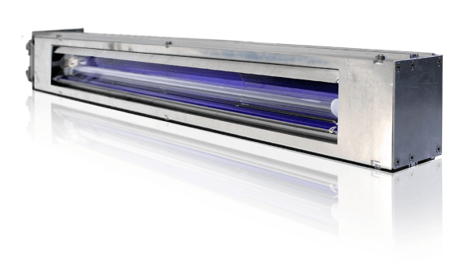
For the print and coatings industry, the discussion goes far beyond the lamp itself. It raises important questions about equipment compatibility, retrofit costs, production reliability, energy efficiency and the pace at which UV-LED technologies can realistically replace conventional mercury-based systems across different applications.
While UV-LED continues to gain momentum and the applications are increasing, it is not yet a universal replacement. Many industrial curing processes still rely on medium-pressure mercury lamps because of their spectral output and compatibility with existing production equipment. The consultation recognises that different applications have different technical requirements, and that a one-size-fits-all approach is unlikely to reflect market reality.
This is exactly why industry participation matters.
The European Commission needs evidence from manufacturers, printers, coating specialists, OEMs, formulators and end users. Decisions of this scale should be based on real-world manufacturing experience—not assumptions.
If your business designs, supplies or operates UV curing equipment, or relies on UV technology in production, now is the opportunity to contribute.
Whether your experience supports extending the exemptions, refining them for specific applications, or accelerating the transition to alternative technologies, your input will help ensure the final decision reflects the practical realities of our industry.
The RoHS evaluation committee extended the deadline for stakeholder comments on 4(a)-I and 4(f)-IV to Saturday, August 1, 2026.
If we want future regulation to support innovation while protecting manufacturing competitiveness, the print and coatings industry needs to make its voice heard.
Links to information and to submit stakeholder comments:
RoHS Exemptions: Annex III n. 4(f)-IV
RoHS Exemptions: Annex III n. 4(a)-I
If you need support in submitting your application, please contact Radtech Europe The European association for energy curing technology they would be happy to advise.
Contact: mail@radtech-europe.com
By Holly Steedman.
