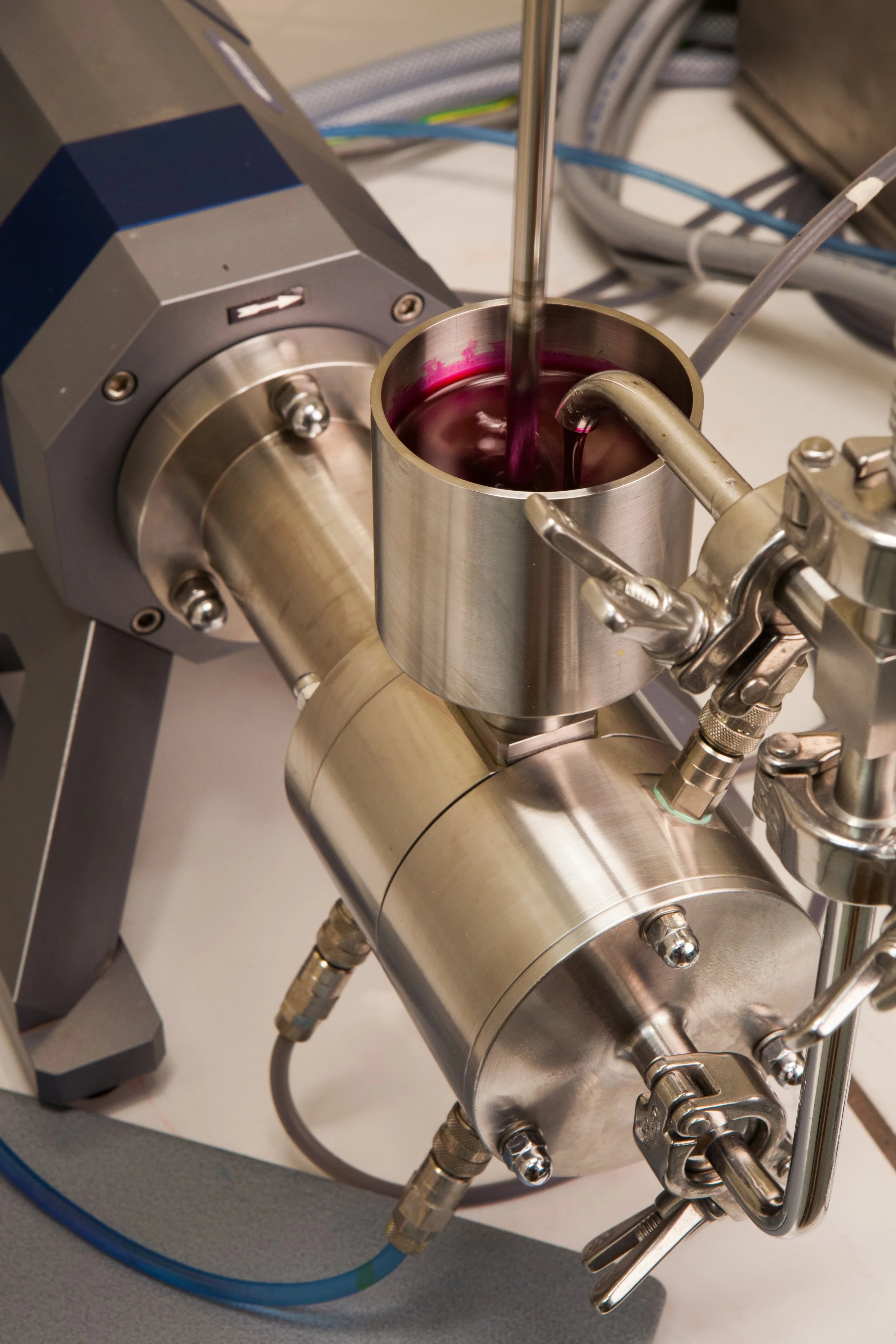
Chemstream: Optimising Pigment Dispersions for Demanding Inkjet Applications
The Belgian formulation specialist explains the basic chemistry of keeping pigment particles apart in an ink, and how tailored dispersant development helps solve demanding inkjet applications.
Colour can be introduced into an ink formulation through either dyes or pigments. Dyes dissolve directly in the liquid medium, offering straightforward formulation but generally exhibiting lower resistance to light exposure. Pigments, by contrast, are insoluble particles that must be dispersed and stabilised within the liquid. Their superior durability and colour fastness make them the preferred choice for many industrial inkjet applications, provided that a stable dispersion can be maintained.
Keeping particles apart
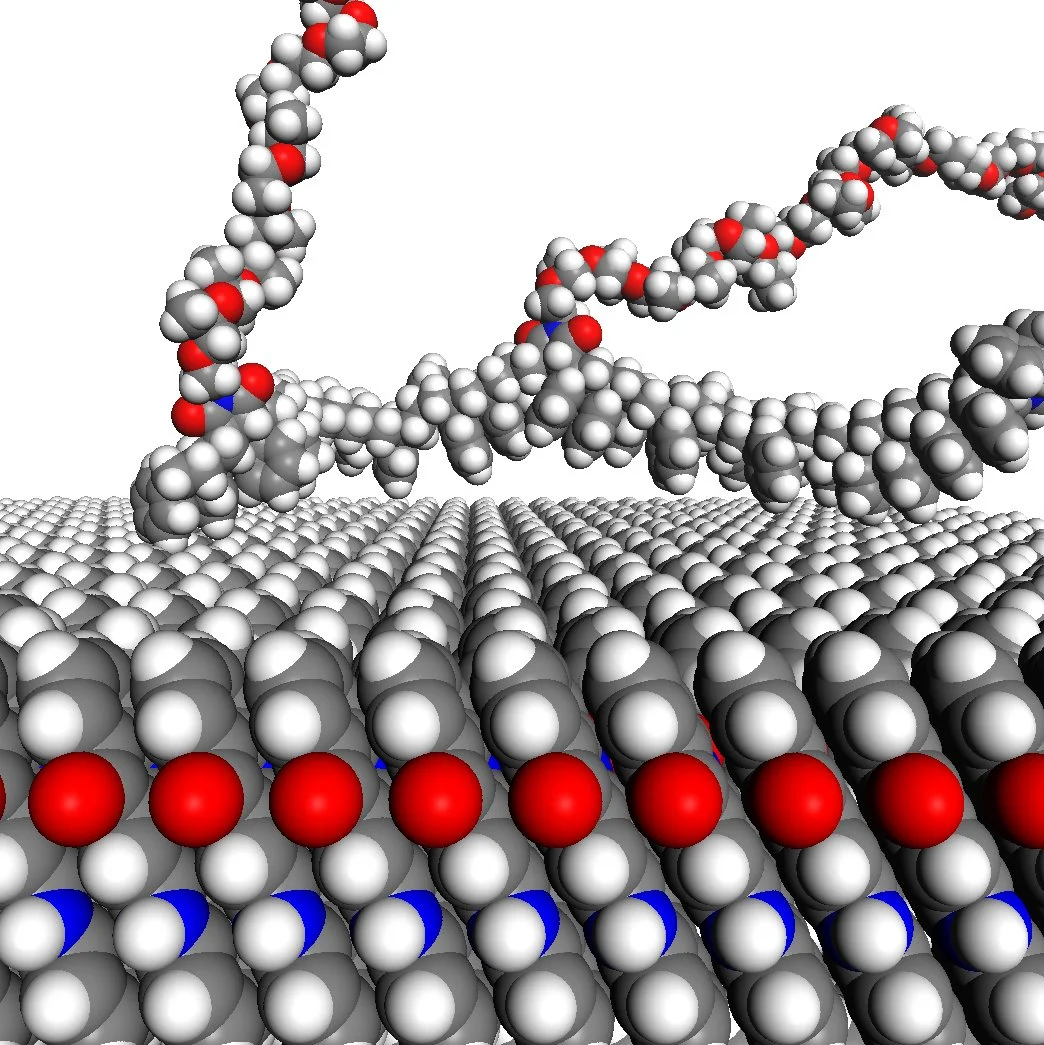
Making a pigment dispersion starts with pigment powder and a dispersant matched to it, milled together until the powder breaks into fine, separated particles. The dispersants do the real work: one end of each molecule attaches to the pigment surface, while the other, a tail, is compatible with the surrounding liquid. Together, they keep the particles apart and stop them from clumping again.
In theory it's straightforward. In practice, every pigment has a different chemical surface, and an ink formulation brings in other ingredients that can throw the balance off. As Els puts it, "there's a lot of factors that can spoil the party." As a result, successful dispersion development requires careful optimisation of both the pigment and the overall ink formulation.
Where commercial dispersants run out
Chemstream's role tends to start where standard products reach their limits. Commercial dispersants are designed for broad applicability, and Chemstream's first step is to screen what already exists, since developing a new dispersant from scratch is a bigger undertaking. Nils De Vos, who leads much of the company's dispersant development, explains that when requirements are very strict, a tailored approach can be the better route. Similarly, commercially available pigment grades are generally selected to meet the needs of the largest market segments. When customers require highly specific colour shades or niche pigment characteristics, suitable products may simply not be available at commercially viable volumes.
Customers usually arrive with a specific problem: "whenever we add it to our ink, the colour changes because of agglomeration," Nils says, or printheads begin blocking almost immediately. Sometimes the fix isn't a new dispersant at all: working from the pigment's surface chemistry, the team can point a customer toward a chemically different pigment that disperses more easily.
Where a new dispersant is needed, the same approach applies. Using in-house knowledge and computer modelling, including Hansen Solubility Parameters, a method for predicting how compatible two materials will be, the team can narrow down a direction before any synthesis happens. This predictive approach significantly reduces experimental screening efforts by identifying the most promising candidate chemistries before synthesis and testing begin. This methodology aims to reduce development time and cost significantly.
From 20 grams to 50 kilos
After modelling experiments, the development moves through several stages: broad pigment-dispersant jar mill screenings at a small scale (20 g) in order to run many combinations side by side, then bead milling at 100 to 500 mL for exploring the process parameters of the best combinations, then Chemstream's larger bead mills, up to a 50kg batch, enough for roughly 250 litres of finished ink, sufficient for pilot lines and small production runs. Alongside particle size, the team runs rheology, filtration and stability testing to confirm a dispersion holds up over time.
Chemstream also develops inks, so where the dispersion and ink are designed together, the two can be matched exactly rather than one adapted to fit the other afterwards.
The real economics of custom development
Custom development is a structured, step-by-step process. A project typically runs to around a year, depending on how demanding the particle and application are, and the investment sits mainly in this phase, where the dispersant is designed around the specific application rather than chosen from an existing range.
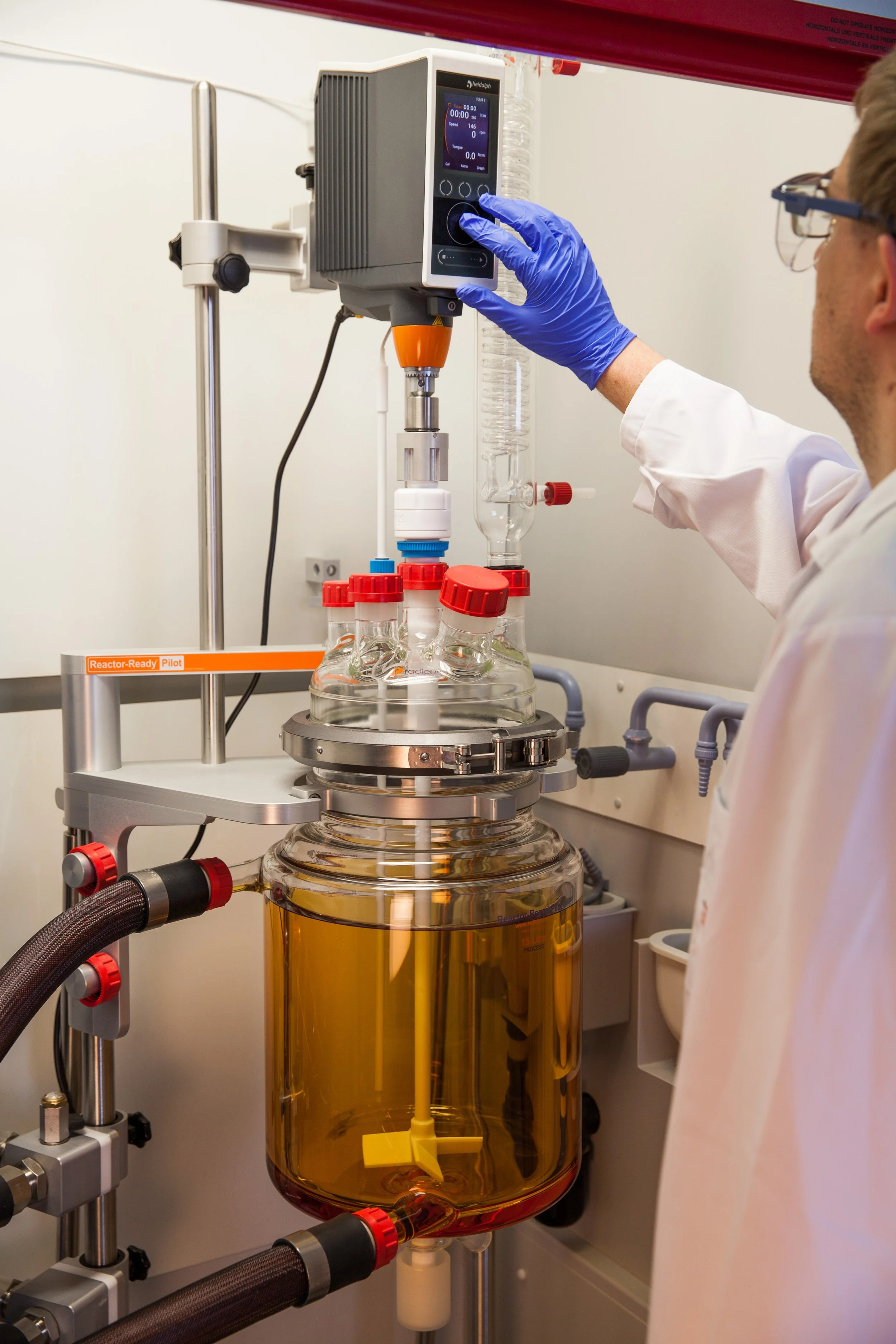
Once development is complete, the finished dispersion can be produced at a cost in line with commercial alternatives. "When we compare the pricings now at a much larger scale, there's really not a lot of difference," Nils says. Optimising the milling process helps keep production efficient, and some dispersions are later scaled up by a toll manufacturer without any noticeable change in price to the customer. The investment is in the development itself, which is what makes the application work.
In Chemstream's view, the systematic development methodology offers a substantial advantage in developing new applications, both by accelerating the development trajectory and by opening up new application fields, made possible by the highly targeted approach.
A developing range of its own
Alongside custom development projects, Chemstream established its proprietary line of dispersing agents, grown partly out of funded research. This dispersion line is called Dispersense, and the portfolio currently focuses primarily on water-based systems.
Dispersense is designed to combine stability with broad applicability. Chemstream says the range holds up across a wide spread of pigments and particles, and needs less of it for the same performance, saving material and milling time.
The next stage is bio-based. Most commercial dispersants, Nils notes, are built on petroleum-derived components, and a bio-based dispersant paired with a water-based ink makes the system meaningfully more ecological. It isn't a shipped product yet, but there's real work behind it. As an example, organic pigment dispersed in soybean oil, using an almost entirely bio-based agent, held its particle size and viscosity steady for several months at room temperature and a week at 80°C. Nils presented this work at the Advanced Inkjet Technology conference in Fribourg in January 2024.
Beyond colour
Looking ahead, Els and Nils point to water-based systems as generating the most enquiries right now, since they're generally harder to stabilise than UV-curable inks.
The bigger shift, though, is away from colour altogether, where performance depends on precise dispersion and long-term stability rather than visual properties. Emerging applications include: carbon nanotubes and other conductive materials for printed electronics, quantum dots, and other functional particles needing similar stabilising chemistry as a pigment particle, applied to a different problem. Not being tied to one application is part of what lets the team carry what it learns from one project to the next.
By combining formulation expertise, predictive modelling and custom dispersant development, ChemStream aims to help customers overcome challenges that conventional, one-size-fits-all solutions cannot always address.
This piece follows on from our earlier introduction to Chemstream, Where Inkjet Begins. Find out more about Chemstream's work at chemstream.be.