The rise of the robots in wide-format printing
An article by Holly Steedman, IST Intech
FESPA Barcelona -it has been 14 years since FESPA was last in Barcelona – I know I could not believe it myself, and I was there in 2012 – I checked out some old pictures and the first thing you notice is suits, ties and high heels were still everyday wear – but in print years it does not feel like 14 years ago- time flies when you're having fun – so what has changed since then?
To sum up, what we are seeing now at the trade shows you can see that over the past 14 years, wide-format digital printing has transformed from a niche graphics-printing technology into a highly automated, production industry serving not just signage but also now décor, textiles, packaging, and industrial applications. So what did I see at Fespa to support that summary.
There is always a different mood to trade shows when they take place in warm, sunny locations like Barcelona. Everyone has an extra spring in their step- sun shining, good food, cold drinks, even delicious ice cream in the food trucks gives summer holiday vibes, and immediately everyone is more relaxed. It is interesting as this first thing I noticed that the halls seemed quiet- I was not overwhelmed by the whooshing of a carriage or hum of a vacuum bed – printers seem to have got quieter these days or there is less print action at the show or is it because of the shifting focus and the change in buying habits- fewer people come to look at a new machine now. They have already done their research online, watched videos and testimonies, and visited an open day or a demo centre to test their materials firsthand. So, what are people visiting for these days? People are still looking for what is new and exciting, but it's moving away from machines and toward Technology and the future.
So aside from the holiday vibes, what were the main themes at the show- automation, sustainable materials, workflow integration and streamlining processes – sounds a bit different from 14 years ago when the headlines were the printers and the developments on speed, resolution, colour gamut?– who had thought that. But it makes sense in this maturing market that faces many challenges at the moment.
We know from the numbers that the amount of print produced in these markets is decreasing – that speed is not always the key point. Topics such as skilled workers to operate the machines, cost reduction, workflow optimisation, and recycling regulations are more relevant in these.
Employment in the global printing industry declined by 14.8% between 2018 and 2022, according to Smithers. It was not just a covid effect it has not recovered. At the same time, industry reports highlight persistent shortages of skilled labour, particularly in digital print operations, driven by workforce ageing and increasing technological complexity. (Smithers, The Future of Printer Demographics to 2028 and industry commentary from Specialist Printing Worldwide)
So, the wide-format market is experiencing a paradox: while employment across the broader print industry has declined, demand for skilled digital print operators remains strong. Automation and AI will reduce routine manual tasks in wide-format printing. Still, there will be an increasing demand for operators with skills in workflow management, colour management, software and automated production systems.
There has been an overall decline in printing equipment machine sales, or markets have shifted, affecting different regions. In wide format, we see that effect, as it has shifted toward fewer, more productive, and highly automated digital systems, with growth increasingly in less mature application areas like décor, packaging, and industrial applications.
Speed is not 100% out of the picture, but in high-volume segments such as industrial inkjet, packaging, and textile printing, productivity remains key.
So, for many PSPs in graphics and signage applications, the question is now: "How many jobs can I get through the factory with the people I have?" rather than "How many square metres per hour can this printer produce?" So how does that die in to the industry and one big question: Is software becoming more important than hardware specifications?
For those machine junkies, it is hard to swallow; I am one of those. The physical part is what draws me to this print world – the feel of the print, the sound of the machine, the glow of the curing lamp- but there is no way to deny it, the future of this industry relies on making it function in the new world, and that will be smarter, more analytical and data-driven.
The actual print will remain the same tactile, emotionally filled part of the process, but the rest will become less human. The machines will run without the need for a human operator, print quality will be automatically controlled, machines will undertake more preventive maintenance, learn more about print processes, and ultimately may be more knowledgeable than the average print operator. How far will this go, I wonder? Will this become more accessible from an investment perspective? That's a look at the big names at the show, summarising their messaging and main takeaways, and seeing how they align.
HP — the message was "connected production".
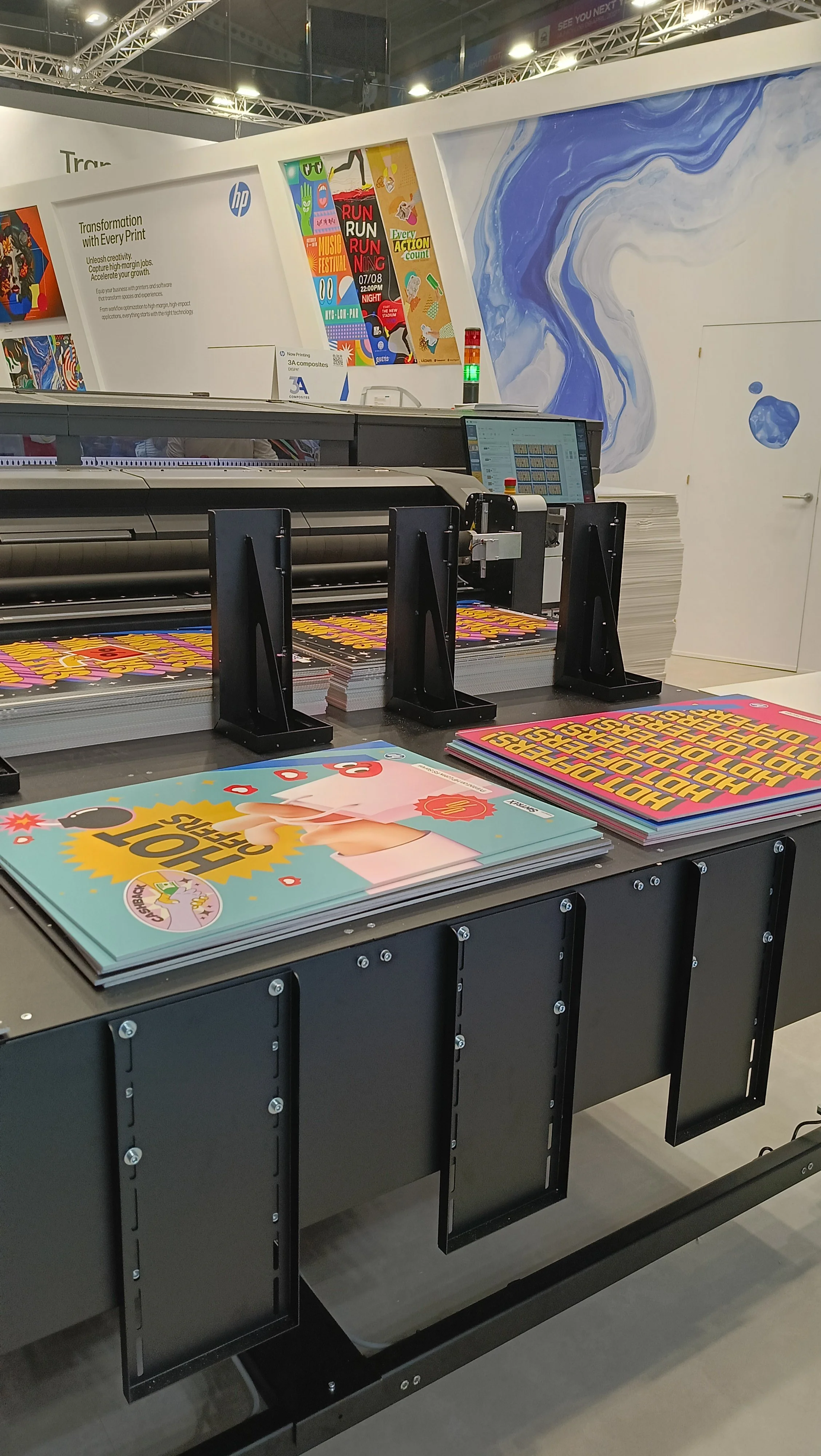
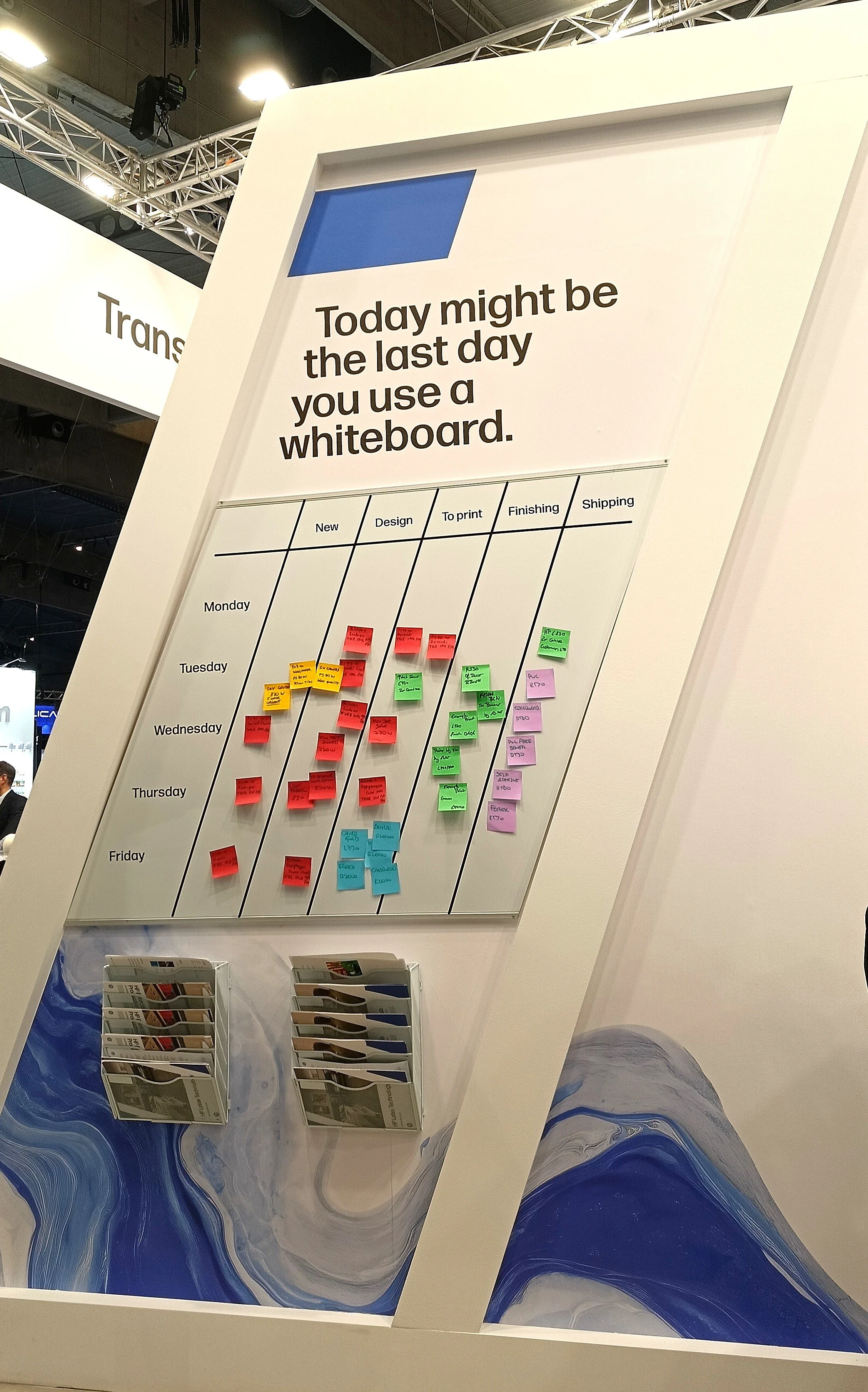
Their story was that workflow automation and end-to-end production visibility are becoming strategic differentiators.
They presented this by showing Neolt Factory's integrated rigid media automation system built around the HP Latex R2000 and the Neolt Factory automatic sheet feeder, and also demoing their Print OS production hub software.
Durst Group — the message was "One Integrated System. One Production Platform."
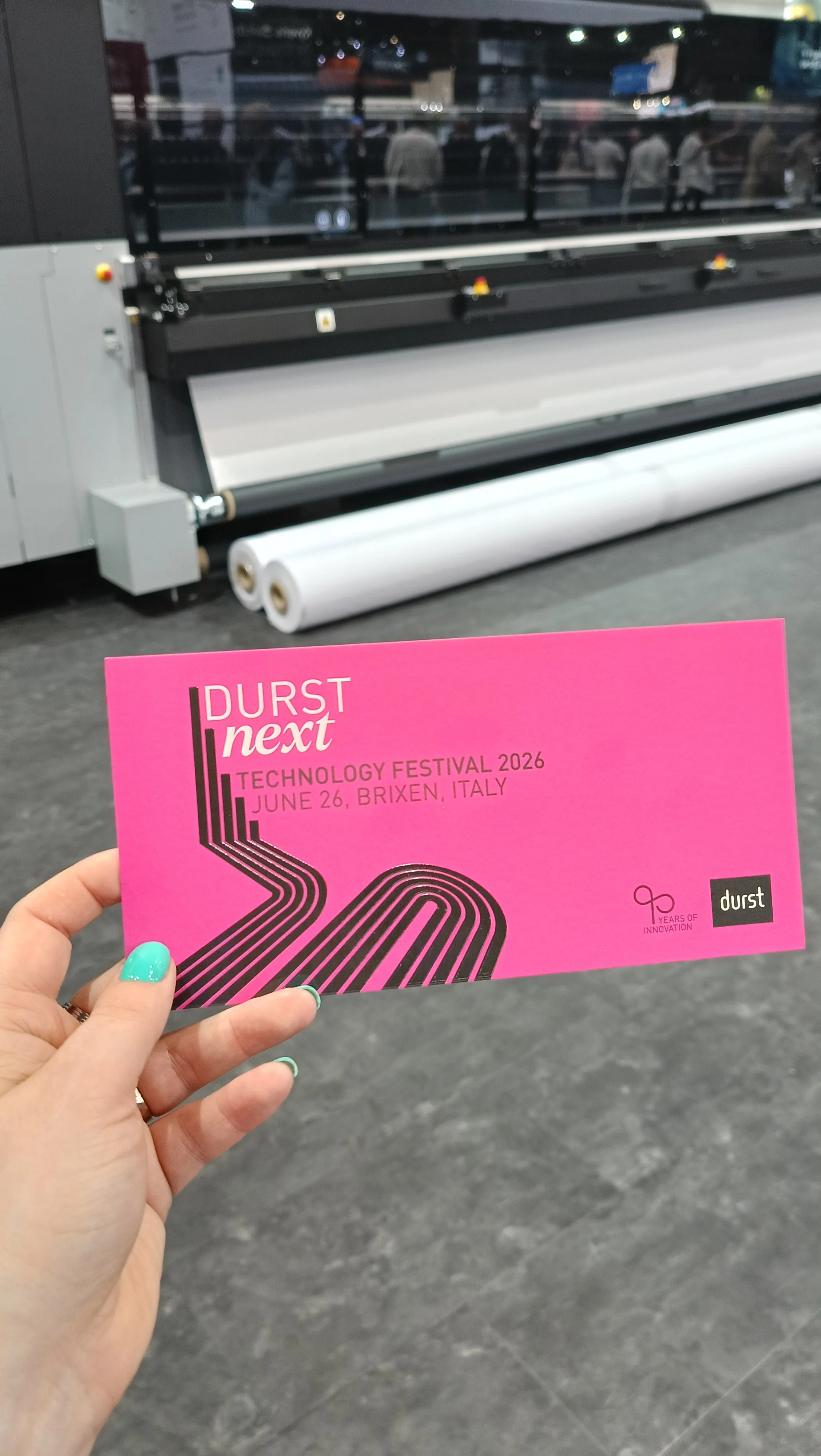
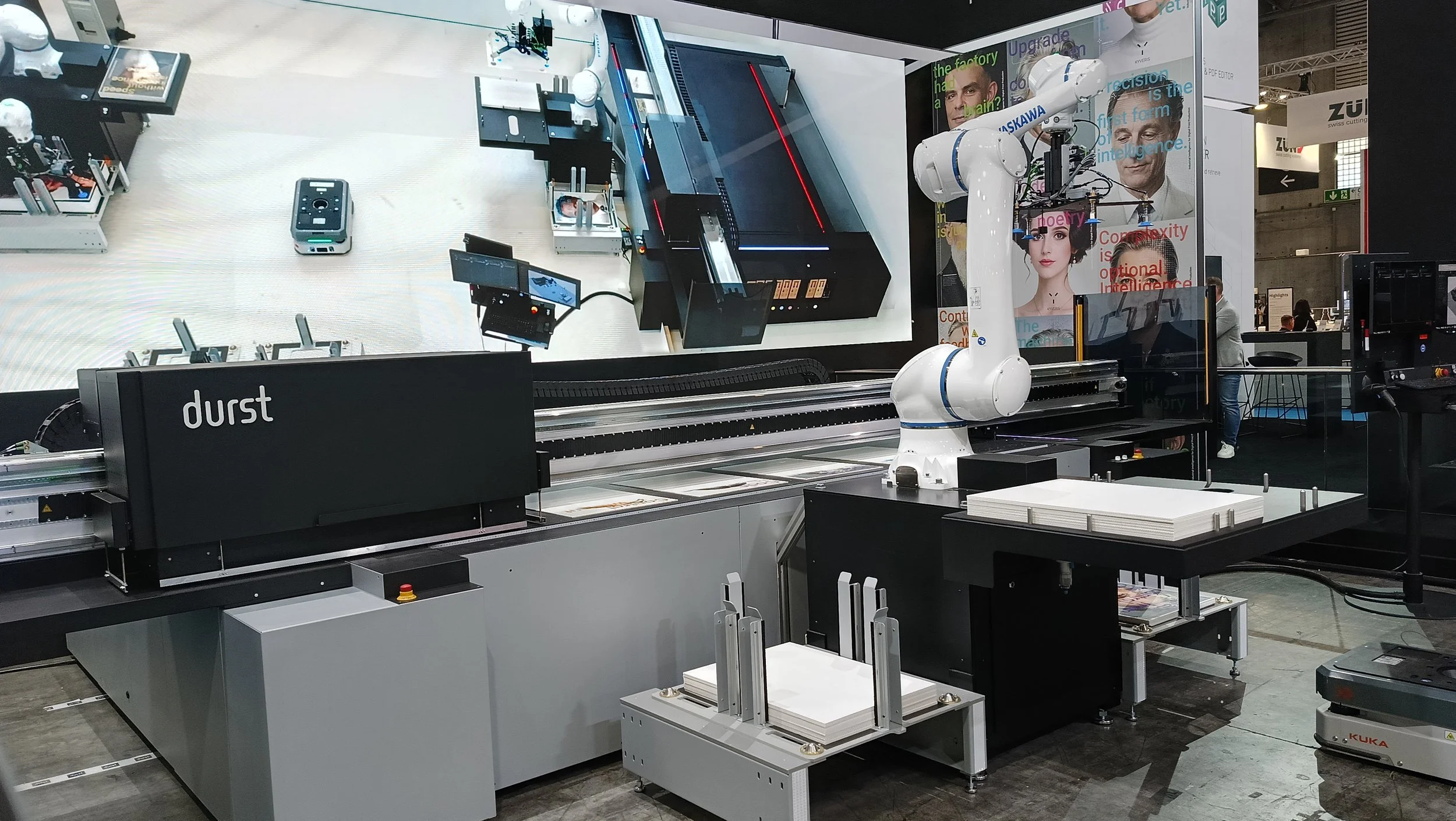
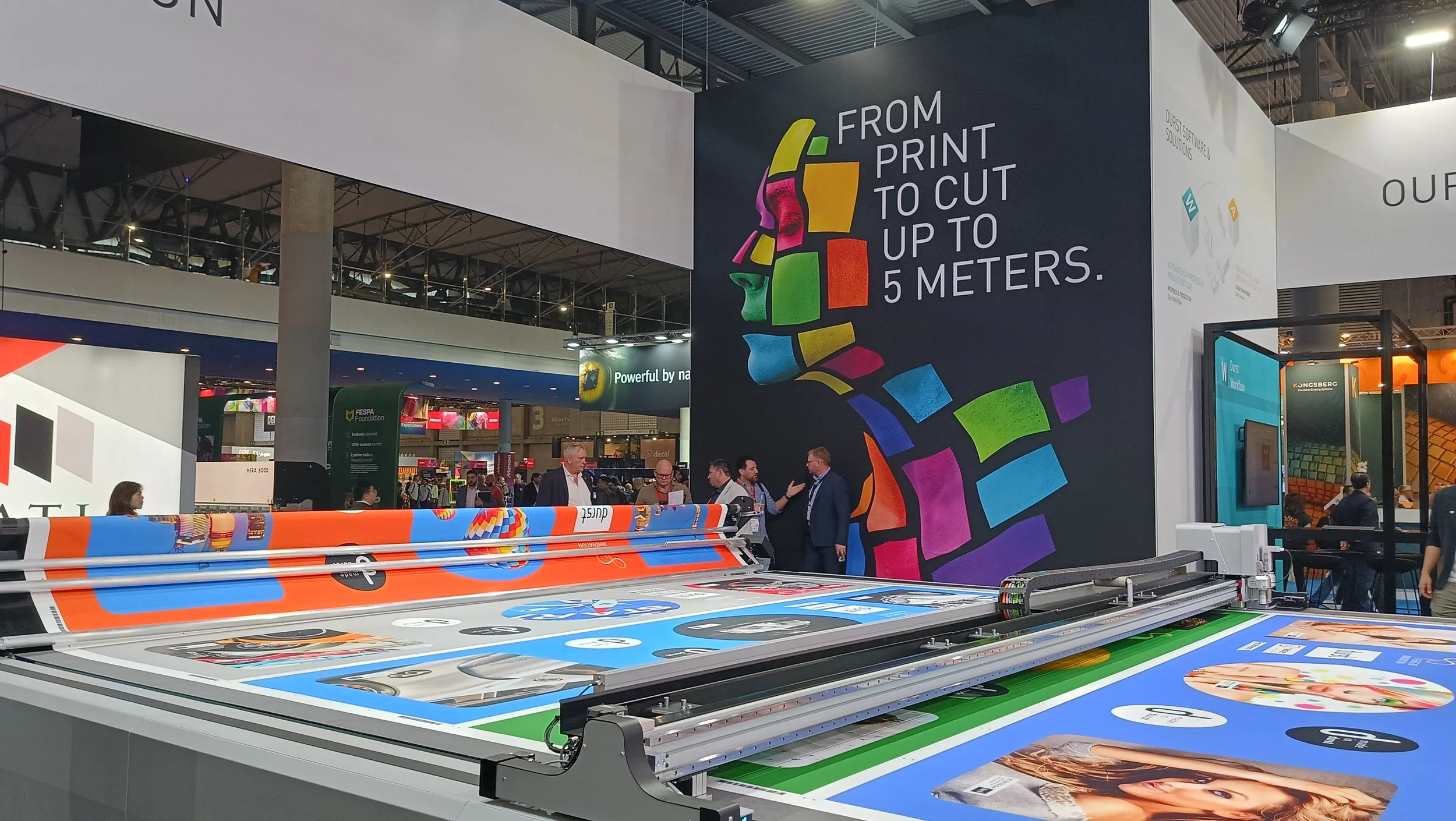
They showed this through the Kyveris Sandbox vision in a live demo and the Open Software Initiative.
The platform connects machines, jobs, materials, and production data throughout the workflow. The substrate is placed, printed, and moved to the sorting station by robots; only the finished prints are then sorted and checked for print quality with a camera system and sorted into jobs. The digital twin continuously updates using real-time data, accurately mirroring the behaviour, condition, and performance of its real-world counterpart.
Part of the Kyveris ecosystem is the Open Software Initiative (OSI), which provides open APIs and documented interfaces that enable integration with MIS, workflow and finishing systems. Interesting, rather than locking customers into a proprietary environment, the aim is to allow PSPs to connect existing software and equipment. Durst will go into more detail on the technology during their upcoming Technology Festival in June.
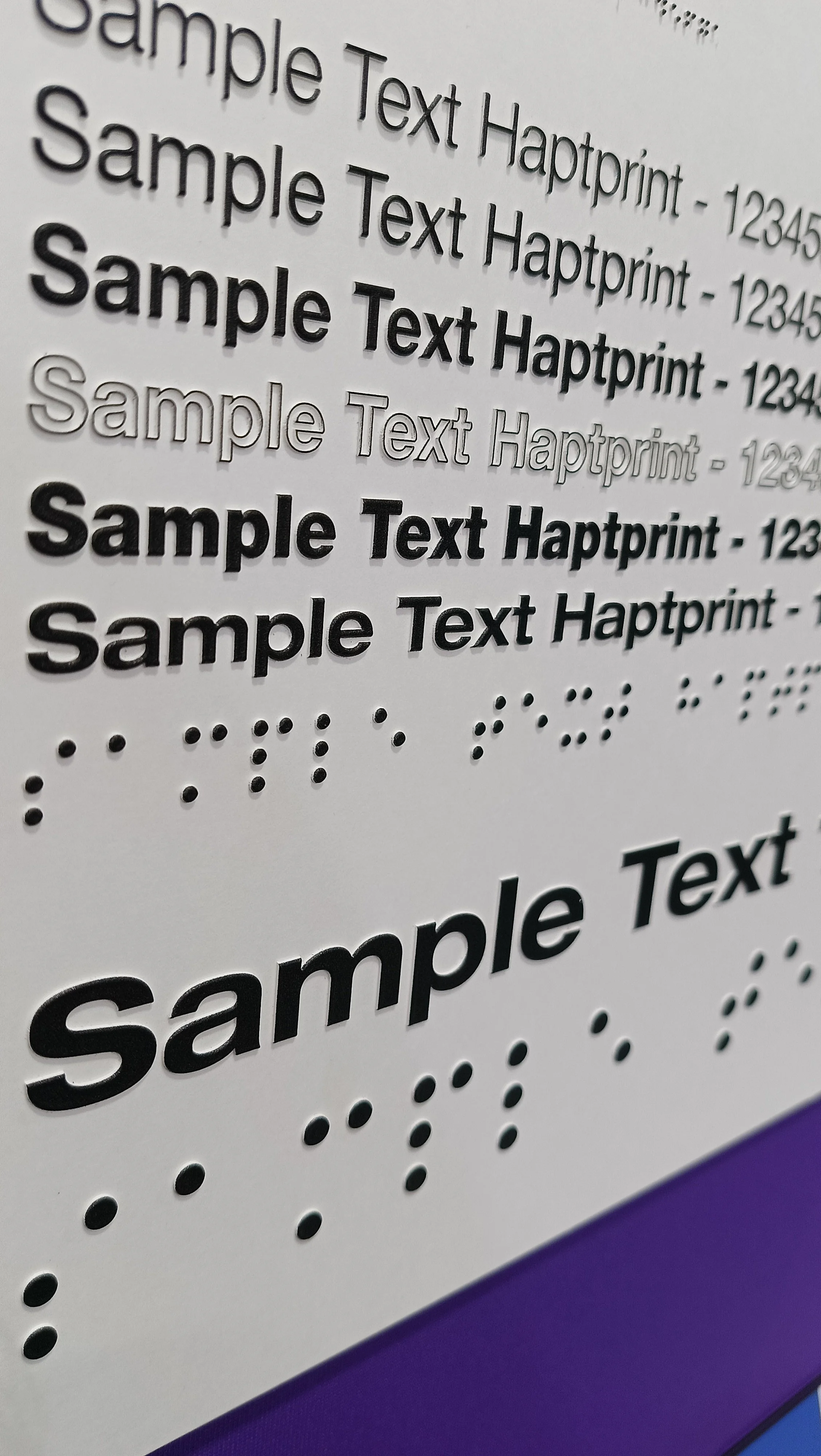
Canon — the message was "The Power to Move" and showed an interesting software, AI Tactile Studio. A workflow allowing customers to create textured and tactile prints using AI-assisted processes.
EFI focused on automation and analytics, with the key narrative of reducing manual intervention and maximising uptime.
Mimaki — was all about application diversification with its message of "Powering Possibilities", which reinforces the future growth opportunity in wide-format, which is increasingly in an industrial direction.
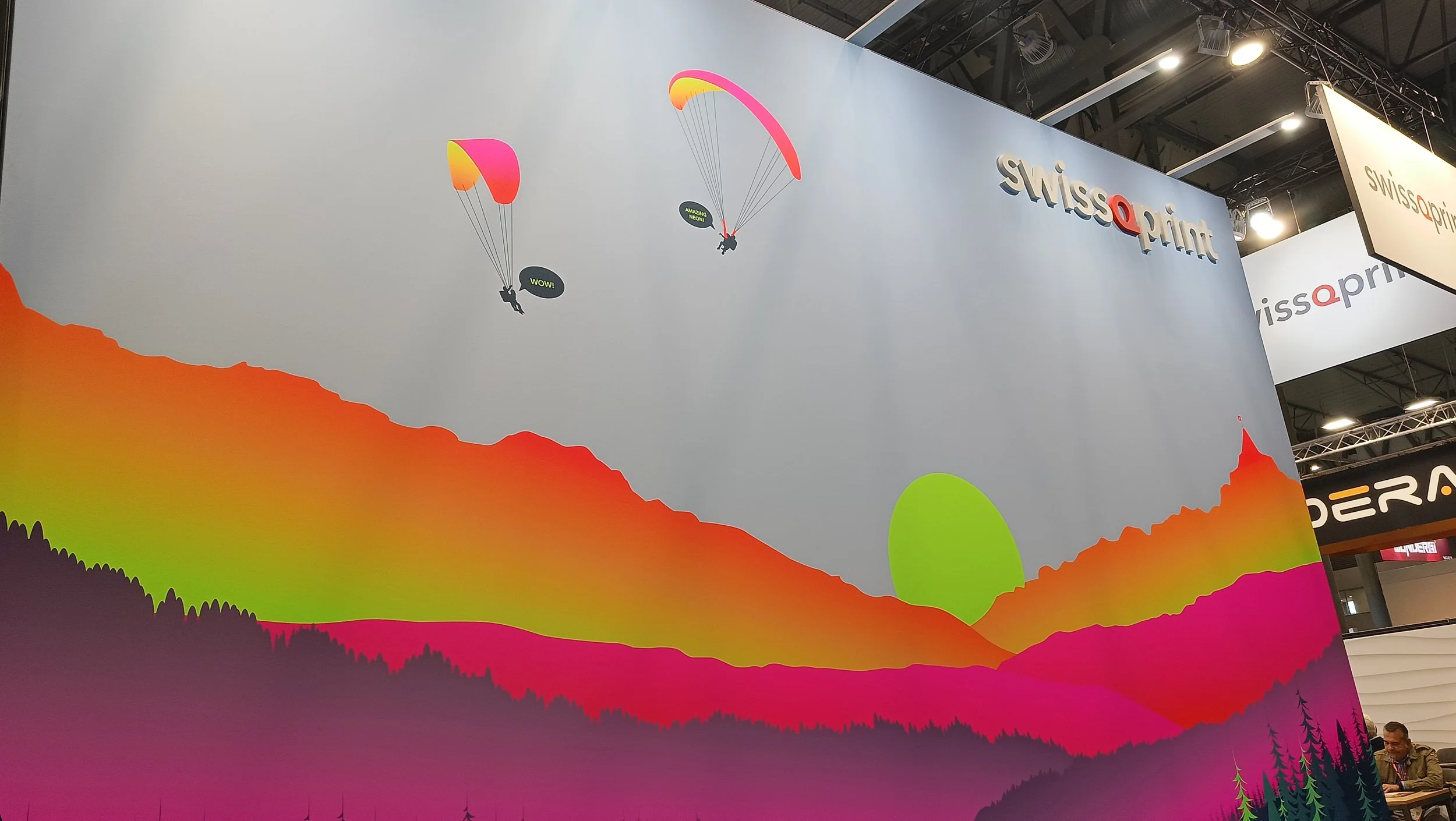
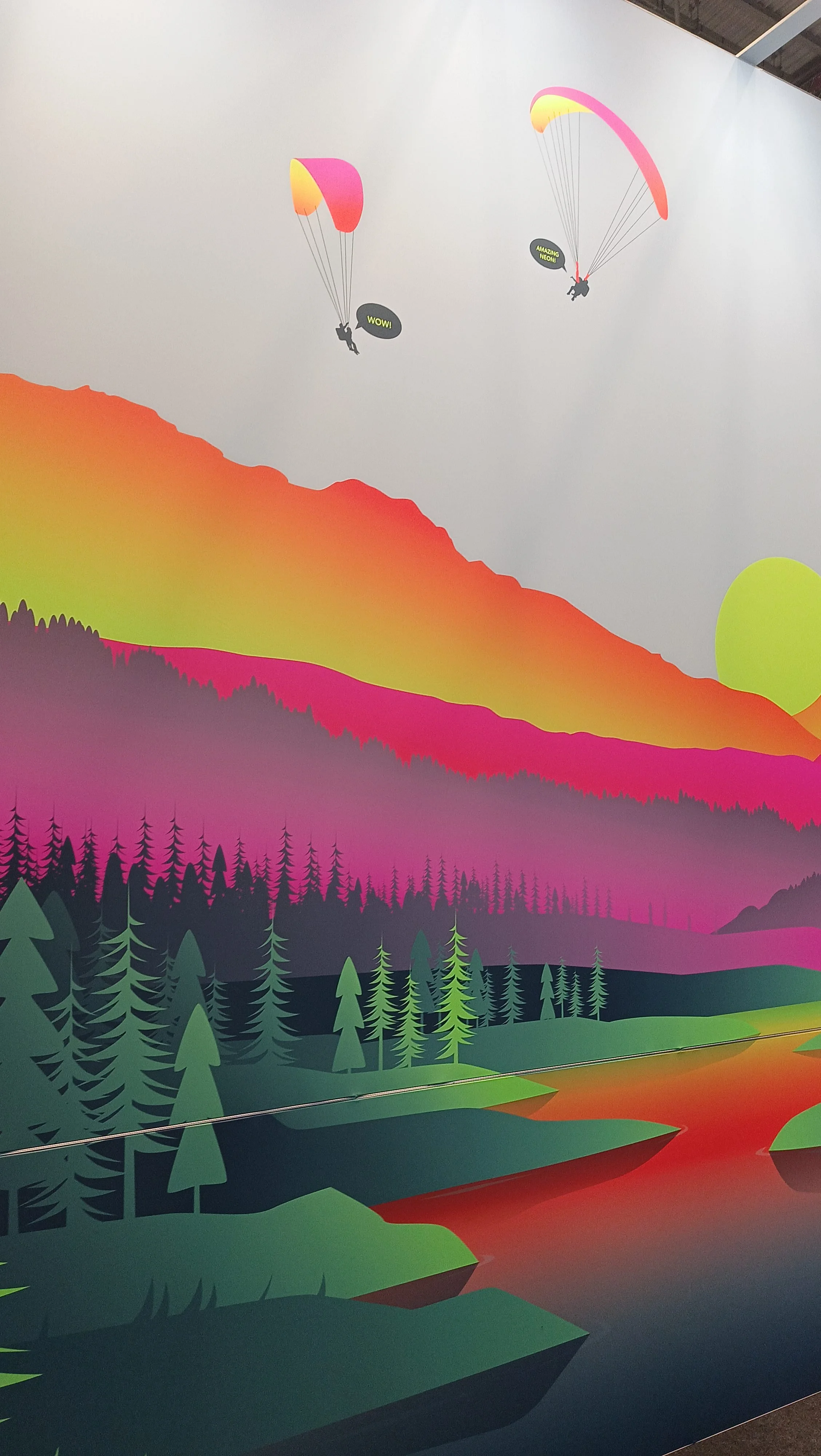
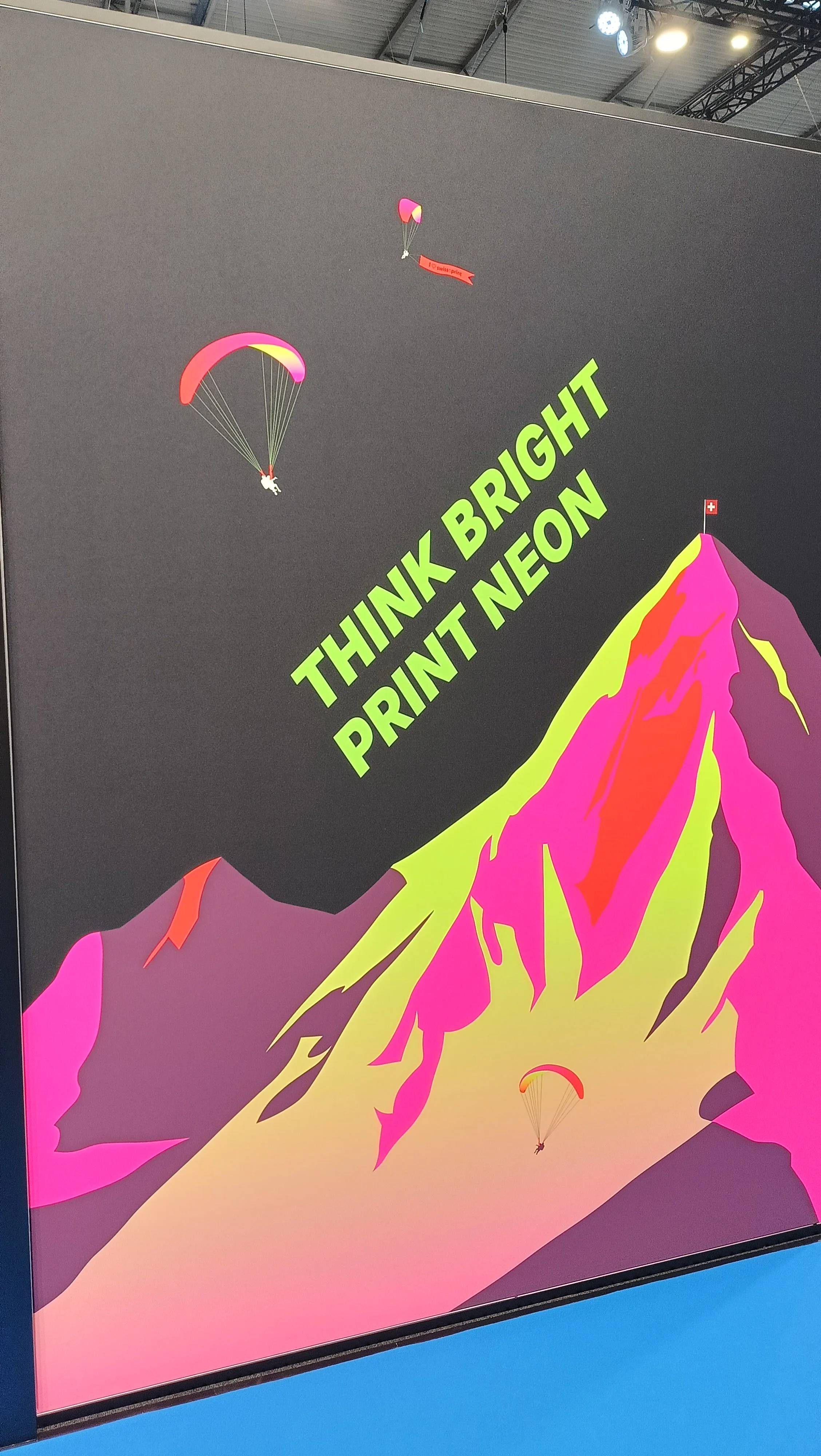
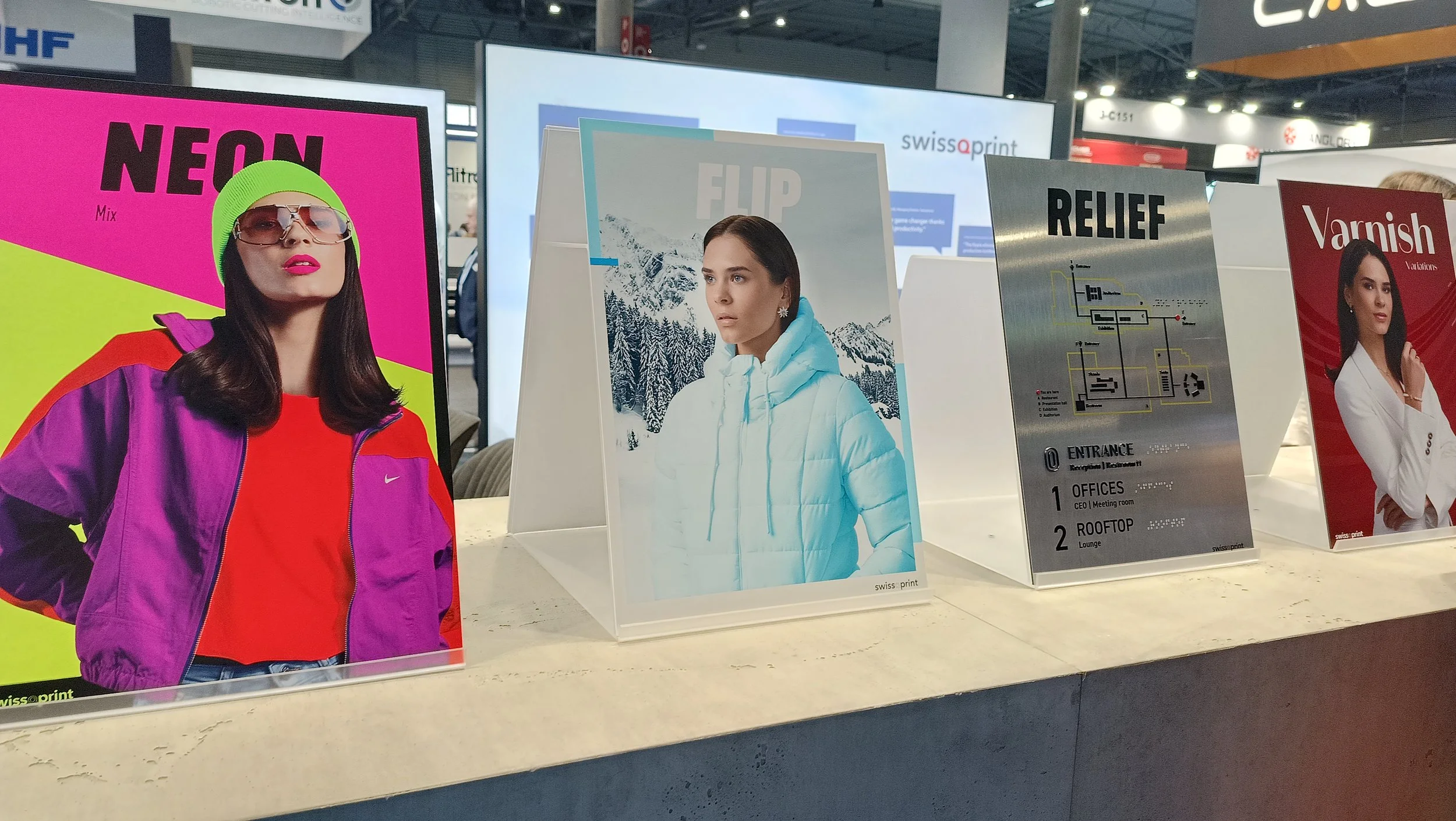
SwissQprint — messaging focused less on headline speed and more on pushing ROI, uptime, and profitability, with an emphasis on high productivity through stability and versatility. With beautiful print quality, the application gallery showcased the creative potential of large-format printers. The neon prints and stunning colour-changing were really eye-catching.
Agfa — The cowboy theme around the Bronco launch certainly caught the eye - who was brave enough to have a go? The European debut of the Jeti Bronco H3300 HS alongside the Jeti Tauro H3300 UHS, Onset Panthera and Asanti workflow software.
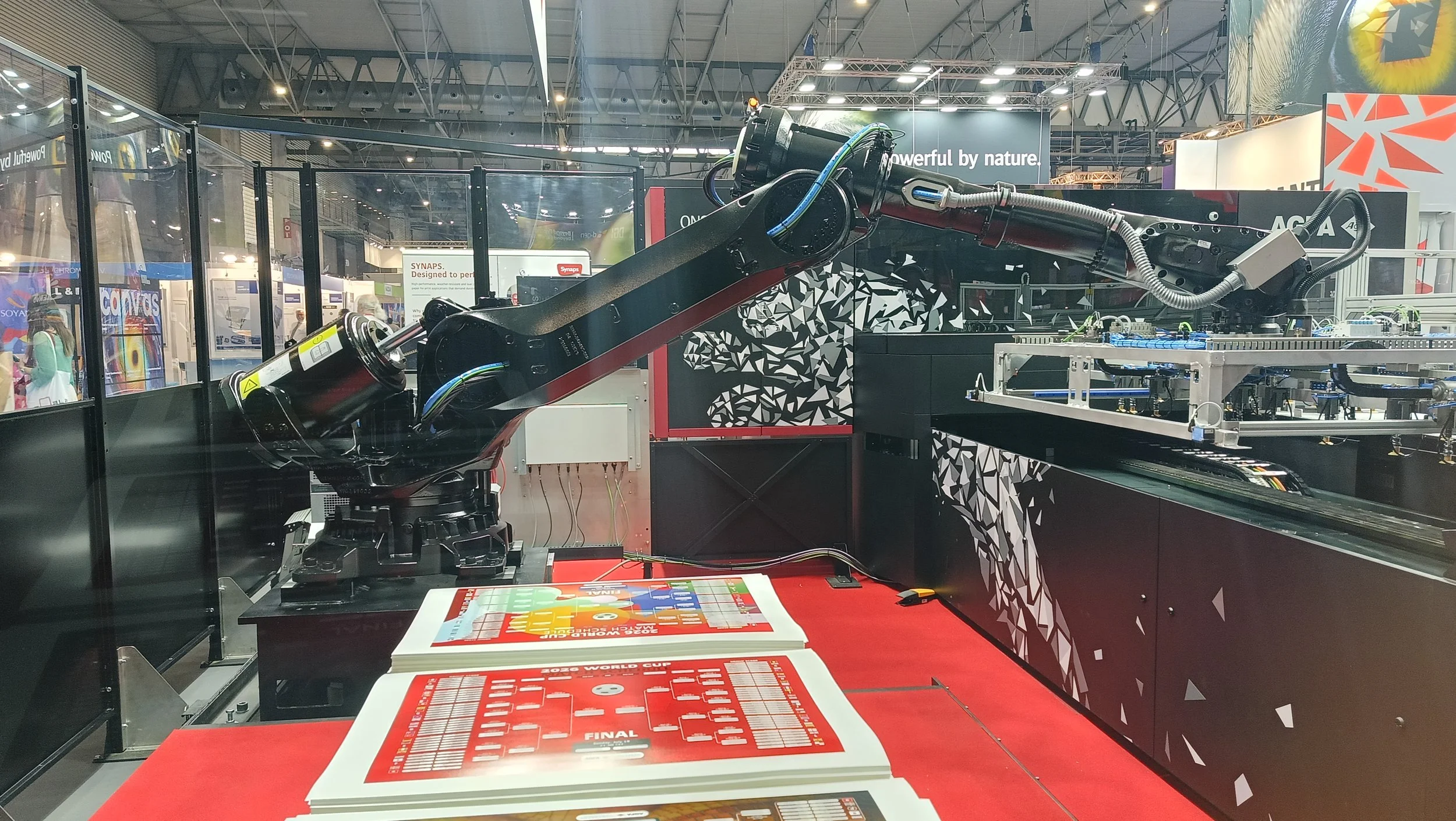
An interesting example of the Asanti 8's StackFlow feature is that it automatically sorts printed jobs by delivery location. It sounds simple, but when you're producing a campaign for multiple destinations, reducing manual handling and sorting can save both time and mistakes. Again, the theme wasn't simply faster printing, but making the whole production process run more smoothly.
But it's not just printer manufacturers where this is becoming critical; I've never seen so much emphasis on automation in post-processing/finishing equipment.
Robot Factory, discussed their partnership with Zünd, how finishing automation is becoming more critical, and how the return on investment is faster than you might expect. The system they had on show was around 150K EUR.
Their CEO, Jacob Hansen, made the point in an interview (inkish TV) that:
Labour shortages and rising labour costs are making robotics economically attractive much earlier than many PSPs expected.
Kongsberg had a strong message: Automation driven by customer pain points
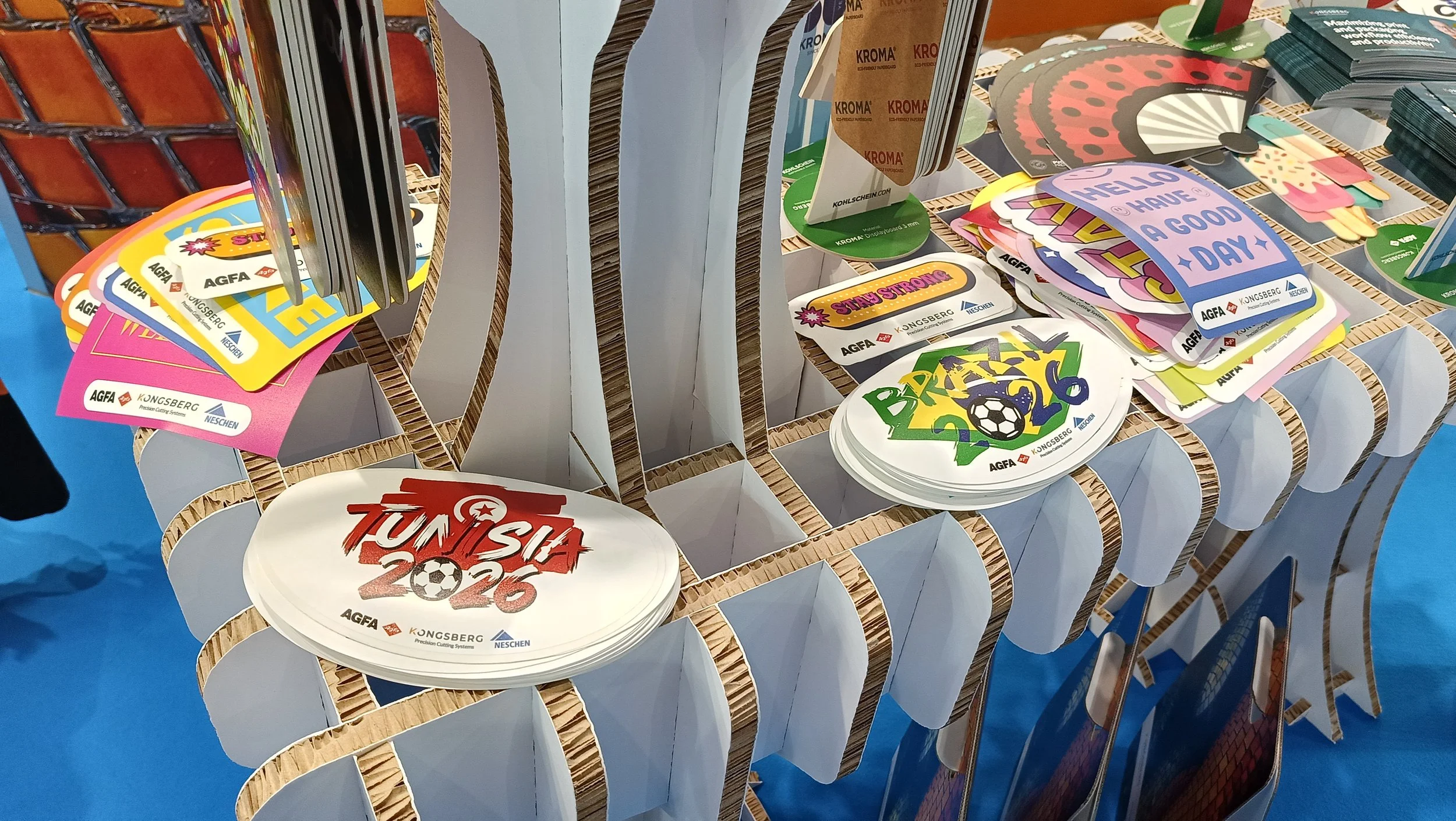
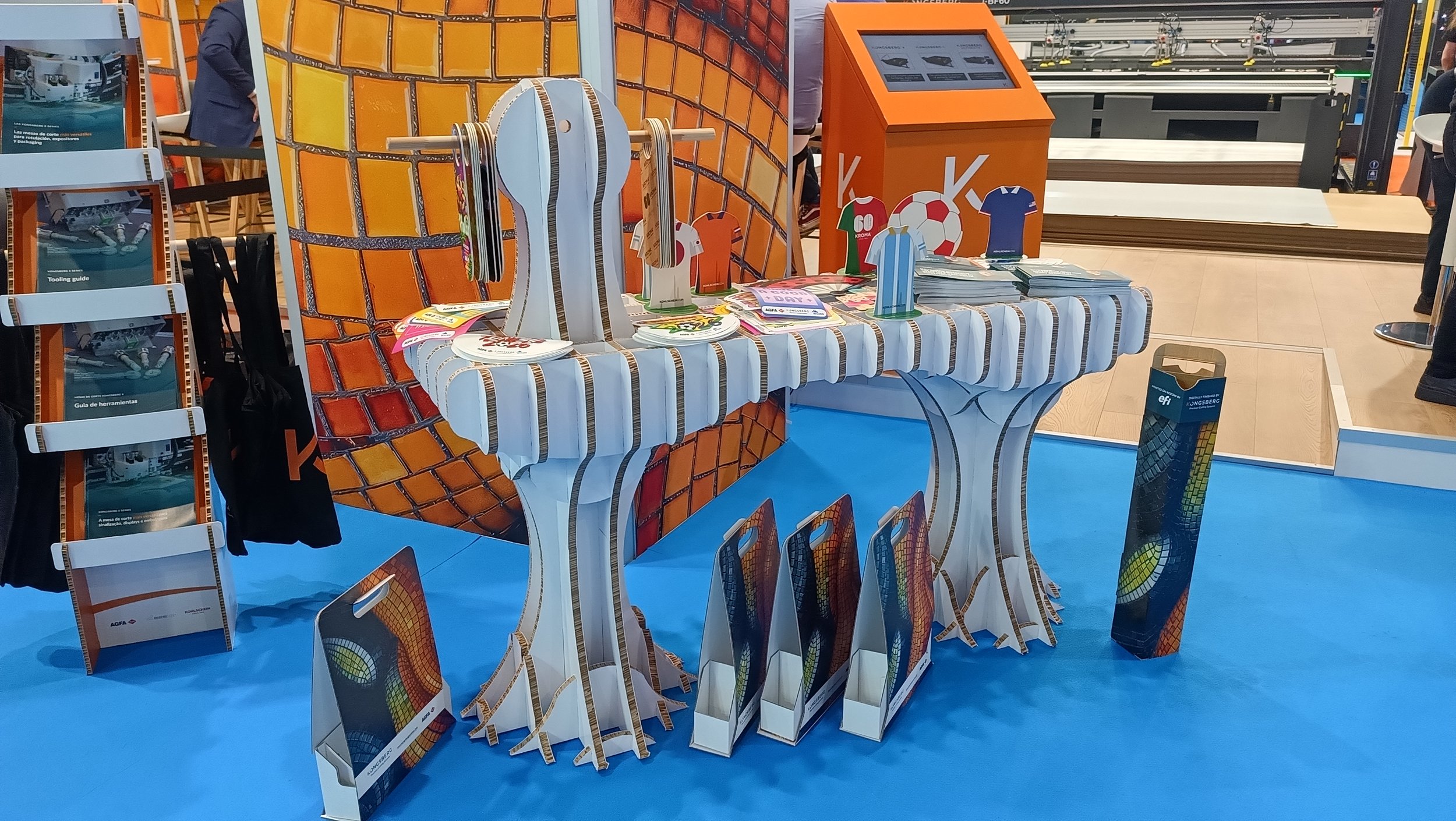
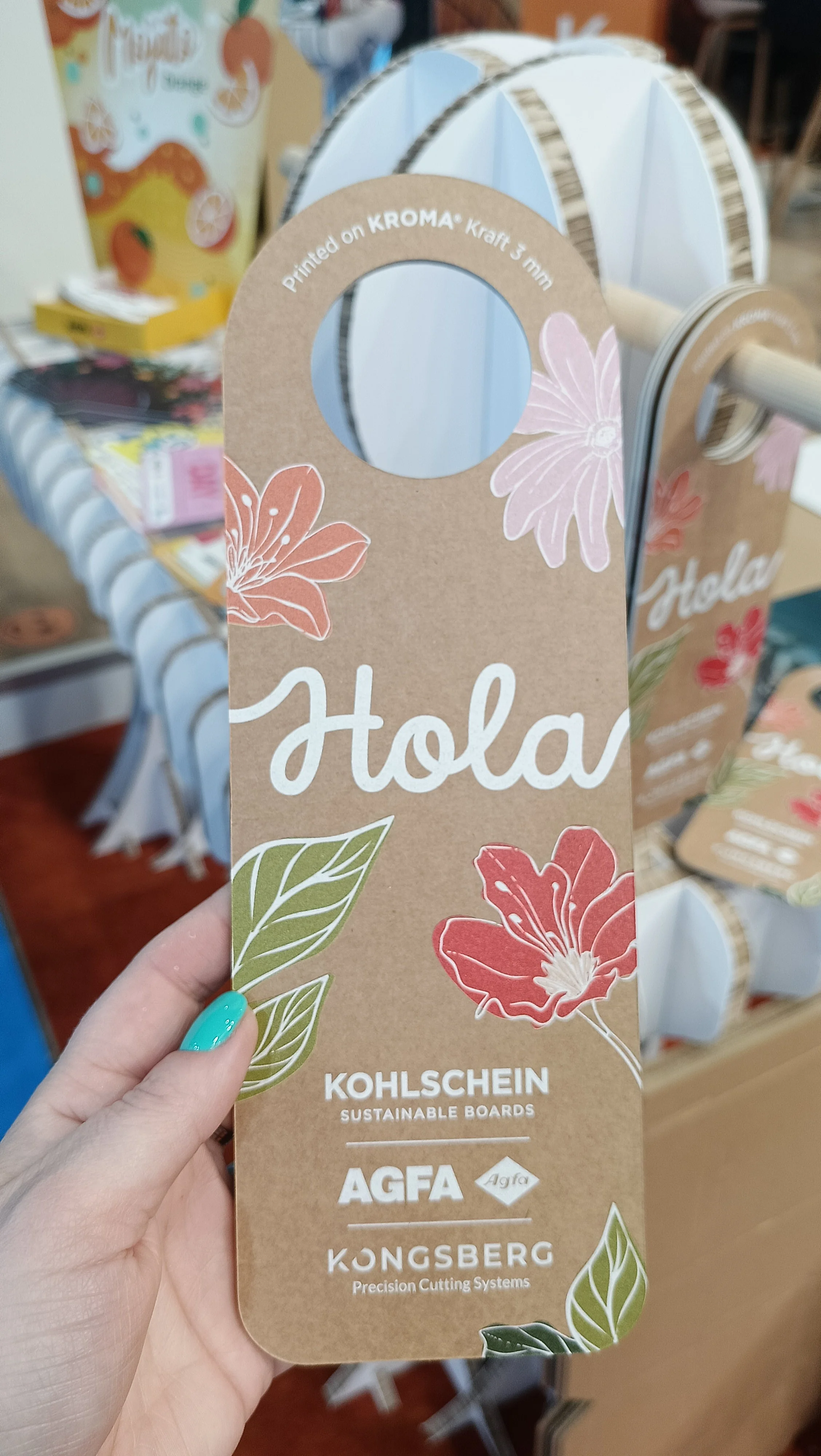
Rather than simply showing faster cutting, Kongsberg focused on smarter finishing workflows, automation and integrated production environments, but emphasised that innovation needs to address real production problems rather than just adding features.
Walking around FESPA this year, I found myself thinking less about who had the fastest printer or the highest resolution and more about who was solving the real problems facing print businesses today. Labour shortages, workflow bottlenecks, sustainability pressures and profitability aren't the most glamorous topics, but they may well determine the future of wide-format printing. The printing systems are still there, of course — thankfully, for those of us who love them — but increasingly the story is about how effectively the whole production ecosystem works together.
I must admit, as someone who still gets excited by a printhead launch or a special effect colour, I didn't expect to come away from FESPA thinking quite so much about software, robots, labour shortages, workflow bottlenecks, sustainability pressures and profitability, as they may not always be the most glamorous topics but that was the story this year.
The printing systems are still the rock stars in the world, but increasingly, the challenge is not improving aspects of ink printing onto the substrate. It's everything that happens before and after.
We know the industry is maturing, but it is not getting stale; the technology is still developing, just in a different aspect than what we are used to. Maybe one day the software will be the rock stars of the industry, and the printing systems will be the backing singers.
P.S -Hope Fespa returns to Barcelona sooner this time – Makes a change to eat something other than Bratwurst at a show.