
HP at FESPA 2026: automation moves beyond the press
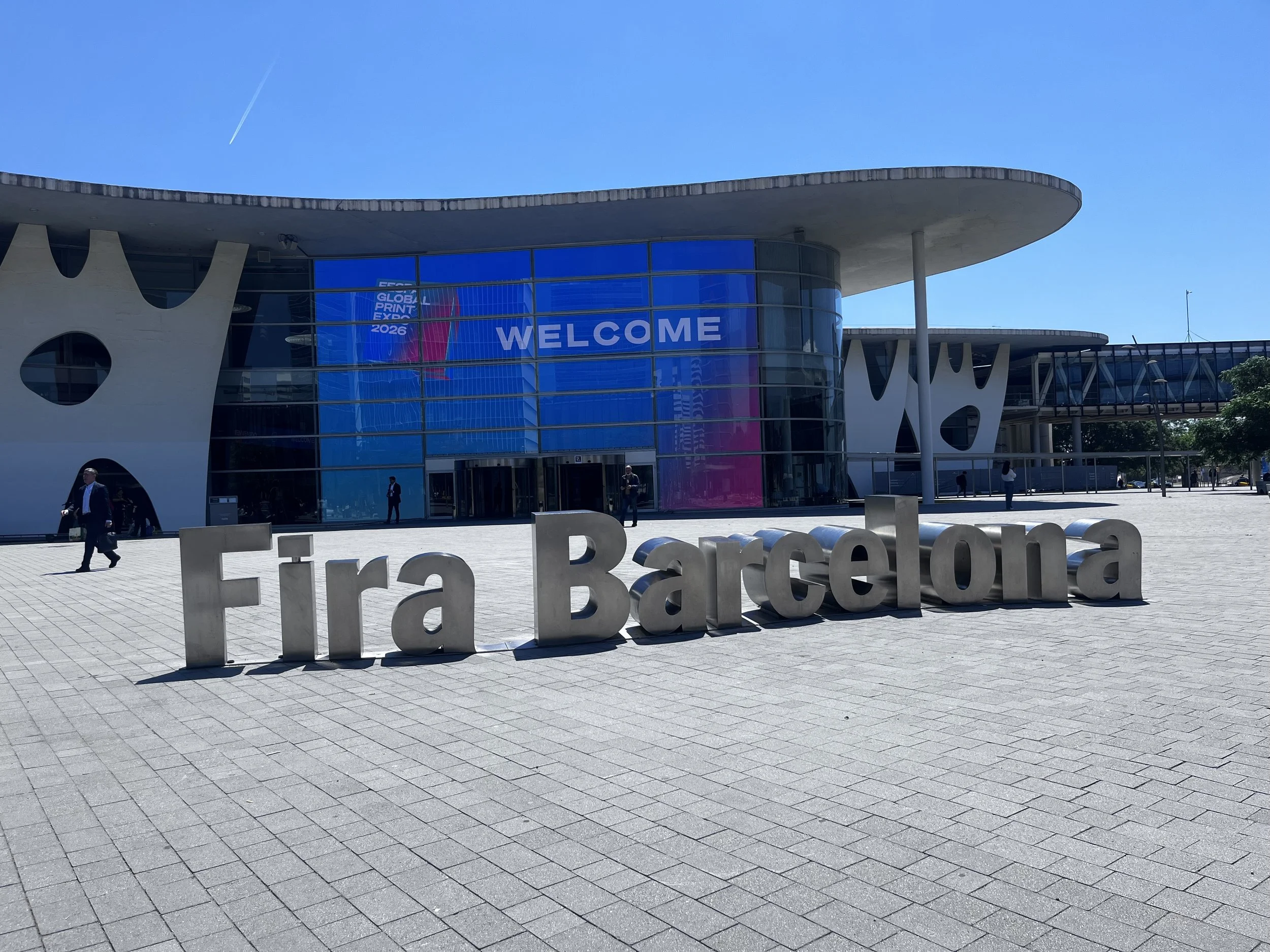
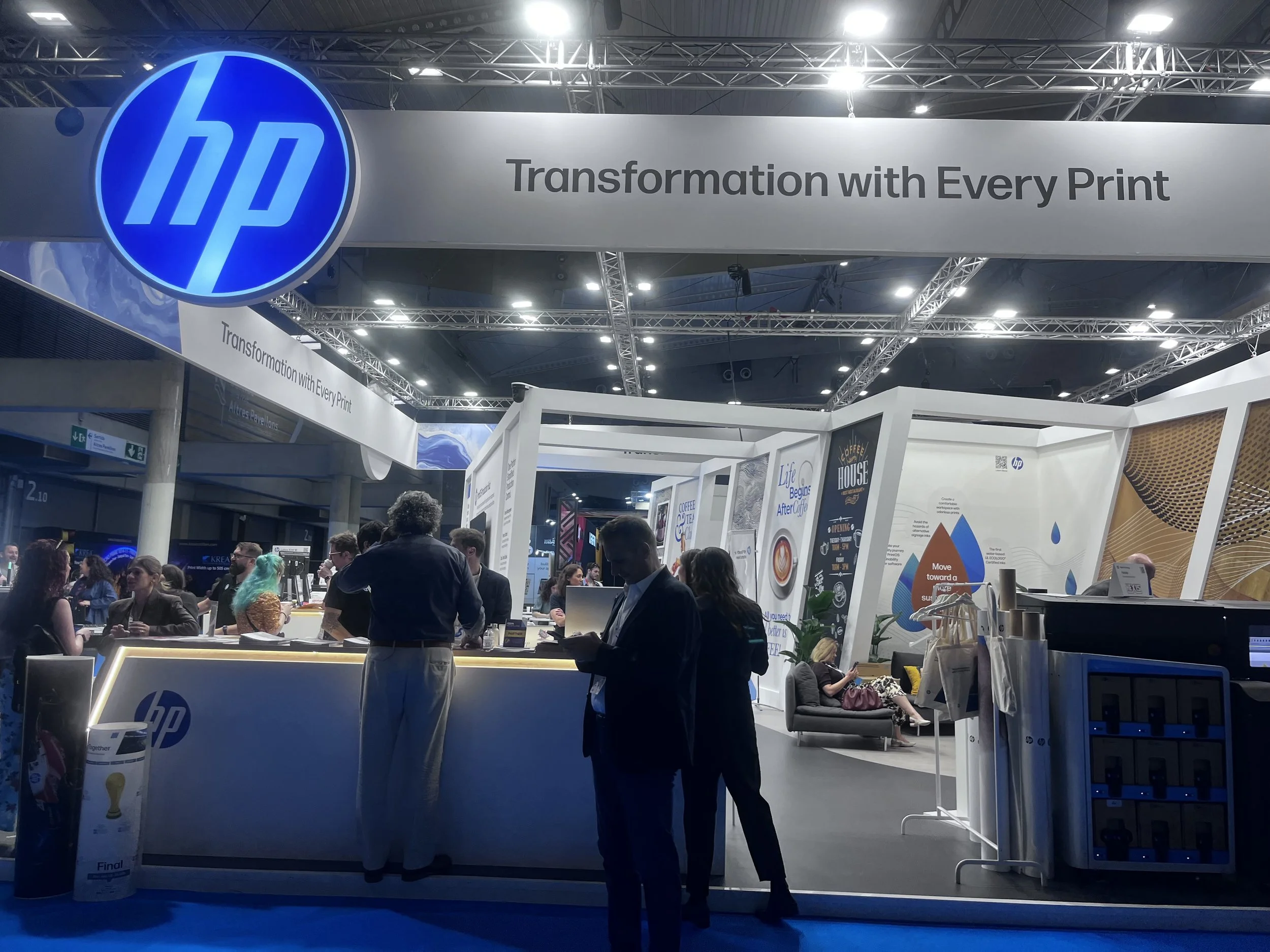
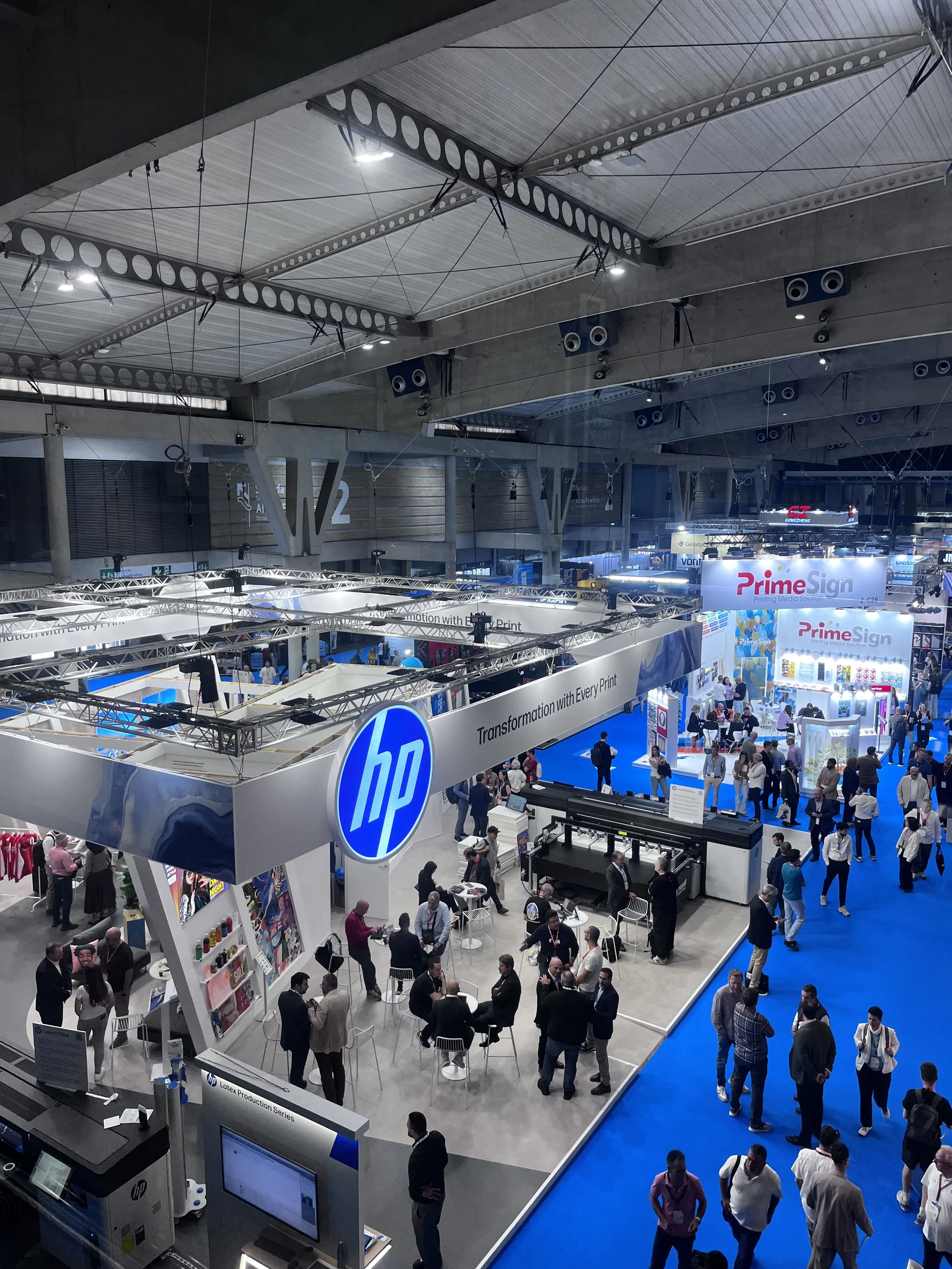
At FESPA 2026 in Barcelona, HP’s message felt very clear. The next stage of digital print productivity will not be defined by press speed alone. It will be shaped by the systems around production: order intake, workflow, data, automation and the way people make decisions inside the print business.
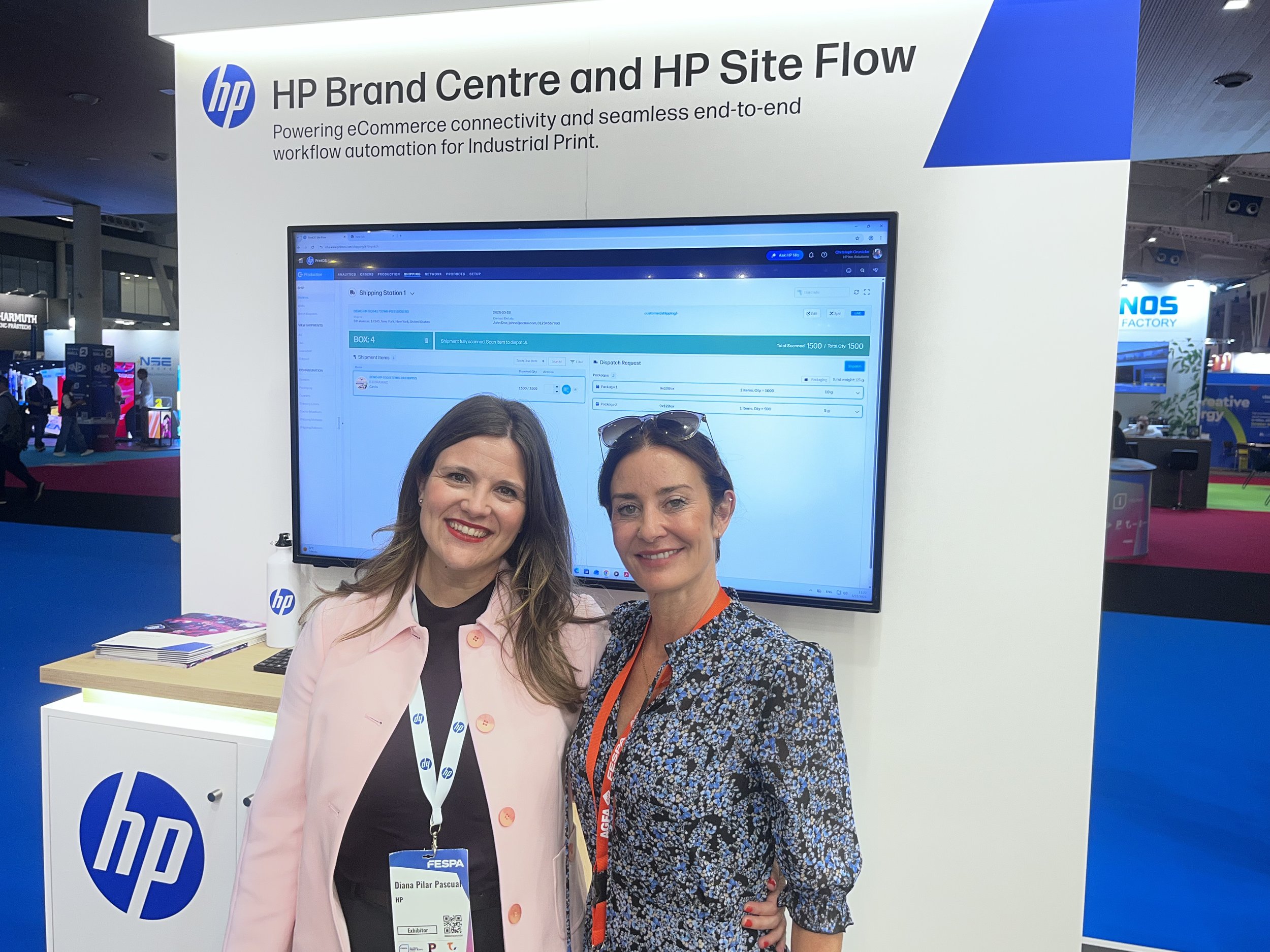
In conversation with Elena Knight from FuturePrint, Diana Pascual, General Manager, HP Industrial Print Software and Solutions, shared HP’s view that the next phase of digital print will be a software and workflow challenge as much as it is a hardware one. Pascual has spent almost 20 years with HP, including earlier roles in large format, and now focuses on how software, automation, and AI can help print businesses connect production more intelligently.
That sits behind the company’s nonstop digital printing vision. Pascual highlighted that it is not just about keeping a press running. It is about everything that slows a job down across the whole production chain.
‘It begins with an order. It begins with a design,’ said Pascual. ‘The point is to remove the pieces of friction that prevent print businesses from moving continuously from one stage to the next.’
That distinction really is important. As we all know, digital print has already changed what is possible on press. Shorter runs, faster turnarounds, more versioning, and more responsive production are now part of the market. The difficulty often sits elsewhere. The press may be digital, but the business around it can still be relying on spreadsheets and manual intervention when something goes wrong.
Pascual pointed to two areas where that pressure is most visible: the business workflow and the production workflow. Put simply, the first covers how work enters the company, how orders are handled, how customers and brands connect into the process, and how information moves towards production. The second covers the factory itself: scheduling, production control, finishing, logistics, and the systems that need to work around the press.
Her argument was that ‘workflow’ is often treated as a single, tidy system. ‘We talk about workflow as if it is singular,’ said Pascual. ‘In reality, customers have multiple workflows, and they may all be at different stages of digital maturity.’
This is where HP sees a major opportunity for automation. The argument is not that AI can be dropped on top of a fragmented process and solve everything. The foundations have to come first. Data has to exist. Systems have to connect. People need to be able to see what is happening before they can improve it.
HP PrintOS sits at the centre of that strategy, providing the operating environment for applications across productivity, service, quality, supplies, fleet management and production control. At FESPA, HP highlighted PrintOS Production Hub’s new capabilities for order approval, API integration, and AI-assisted image upscaling. Alongside HP’s wider software portfolio, including HP Site Flow and HP Nio, the ultimate aim is to make it easier for print businesses to run connected software to reduce friction across the production lifecycle.
Pascual described the portfolio as a connected house with individual parts focused on the business, the factory, and the fleet. The idea is to remove siloes and enable information to move seamlessly through the business.
That also helps explain where HP Nio fits. HP’s AI-powered companion for industrial print is more than a generic AI tool. It is being built around the specific data and operational realities of print production to help teams ask better questions of their production environment and consequently, receive more useful answers.
For example, a print business could use it to look at delays, track productivity or identify what needs to change in order to reach a target. In that sense, HP’s argument is less about AI for its own sake and more about turning production data into guidance that can support informed decisions.
That is why Pascual kept coming back to human-centric AI. In HP’s view, the shift is from task automation towards human augmentation. ‘It is not only about the task anymore,’ Diana said. ‘It is about the person running the business. How does that person become more capable? How can they make better decisions? That is where the design centre of the portfolio shifts.’
That is a more credible way to talk about AI in print than some of the abstract claims the industry has heard in recent months. But it still leaves the same practical question. Many print businesses are working with older systems that do not connect easily. Some have invested in parts of the workflow but not all of it. Some are still heavily dependent on manual intervention. For those companies, the challenge is not understanding the case for automation. It is finding a route that is realistic.
Security is part of that as well. Print businesses hold sensitive customer, commercial, and production data. For AI to be useful in that environment, customers need confidence that their information is protected and that the technology has been designed for industrial use. In the FESPA discussion, Pascual repeatedly returned to privacy, security and especially ethical use as conditions for adoption, not afterthoughts.
Pascual also described customers coming to HP with a clear sense that they need to act, but with uncertainty about the first practical step. That is why HP is also putting emphasis on advisory support, as well as the software itself. For businesses facing fragmented systems and rising complexity, that guidance may be as valuable as the technology itself.
FESPA 2026 offered a useful setting for that conversation, with questions around automation emerging across the market. Customers are asking less often about what a press can do in isolation. They are asking how the whole production environment can work better.
Digital print is entering a phase where productivity will depend less on the machine alone and more on how well the rest of the business is set up around it. The press remains vital, but it is no longer the whole story.
For HP, the future of digital print is about a more connected production model, with automation designed around people as much as machines. As Pascual put it: ‘The world is changing, and it is not waiting for print. We are here to help customers find the right way through that change.’