
By Abel Sanchez-Hermosilla Martinez, Head of Brands Innovation EMEA at HP.
There is a wine that cannot be bought. Around 2,000 bottles are produced each year for one of the most distinctive households in the world: the Vatican. These bottles are not for sale, but each carries a label with a story to tell. With every new papacy comes a new label, and the latest — for Pope Leo XIV — has been produced by Riojadhesivos using HP digital print technology.
For 25 years, Heras Cordón, a family-owned winery in Rioja, has supplied wine to the Holy See, a relationship spanning the papacies of John Paul II, Benedict XVI, Francis and now Leo XIV. Each edition carries the sitting Pope’s coat of arms and name, alongside the Latin inscription Misericordias Domini in aeternum cantabo: “I will sing forever of the Lord’s mercies.”
It is an extraordinary story — and an equally interesting production challenge.
A small run, with high stakes
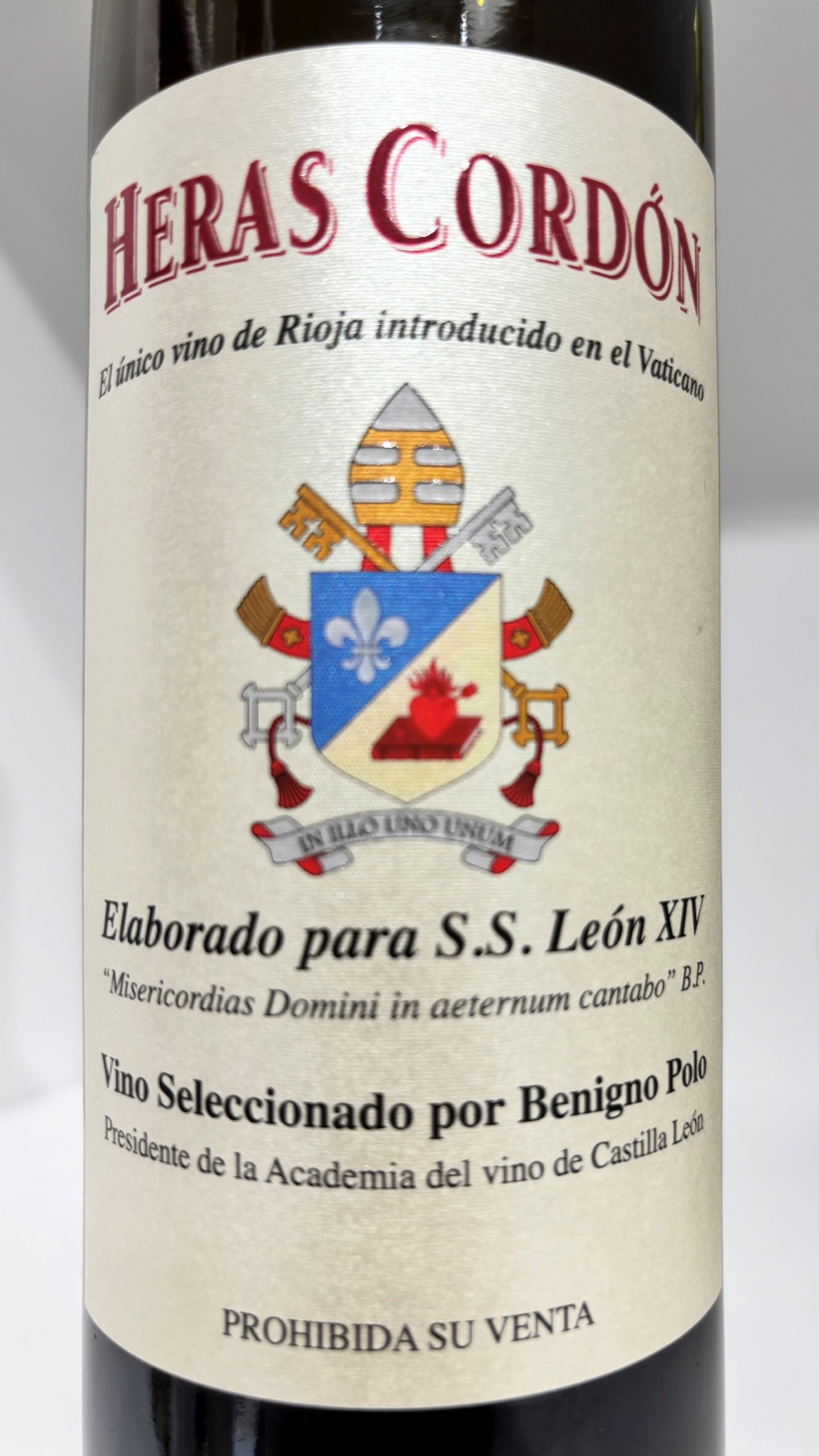
For a label this distinctive, the challenge is not scale but precision. Two thousand labels may be a small job in volume, but producing them comes with a unique set of requirements. Every detail must be precise, and a change of papacy means producing a new, historically specific edition.
“Every label carries the Pope’s coat of arms and name, so there is no margin for error, and a new edition can be needed with little notice. With HP digital print technology, we can move directly into production without new plates or a lengthy makeready process, helping us deliver each papacy-specific run accurately and efficiently,” said Johathan Melón, CEO of Riojadhesivos.
From producing differently to creating differently
For print service providers (PSPs) and converters, this story points to a broader opportunity.
The value of digital print is not limited to making existing production faster or more flexible. Its greater potential lies in applications that once looked too specific, too limited in volume, or too complex to pursue.
That is an opportunity for PSPs and converters to move beyond simply selling print. By bringing their technical and production expertise into the creative process earlier, they can help brands identify high-value applications where packaging itself delivers a more distinctive experience.
A label, after all, does not have to serve only as an identifier. It can carry meaning, capture a particular moment, and strengthen the connection between the people who make a product and those who receive it.
The Heras Cordón label does exactly that. More than a label on a bottle, it records a moment in time. The packaging acts as a channel carrying a message from maker to recipient and turning a physical object into a more personal, human-to-human experience.
Connecting creative ambition with production
Turning this kind of creative ambition into a finished application takes more than print technology alone. It requires the right combination of brand thinking, technical expertise, and production capability. This is the space in which HP Brands Innovation operates. By connecting brands, agencies and print service providers with the right technology, expertise and production ecosystem, HP Brands Innovation helps identify applications that can unlock differentiation, personalization and richer physical brand experiences.
Sometimes that means personalization at scale. In other cases, it means producing a small number of highly specific labels, while retaining the flexibility to change them when history does. The common objective is to prevent production from becoming a constraint on creative ambition.
Riojadhesivos plays an essential role in that ecosystem: it is where the concept becomes a finished label, translating creative ambition into something precise, consistent and practical to produce.
Through HP Brands Innovation, we help brands create differently by connecting creative ambition with the technology, expertise and production partners needed to bring it to life - whether for a global campaign or a run of 2,000 bottles for the Vatican.
For brands, agencies and print providers, the lesson is simple: the most powerful applications start with an idea worth creating.
What would you create if production stopped being the constraint?