
Nazdar at FESPA 2026: a useful conversation on corrugated ink
What a pleasure it was to meet Natalie Thrall, Nazdar’s Marketing Manager, last week at FESPA 2026 in Barcelona. Natalie had travelled all the way from Chicago for the show, which made me feel slightly less inclined to complain about my sore feet by the end of the week.
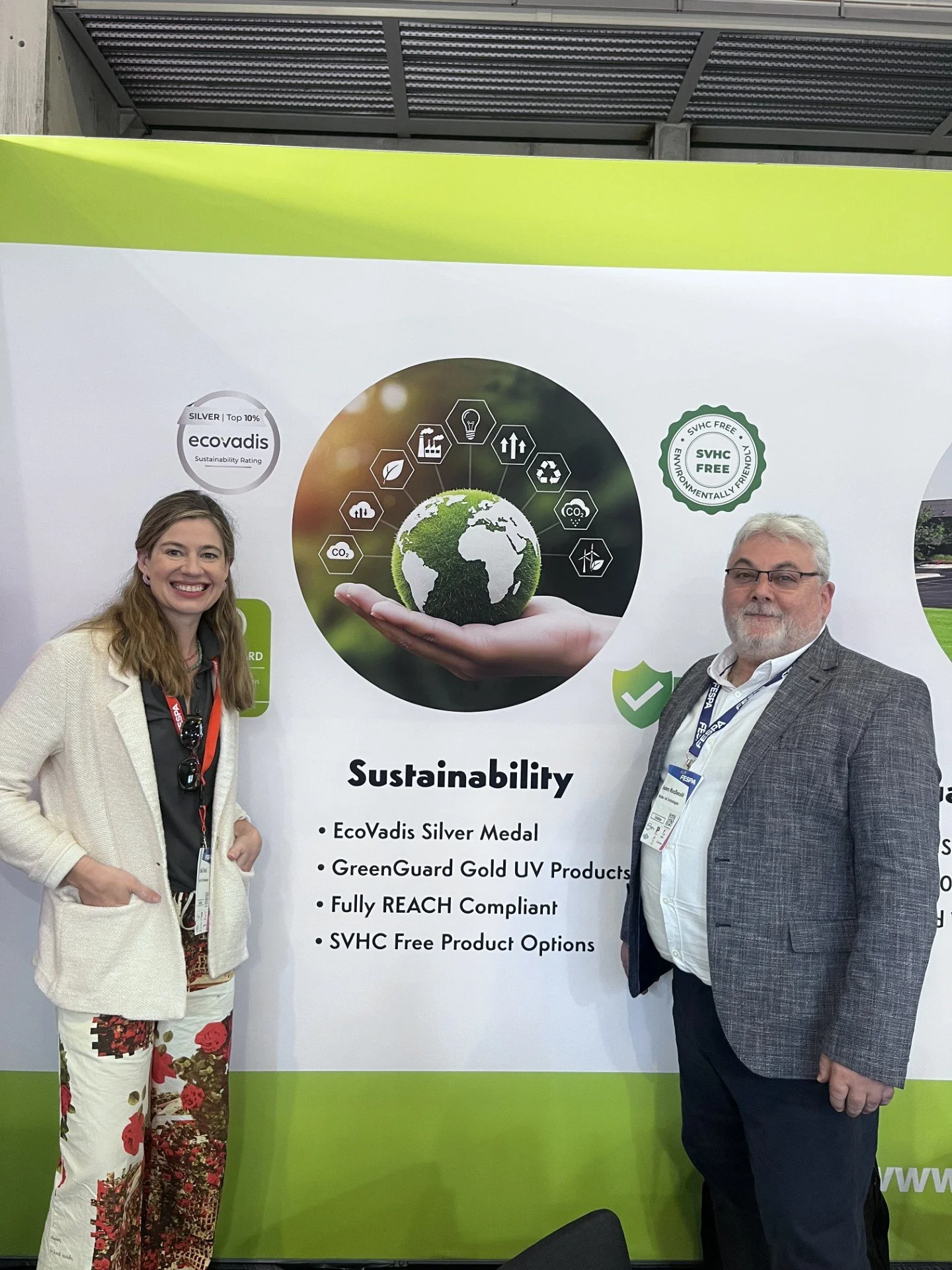
Natalie Thrall, Marketing Manager & James MacDonald, VP of Nazdar's OEM Group on their booth at Fespa 2026
We talked about Nazdar’s work in high-viscosity water-based ink technology, particularly for corrugated. It is a technical area, but the point is fairly straightforward: Nazdar is continuing to develop inks that can deliver stronger colour, work better on difficult substrates and reduce water content, which can help with drying time and energy use.
That becomes more interesting when you think about corrugated. It is not always the easiest material to print on. It can absorb ink differently, affect colour and create drying challenges. So the ink has to do quite a lot of work before the finished result looks and performs as it should.
Natalie also mentioned that Nazdar’s high-viscosity ink technology was highlighted during Xaar’s presentation with Karl Forbes at FESPA. The samples compared high-viscosity and standard-viscosity inks in full colour, showing how much difference the ink formulation can make.
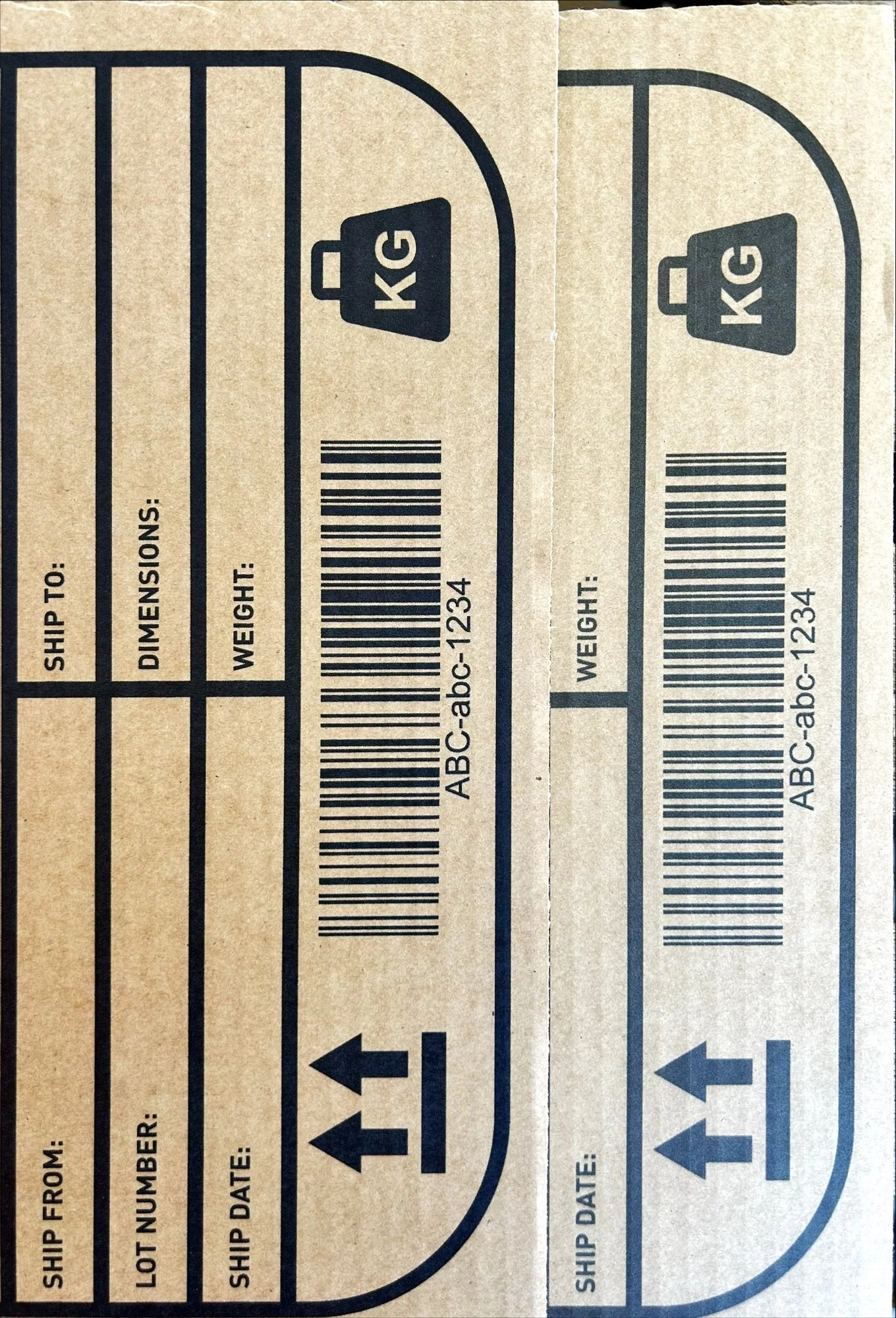

Samples of High Viscosity vs Standard Viscosity Inks
What I liked about the conversation was that it brought sustainability back to something tangible. Not just a ‘claim’, but the details that affect production: ink usage, drying, colour, substrate compatibility and what happens when the printed material reaches the end of its life.
Sustainability is one of Nazdar’s key company pillars, shaped by regulation, customer expectations and product development. The company has also been awarded Silver EcoVadis status, which adds a credible external marker to that work.
Nazdar has also joined the Sustainable Print Manifesto as a Development Partner, which is great to see. Having ink partners involved is important, because sustainability in print cannot just be about the material. It is also about the ink, the process, whether the finished application actually works, and what happens to it at end of life.
For me, that was the useful reminder that sustainability in print is not just about one decision. It is an entire system. The material, the ink, the print process, the drying, the finish and the end product's compatibility for closing the recycling loop all have to work together. Corrugated makes that especially clear. The surface can be absorbent and variable, so the ink has to do a lot of work: hold colour, dry efficiently, perform on the board and avoid creating problems later in the lifecycle.