
Resilience, Risk and the Value of Time: Leadership Lessons from Crisis
This article is inspired by a recent podcast interview with Javier Quesada of Kento Digital, you can listen to the podcast here.
In digital and industrial print, as in life, the instinct to pause can often feel like the safest option. Yet, as Javier Quesada, CEO of Kento Digital, argues, doing nothing is rarely neutral. It is a decision - and often the wrong one.
His perspective is not theoretical. It is forged in experience.
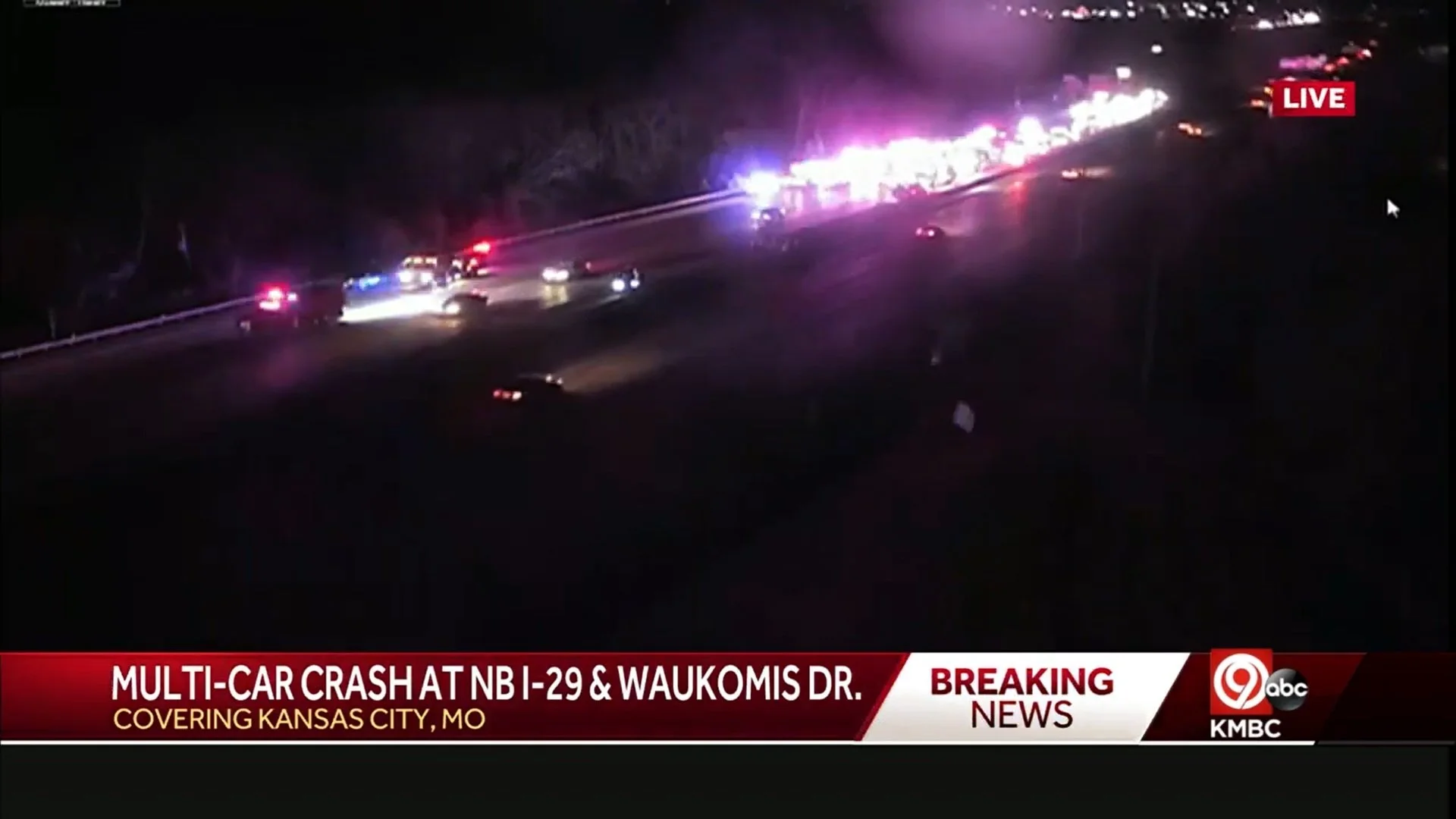
Four years ago, while travelling in Kansas City, Quesada was involved in a severe multi-car accident that made national news. Alongside colleagues, he emerged fortunate - injured, but able to recover. The incident, however, left a deeper imprint than physical scars.
“It was a brutal reminder,” he reflects, “that safety is an illusion.”
When inaction becomes risk
The lesson he draws is both personal and professional. In moments of uncertainty - whether geopolitical tension, economic slowdown or market volatility - the default human response is often to retreat. To wait. To protect.
But Quesada challenges this instinct.
“Inaction is not safe,” he says. “Doing nothing is still a decision.”
In the context of today’s corrugated packaging market - currently navigating a cyclical downturn following post-COVID highs - this insight is particularly relevant. Capacity has expanded, demand has softened, and investment decisions are under scrutiny.
Yet, according to Quesada, this is precisely when leadership matters most.
“Crisis is a second chance,” he argues. “It forces you to rethink, to adapt, to distinguish yourself.”
Time as the only true asset
Central to his philosophy is a simple but powerful idea: time is the only real possession.
Drawing on the 17th-century Spanish thinker Baltasar Gracián, Quesada points to a truth that resonates in both business and life: even when resources are constrained, time remains.
How it is used, however, defines outcomes.
This perspective reframes investment decisions. Delaying action may feel prudent in the short term, but it carries long-term consequences. Opportunities are missed. Competitive positions weaken. Momentum is lost.
In fast-evolving sectors such as digital print and corrugated packaging, where technology continues to reshape production economics and value propositions, standing still can quickly become falling behind.
Resilience over reaction
Quesada’s leadership approach is grounded in resilience rather than reaction.
“It’s easy to be optimistic when the sun is shining,” he notes. “Real leadership is about continuing during the storm.”
This is not blind optimism, but a deliberate mindset. One that acknowledges external volatility - geopolitical conflict, economic uncertainty, shifting demand - while maintaining focus on controllable factors: strategy, innovation, and people.
The analogy he draws from his own industry is apt. Corrugated packaging is designed to protect, to endure, to absorb shocks. Businesses, he suggests, should do the same.
“Protect your people. Strengthen your teams. Think long term.”
Why now is the moment to act
Despite current headwinds, Quesada remains unequivocal about the long-term trajectory of the sector.
Paper-based packaging continues to benefit from structural tailwinds, not least the ongoing substitution of plastic. Demand, while temporarily suppressed, is not disappearing - it is deferred.
“We are in the right market,” he says. “We are lucky.”
This conviction underpins his view on digital transformation. Technologies such as digital printing and converting are not optional upgrades; they are strategic enablers. They allow manufacturers to differentiate, to add value, and to respond more flexibly to changing customer needs.
Crucially, adopting them does not always require large-scale capital expenditure. Often, it begins with a shift in thinking.
“Adaptation should not be postponed,” he argues. “Fear should not stop us from acting.”
The danger of short-term thinking
One of the more subtle risks in times of uncertainty is the dominance of short-term thinking.
Markets react quickly. News cycles accelerate. Decision-making compresses. In this environment, leaders can be tempted to prioritise immediate stability over long-term progress.
Yet, as Quesada points out, this can be counterproductive.
Short-term decisions that provide temporary comfort - delaying investment, reducing innovation, avoiding risk - can undermine long-term competitiveness.
Instead, he advocates zooming out. Taking a broader view of market dynamics. Recognising that cycles are temporary, but strategic positioning endures.
Fear, gratitude and leadership
If there is a unifying thread through Quesada’s reflections, it is the interplay between fear and gratitude.
Fear, he argues, is often the greatest barrier to progress. It paralyses decision-making and encourages inaction. Overcoming it requires both awareness and intent.
At the same time, gratitude provides perspective.
“We cannot forget how lucky we are,” he says.
In a world often characterised by uncertainty and noise, this mindset offers clarity. It shifts focus from what cannot be controlled to what can. It reinforces purpose. And it enables more balanced, rational decision-making.
A philosophy for uncertain times
For leaders in print and packaging, the message is clear.
The current downturn is not a signal to retreat, but an opportunity to recalibrate. To invest intelligently. To adopt new technologies. To strengthen organisations for the next phase of growth.
Because when the cycle turns - as it inevitably will - those who acted will be ready.
And those who waited may find themselves behind.
In the end, Quesada’s lesson is simple, but profound.
Time is finite. Action is a choice. And inaction, however comfortable it may feel, is rarely the safe option.