
The Sustainable Print Manifesto is built around nine principles for a more sustainable print industry. They cover the practical areas where change has to happen: materials, energy, water, waste, production, design, measurement, collaboration and accountability. It was never intended to be another well-meaning document for the industry to admire and then ignore. Its purpose is more practical than that. It is a framework for action. A way to bring print businesses, suppliers, brands and industry voices around a shared set of principles, then ask a harder question: what does this look like in practice?

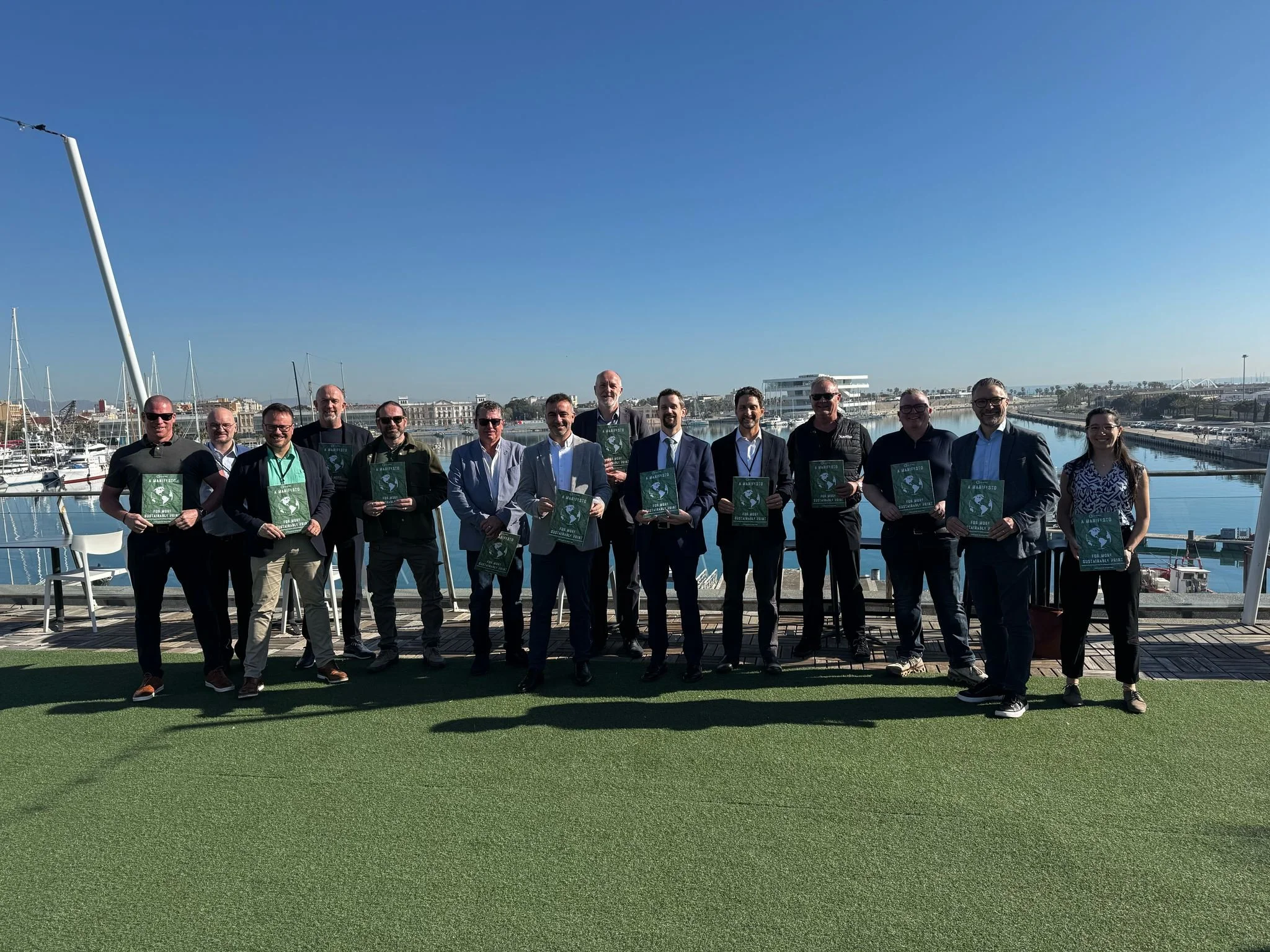


The project has reached this point through steady, detailed collaboration. Across 16 development meetings, partners and contributors have worked through the manifesto’s principles, challenged the language, tested the relevance and started to shape what each principle could mean in practice.
This has not been a quick branding exercise. It has been a process of discussion, refinement and shared ownership, built with companies that understand the realities of print production, supply chains, customer pressure, regulation and technical compromise. That is why development partners are so important.
Regulation is part of that picture too, but the manifesto is not about waiting for regulation to define the industry’s direction. The aim is to move faster than minimum compliance: to anticipate what is coming, reduce long-term risk and help the print sector develop a more informed voice in the debates that shape future policy. Sustainability should not only be a response to regulation. It should be a way for the industry to show what responsible progress can look like before it is forced to.
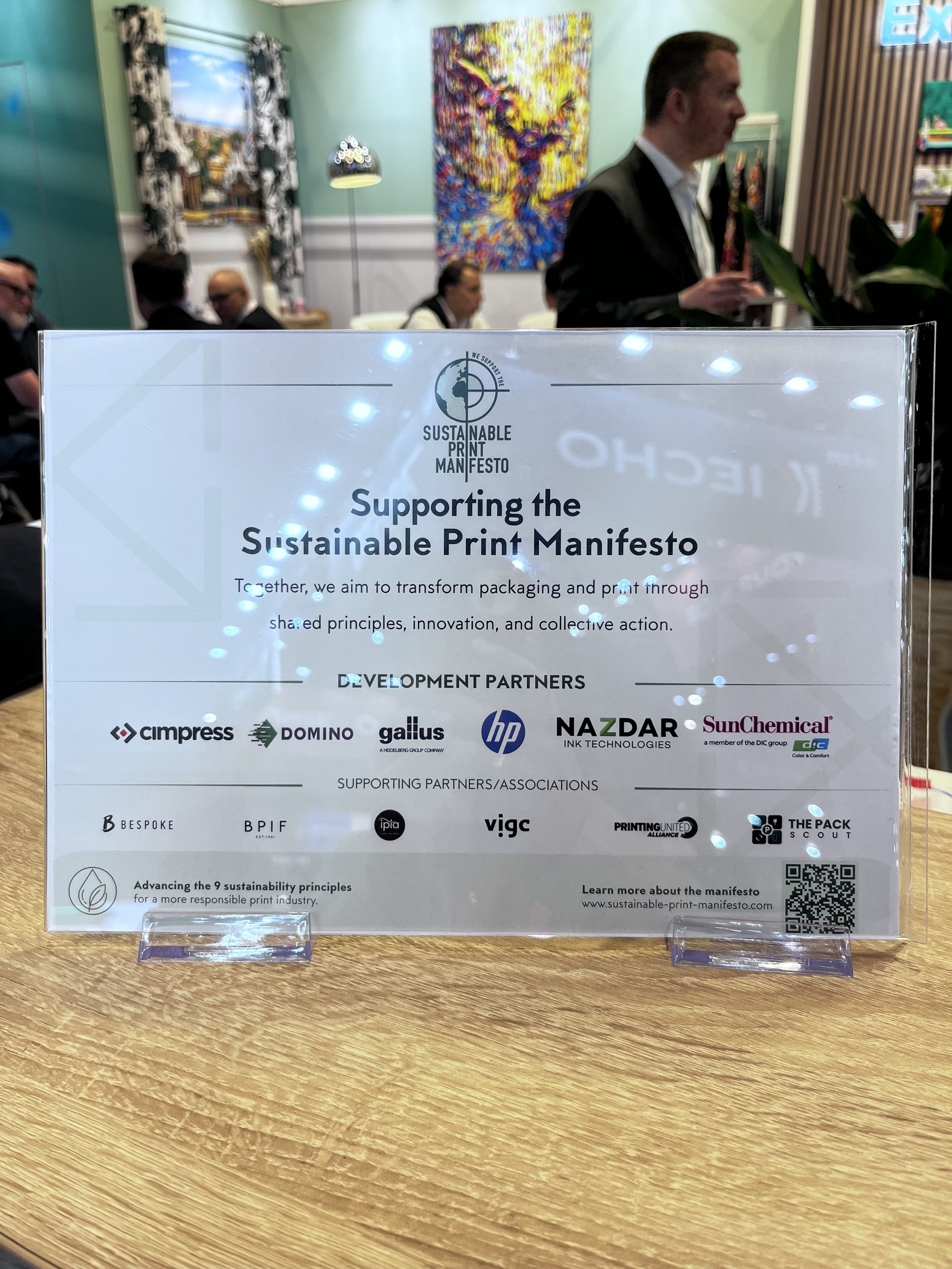
With Nazdar now joining the Sustainable Print Manifesto, the project gains another experienced contributor from the ink and industrial print supply chain. Nazdar joins a growing group of development partners including Cimpress, Domino, Gallus, HP & Sun Chemical, who are helping to move the manifesto from intent to application. And we feel that this mix is very important.
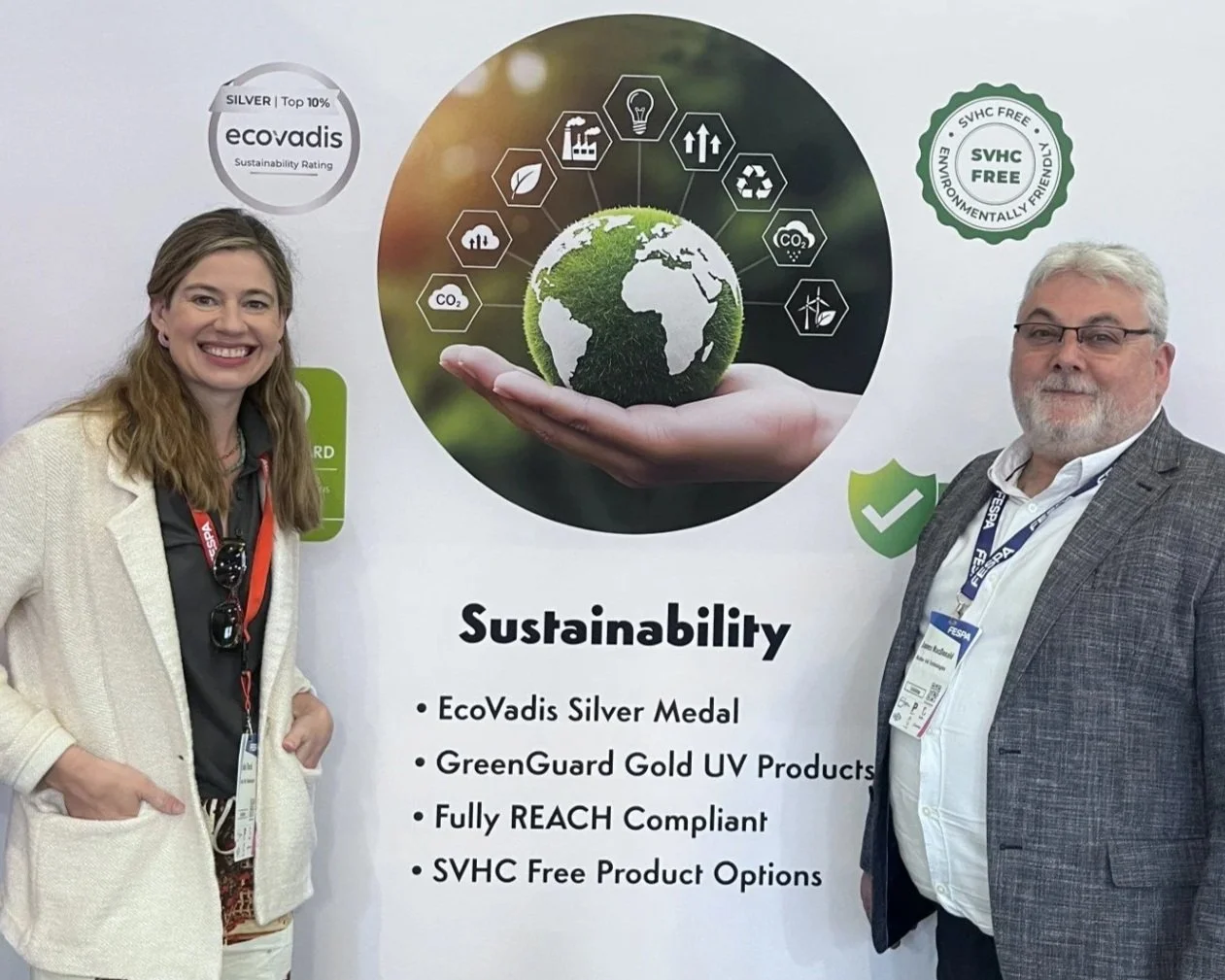
Natalie Thrall, Marketing Manager & James MacDonald, VP of Nazdar's OEM Group
This is not a group of companies all doing the same thing, from the same place in the supply chain, with the same commercial interests. In some cases, they compete – and herein also lies the strength of the project. Sustainability in print is not a single-company challenge, and it will not be solved by single-company thinking. The industry needs shared ground.
Jeff Freeman, Cimpress comments: ‘Clear agreement around what ‘sustainable print’ is (and is not), is a foundational step toward meet the evolving expectations of customers and the needs of the planet.’
It needs ink manufacturers, technology suppliers, print platforms, producers, converters, brands and associations to bring their own evidence, constraints and experience into the same conversation. Not to flatten out the differences between them, but to make the discussion more useful. Sustainable print cannot be reduced to one material, one machine, one certification or one claim. It sits across energy, chemistry, substrates, waste, durability, logistics, compliance, design and end-of-life thinking. It is complicated. And because it is complicated, it needs to move beyond good language and into useful work.
The manifesto’s development partners are helping to turn the nine principles into something more practical: clearer guidance, better examples and a stronger shared language for the industry. Their role is not simply to support sustainability from the sidelines. It is to contribute knowledge, challenge assumptions and help define what progress can look like across different parts of the print value chain.
The supporting partners Bespoke, BPIF, IPIA, VIGC, Printing United Alliance & The Pack Scout also have an important role to play. They help extend the reach of the project, bring wider industry perspectives into view and keep the conversation visible beyond the companies directly involved in development work.
Ford Bowers, PRINTING United Alliance says: ‘Common understanding of sustainability is vital to help drive the printing industry forward. A collective vision will be invaluable in implementing best practices, guide legislation, and report results. The Alliance encourages all participants in the printing industry, whatever the role, to become familiar with a core set of principles to speak coherently on this important topic.’
That combination gives the manifesto its value. The industry needs a common reference point that can travel across sectors, from industrial print and packaging to display, décor, textiles, labels and direct-to-shape. It needs companies willing to share what they are already doing, where the gaps remain and where collaboration could make progress faster.
The next phase is less about launching the manifesto and more about making it work. FuturePrint’s editorial focus on sustainability will continue to follow that process: the companies contributing, the principles being developed, the practical examples emerging and the questions the industry still needs to answer.
Add your name to the growing list of people pledging to the shared principles of the manifesto. Your voice matters: