
Where Inkjet Begins: How Chemstream Develops the Fluids Behind Industrial Innovation
In the world of industrial inkjet, attention is often focused on the printheads, printers and production systems that bring applications to life. Yet behind every successful inkjet application sits something equally important: chemistry.
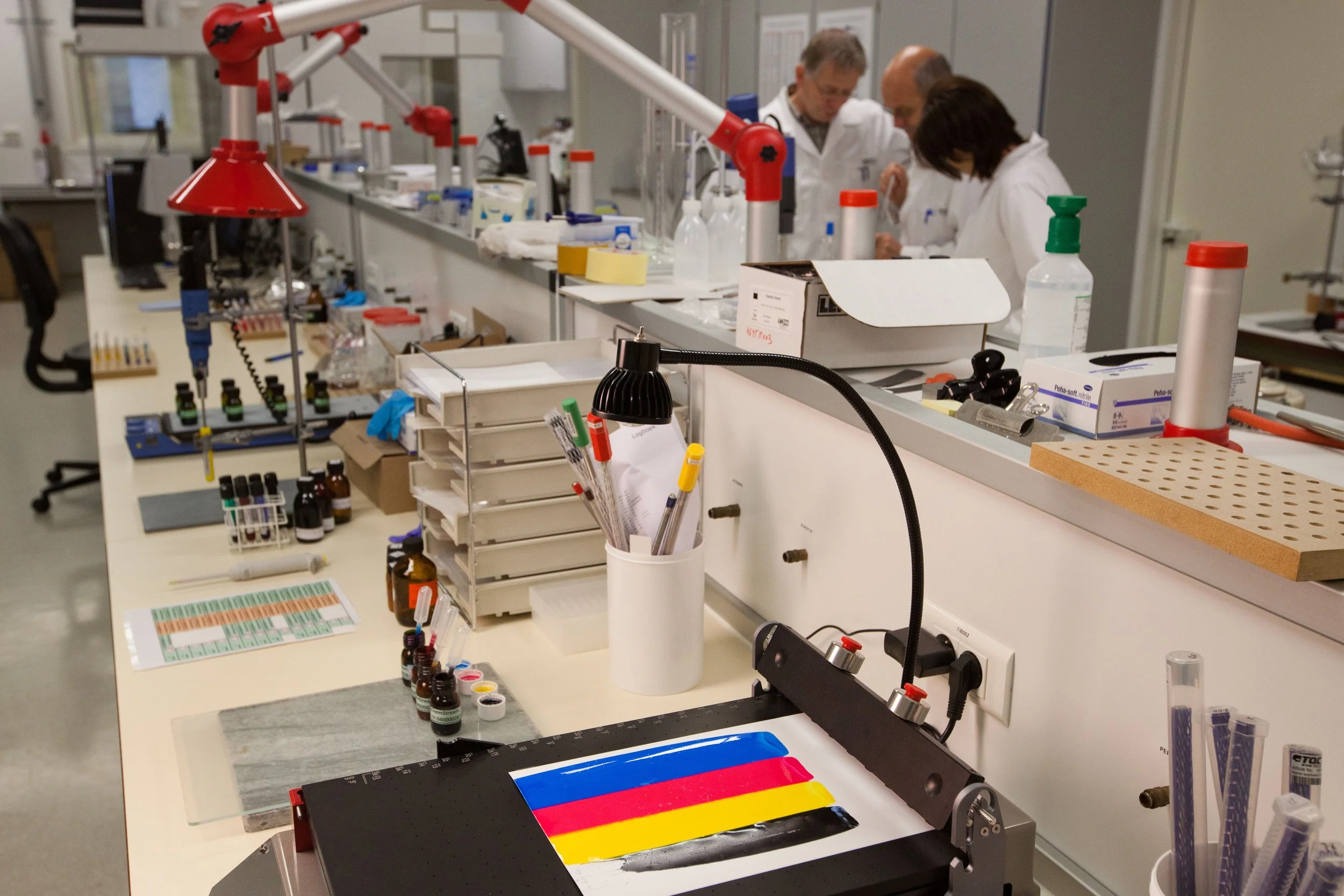
For the past 16 years, Belgian R&D specialist Chemstream has been helping companies develop the inks, coatings and functional fluids that make advanced inkjet applications possible. Founded by three former Agfa scientists, the company has built a reputation as a specialist development partner for businesses looking to solve complex formulation challenges that fall outside the scope of standard ink products.
Today, tucked away just outside of Antwerp, you'll find Chemstream's team of ten scientists working across a wide range of industrial sectors, developing custom formulations for applications ranging from packaging and decoration to medical devices, automotive components and advanced manufacturing.
A Different Kind of Ink Company
Unlike large ink manufacturers focused on high-volume production, Chemstream operates as an independent research and development partner. They are trailblazers, not held back by bureaucracy. Flexible, quicker, more agile.
"We develop solutions for companies that need something very specific," explains Els Mannekens, Project Manager at Chemstream. "Often the volumes are too small or the requirements are too specialised for larger suppliers to be interested."
That niche has become increasingly important as industrial inkjet expands into new markets. Many emerging applications require fluids with highly specific performance characteristics, whether that means unusual adhesion properties, extreme durability, transparency, biocompatibility or compatibility with unique substrates.
Rather than offering off-the-shelf products, Chemstream works closely with customers to develop formulations tailored to their exact requirements.
Understanding Inkjet from the Molecular Level

At the heart of Chemstream's expertise is a deep understanding of particle behaviour and surface chemistry.
Developing a successful inkjet fluid is about far more than simply mixing ingredients together. Every component must work in harmony with the printhead, substrate and final application.
The company develops pigment dispersions at nanoscale level and has created its own range of polymer-based dispersants for situations where commercially available solutions are unable to meet performance requirements.
This approach allows Chemstream to tackle some of the industry's most demanding technical challenges, particularly in water-based ink systems.
The Growing Importance of Water-Based Inks
One of the most significant shifts in industrial printing over the last two decades has been the move towards water-based technologies.
Driven by environmental pressures, regulatory requirements and the desire to reduce VOC emissions, water-based inks have become increasingly attractive across a wide range of applications.
However, they also introduce new challenges.
Water is inherently more difficult to control in high-performance inkjet environments. Its volatility can create issues with nozzle reliability, open time and jetting stability, particularly in demanding single-pass production systems.
As a result, developing stable, reliable water-based formulations requires extensive expertise in chemistry, particle engineering and fluid dynamics.
Chemstream has invested heavily in this area, developing specialised dispersants and testing methodologies that allow customers to explore water-based alternatives without compromising performance.
From Packaging to Medical Devices
The company's work extends well beyond traditional graphics applications.
Over the past nine years, Chemstream has also been involved in the development of UV-curable materials for inkjet-based 3D printing applications, including ophthalmic lenses where formulations must be transparent, colourless and capable of producing highly accurate layered structures.
The team has also contributed to projects involving dental applications, biomedical devices, microfluidics and lab-on-a-chip technologies.
During the COVID-19 pandemic, Chemstream participated in projects focused on creating printable testing devices that could be produced efficiently through specialised inkjet manufacturing processes.
These applications highlight a broader trend across the industry: inkjet is increasingly becoming a manufacturing technology rather than simply a printing technology.
Bridging the Gap Between Research and Production
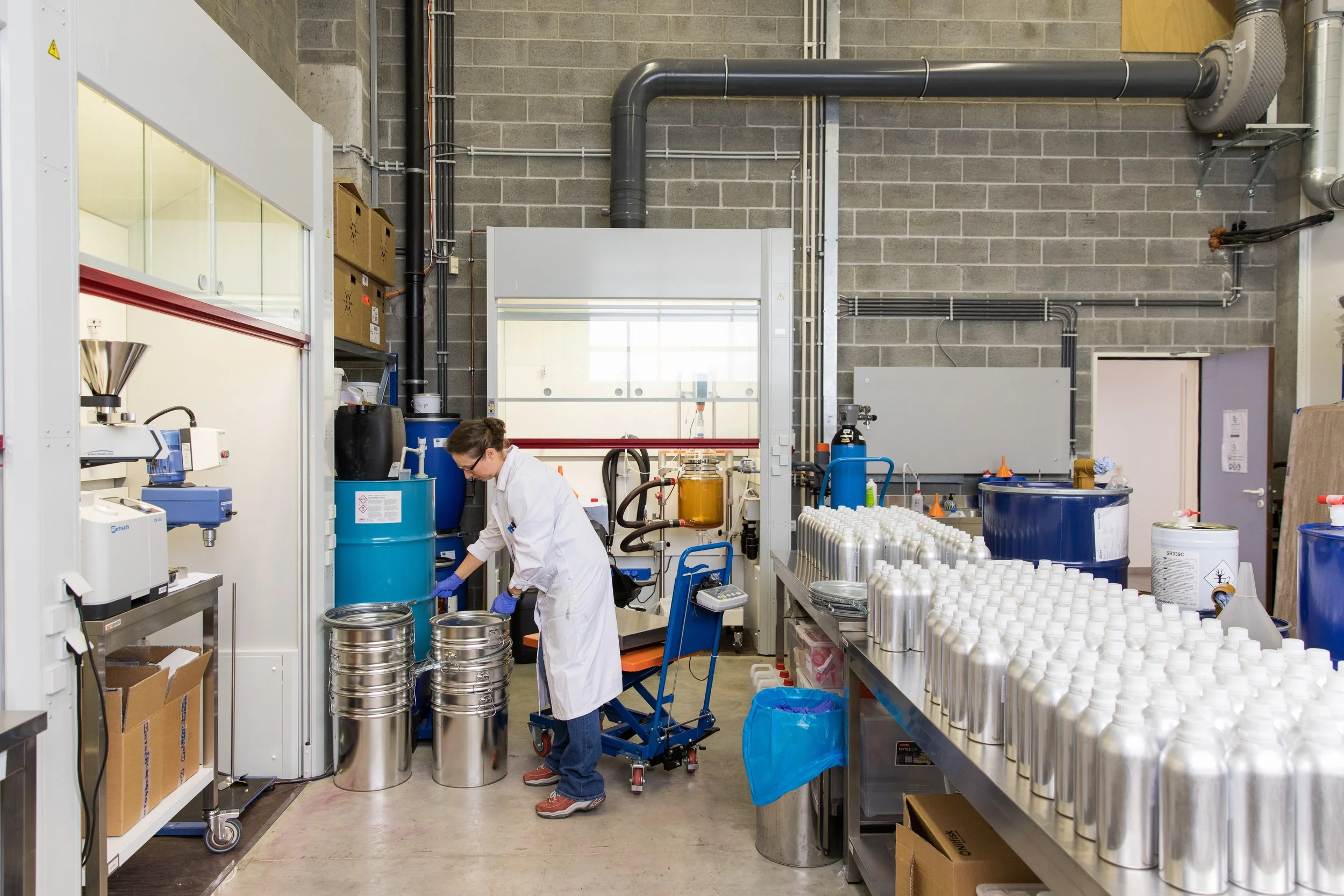
A key part of Chemstream's role is helping customers translate technical requirements into practical solutions.
The company's laboratory houses a range of equipment designed to replicate real-world printing conditions, including modular print systems, milling devices, particle analysis equipment, rheology testing systems and drop-watching technology that allows engineers to visualise how fluids behave as they leave the nozzle.
This capability enables Chemstream to evaluate not only whether an ink works in theory, but whether it will perform consistently in production.
According to Els, one of the most important aspects of any project is ensuring alignment between customer expectations and laboratory testing.
"The better the communication at the start, the more successful the development process becomes," she explains.
Building Confidence Through Certification
Chemstream’s ISO 9001:2015 Certification
As Chemstream expands its involvement in regulated industries, quality assurance is becoming increasingly important.
The company recently achieved ISO 9001 certification and is currently pursuing ISO 13485 certification for medical device applications.
For customers operating in sectors such as healthcare and dental manufacturing, these certifications provide additional confidence in the company's quality management systems, traceability and reproducibility.
Combined with in-house analytical capabilities covering areas such as biocompatibility and migration testing, Chemstream aims to support customers throughout the development process, helping them prepare for the more extensive certification requirements that often follow.
Looking Ahead
Chemstream has built its reputation through long-term partnerships and close collaboration with customers. New relationships often begin through conference presentations, industry events and word of mouth, but they are sustained by something more important: trust.
The company sees itself not simply as an ink supplier or development laboratory, but as an extension of its customers' own R&D teams. Projects are often highly specialised and are designed to move from concept to commercial reality. Success therefore relies on open communication, technical collaboration and a shared commitment to solving complex challenges together.
As industrial inkjet continues to move into increasingly specialised and high-value applications, demand for this type of independent development expertise is likely to grow. In a market where every application presents a new challenge, companies capable of bridging the gap between chemistry and production are becoming increasingly valuable.
Chemstream’s combination of scientific expertise, agility and collaborative approach means it is playing an increasingly important role in helping customers turn ambitious inkjet concepts into commercial reality.